japonisme

29 September 2006

again with the peacocks

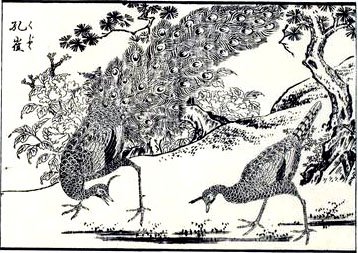
well, i don't wish to call any- one a liar, but per- haps Iida Takashimaya, who embroidered a peacock on a silk kimono meant for export, despite the fact that there were no peacocks in japan, could explain this image.

this and the rest of the amazing book are available
here in the new york public library's amazing database of images. it's from a book called 'the keramic art of japan' by audlsey and bower; published in 1875, this is taken from a woodcut.

in the hands of children

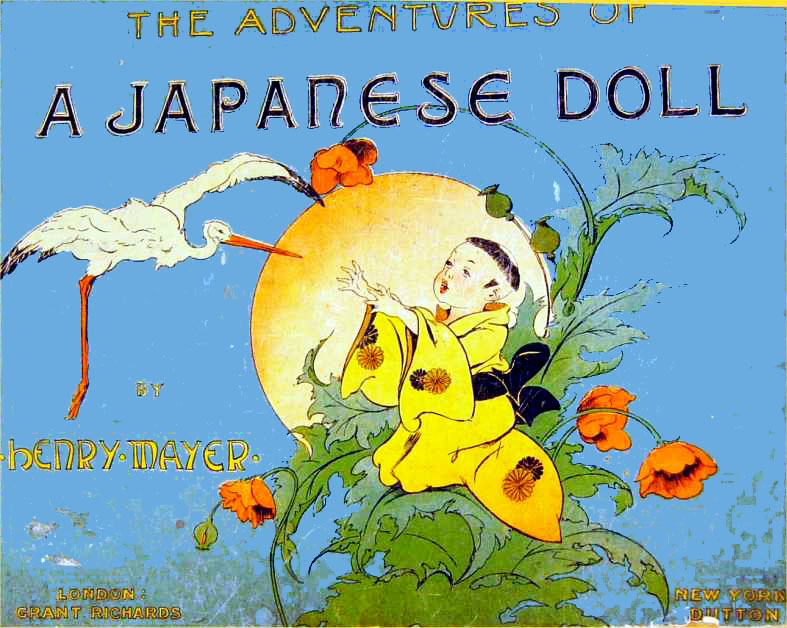
another place where the japanese influence was felt was in children's book illustrations, both by overt mention, but also, by inspiration, the lines, the letter design, the flat planes, the use of pattern, and the outlines.

28 September 2006

a tale of peacocks - part 4

peacocks soon were everywhere, how ironic that this peacock obsession was born of a fit of pique. louis comfort tiffany was perhaps the greatest interpreter of the bird, learning it, and inventing ways to reproduce the flow, iridescence and color.

the peacocks were everywhere.
liberty of london still manufactures the designs it created for this era.

Labels: ,

a tale of peacocks-part 3

At-home gown 1904 -08

by Iida Takashimaya, Kyoto, Japan
plain-weave silk with peacock and cherry blossom motifs embroidered in silk using traditional nikuiri-nui (padded) technique, kumihimo (silk cord) and tassel trim, fuki (padded hem), and habutae silk lining

On loan from the Kyoto Costume Institute

This gown was made by Iida Takashimaya for the Takashimaya department store. This was the first Japan- ese store to export to Western Europe. The garment has a traditional kimono shape, but with a flared cut to suit European tastes.

Though the peacock is not native to Japan, the designer has included it on the gown as the bird became strongly associated with the Japonisme art movement of the late 1800s. A famous example of Japonisme was the Peacock Room – an entire room decorated in 1876–77 by artist James McNeil Whistler (1834–1903). (copy from the exhibit)

27 September 2006

a tale of peacocks-part 2

ascinating, sarcastic, brilliant, argumentative, genius, james mcneill whistler brought to the art world new perspectives, new inspiration, and new headaches.

i get sad reading the reviews he got, excerpts of which are included in his collected papers, the gentle art of making enemies. "another crop of mr. whistler's little jokes." "so far removed from any accepted canons of art as to be beyond the understanding of an ordinary mortal." and on and on and on......

but the arrogant if insecure artist wrote letters to the editor combating these reviews just as endlessly.
he didn't limit his fights to those with critics. he was a man who knew what was right, and anyone else be damned. when hired to do a simple assist at room decoration he instead repainted the entire room, including over leather walls, making of it exactly what it should be. unfortunately, the owner of the house disagreed, and refused to pay whistler the total agreed amount. petulantly, and yet with glory, this grand peacock mural, inspired by utamaro's print, was created for the room, parodying he and the owner: the proud and the pauper. (more on this to come)

and in doing so created one of art nouveau's most prevalent symbols.
Labels:

a tale of peacocks-part 1

utamaro kitigawa died of a broken heart. at least this is what some of his biographers say, though none of them seem to agree on much.

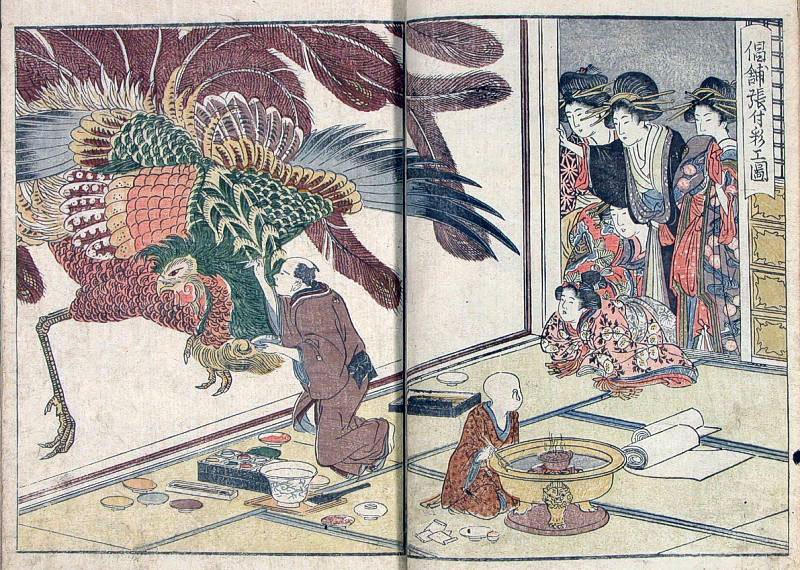
this is his print of himself painting a ho-o bird (a phoenix) on a wall in a "green house," a house of pleasure, as the courtesans look on. they were his favorite subject (with nature studies being a close second), and his most popular productions. his eye for female beauty seemed unparalleled in the japanese art world, and yet it was subject in his paintings which got him arrested, jailed, and eventually broken. the stories of the arrest vary widely, but all include concubines being pictured elsewhere than they were legally allowed to be pictured (if indeed they were allowed to be pictured at all).

still, his work was embraced in europe, and numerous artists credited him for having influenced their work in profound ways.

to understand how this print will fit into this narrative, you will have to know that whistler saw it.

Labels:

26 September 2006

japonisme kitch

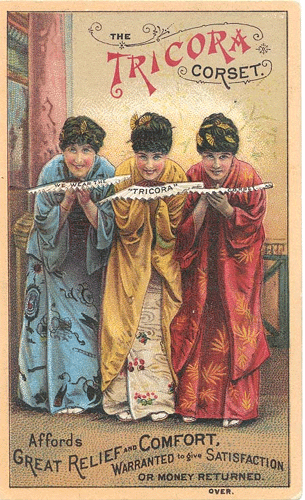
from the ephemera society, "With the opening of Japan to trade in 1854, the American market was flooded with goods from the Far East. Later on, exhibits of Japanese goods at the Centennial Exhibition in 1876 in Philadelphia and the success of Gilbert and Sullivan’s operetta The Mikado as well as New York’s exhibit The Japanese Village, both in 1885, exposed more Americans to Japanese wares and design.


Japanese novelty stores in major cities in the 1870s made goods
more accessible and cheaper for customers. American companies
also incorporated Japanese imagery in their advertising to cash
in on the craze.

This selection of trade cards shows a wide variety of products being advertised, using Japanesque illustration and characters."

[at least in neither of these has the artist tried to make the women look japanese. we were no better at making the japanese look japanese that the japanese are at making americans look american. 'nother topic... later....]

in an interview with kimi kodani hill, granddaughter of chiura obata, a well-known artist from this period, she said, "Now, as you know the 1910's, 1920's, the blatant prejudice shown against the Japanese community was something that all the Japanese- American community had to deal with. And my grandparents were no exception. My grandfather, obata, had physical encounters on the streets of San Francisco because he'd be walking down the street and he'd be hit or attacked or spat upon simply because of his ethnicity. And yet ironically at the same time there was this interest in japonisme or the 'Oriental Arts,' and stores like Gump's and the City of Paris all commissioned him to decorate their Oriental rooms to sell their Asian arts."

Labels:

25 September 2006

letter to theo, 24 septembre, 1888

"...If we study Japanese art, we discover a man who is undeniably wise, philosophical and intelligent, who spends his time - doing what? Studying the distance from the earth and the moon? No! Studying
the politics of Bismarck? No! He studies … a single blade of grass.
But this blade of grass leads him to draw all the plants - then the seasons, the grand spectacle of landscapes, finally animals, then
the human figure. That is how he spends his life, and life is too short
to do everything.


"...come now, isnt it almost a true religion which these simple Japanese teach us, who live in nature as though they themselves were flowers. And you cannot study Japanese art, it seems to me, without becoming much gayer and happier, and we must return to nature in spite of our education and our work in a world of convention."

vincent william van gogh, to his brother theo, 24 september 1888

hiroshige's wood-cut flowering plumtrees at kameido (1857)
and vincent van gogh's oil version (1887)

Labels: ,

berlin-tokyo/tokyo-berlin

'the japanese painter,' by adolf von menzel, was unusual for him; it's impres- sionistic though he stated he disliked impres- sionism and wished to paint painting more real than photographs. he has managed to capture, perhaps, the spirit of east meeting west better than a photograph ever could.

interesting that he called this what he did as the painter appears to be all but an afterthought. what is von menzel, whose main claim to fame are his portraits of frederick the great, saying with this?

on exhibition until october 3, 2006 at the new national gallery in berlin. show title: berlin-tokyo/tokyo-berlin.

Labels:

24 September 2006

nineteenth-century art worldwide

this tiffany vase is from an amazing online journal, 'nineteenth-century art worldwide,' which offers articles and reviews of the circle of traditions of which japonisme is a part, written by the people who have made it a field of study today.

try doing a search for 'japonisme'

Labels:

23 September 2006

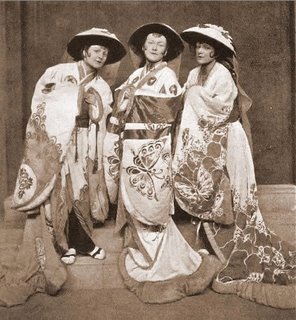
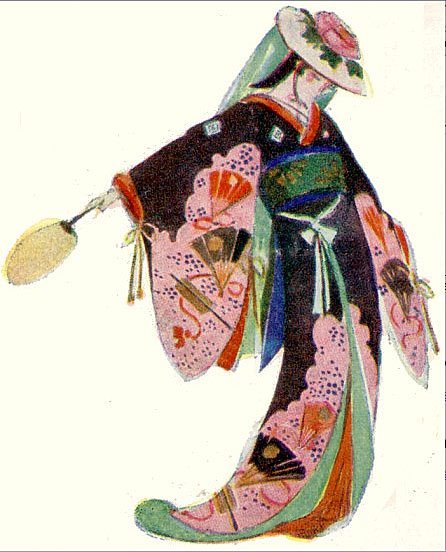
more ricketts mikado costumes


Labels:

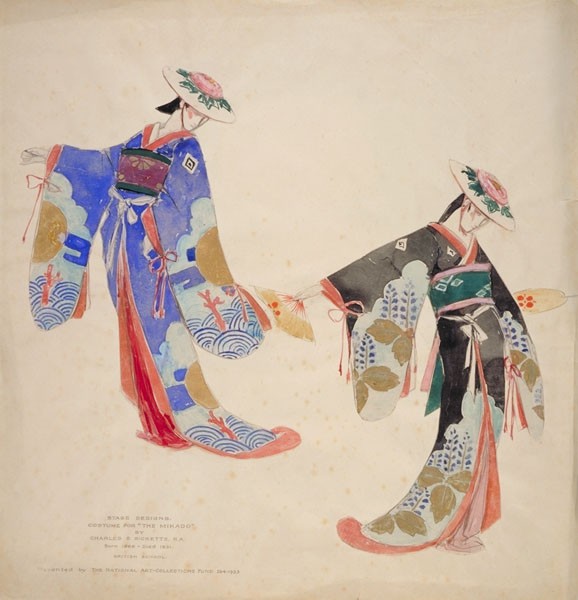
the mikado


while the mikado, 1885, fanned the flames of japonisme, as much as it was itself a flame, it had not dimmed throughout the twentieth century.
the wonderful artist, designer, and maker of books, charles ricketts, designed a whole new costume scheme in the mid-twenties, right about the time when w. russell flint did the breathtaking illustrations.

this is interesting to me because we have entered a different realm here; not sure i know how to talk about it yet, but i'll try: these are not examples of artists being inspired, informed, by the newness of what they're seeing but rather maybe by the novelty. i'm not lumping this in with using women in kimono to sell corsets or whatever; here there are truly artistic results. but it is a place where "the japanese" is "the other" that we can use on "us."

nor am i selling this as politically incorrect. i for one have been grateful most of my life for what the japonisme creators brought into the world. but it is one thing to be moved by something implicit in a culture's culture, and to elaborate upon something external is something else.

it's been called the punch version of japonisme.

Labels: , ,

22 September 2006

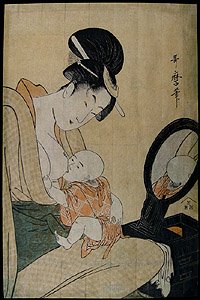
mother and child

by completing an entire series of prints on mothers with their children, utamaro kitagawa, one of mary cassatt's favorite japanese printmakers, gave her permission to do the same. this had not been seen as a valid subject for fine art until this time.

daniel pipes, in a 1992 copy of society magazine, said,


"Outstanding artists directly affected by the wood blocks included Mary Cassatt, Edgar Degas, Théodore Duret, Paul Gaugin, van Gogh, Edouard Manet, Claude Monet, Edvard Munch, Pierre Renoir, and, above all, Henri de Toulouse-Lautrec. Toulouse-Lautrec derived his subject matter directly from Japanese models; his posters of the Parisian demi-monde, for example, resembled Kitagawa Utamaro's courtesans of Tokyo's pleasure quarters. Further, he imitated the Japanese in the heavy use of shadowless pure colors and other elements of design, and in his print-making technique. James Abbott McNeill Whistler had an important role in popularizing Japanese styles in the United States. Impressionists did not shy from crediting Japan. Duret called the Japanese "the first and finest impressionists," while van Gogh dubbed Japanese art 'true religion.'"

Labels: ,

roses in france

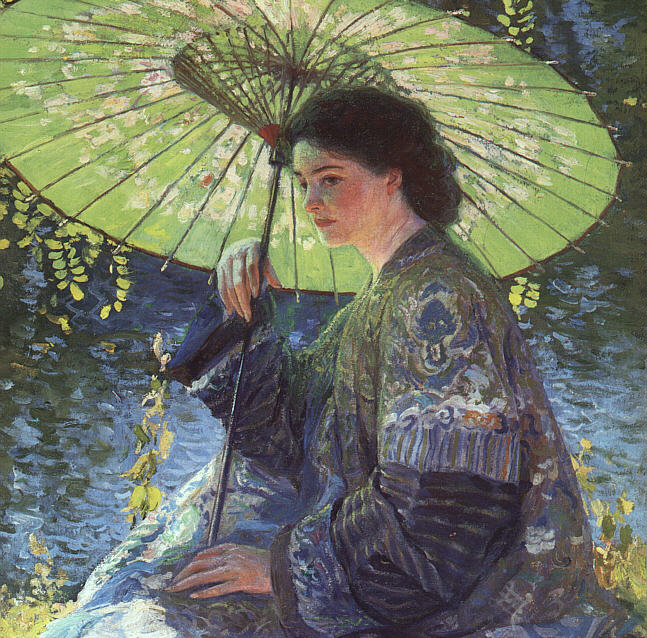
sarah frieseke again, and again by guy rose,
'the green parasol.'


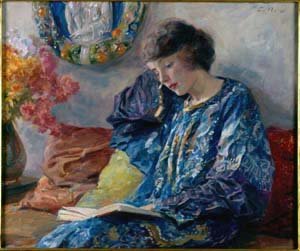
and also by rose, also in giverney, 'marguerite,' wearing the same kimono.

Labels: ,

american impressionists in giverney

guy rose and frederick carl frieseke, both american impressionists, from california and from michigan, loved the kimono and parasol look women were wearing that year. in fact on the french countryside at giverney, where both lived for many years, both painted frieseke's wife one summer afternoon.


("through the vines," frederick carl frieseke"; on the river," guy rose)

Labels: ,

21 September 2006


walter klemm was born in 1883


kono bairei did his series of 100 birds in 1881

Labels: ,

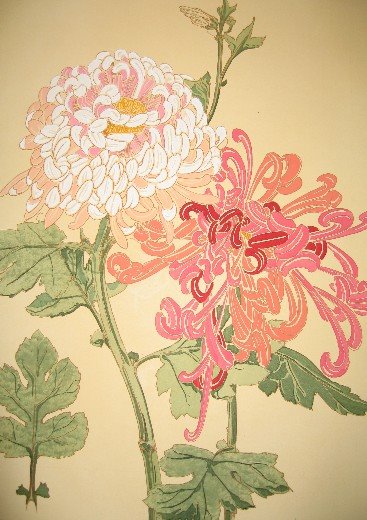
or adoration?


we have keika hasegawa making one of his 100 chrysanthemums prints in 1893 on the left,


and on the right we have eugene seguy making his lithographs of chrysanthemums in 1904.

Labels: , ,

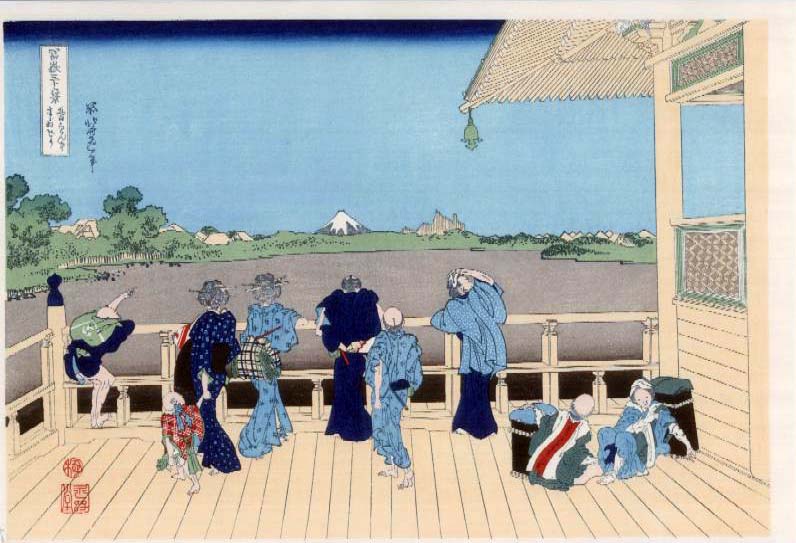
inspiration?

i have selected these two images for a couple of reasons: that this may be the hokusai that whistler saw that inspired his own balcony painting, for one thing, and for another, to note that whistler's painting, in addition to featuring the wearing of kimono, also features a common setting from the japan- ese prints, has it's own little "fuji" in the back- ground (hokusai's is from his '36 views of fuji' series), and has the main figure, in fact most of the company, with her back to the viewer.

Labels: , ,

20 September 2006

japan changes too

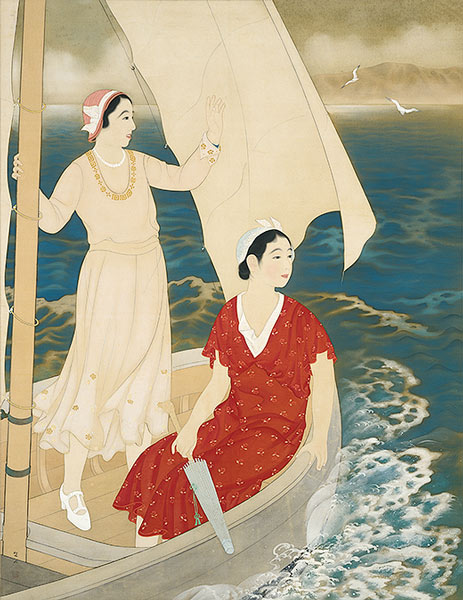
david asked here about the changes that went in the opposite direction. i don't know about that as much, but see that there's an exhibition at boston's mfa that bridges the gap somewhat:

Tradition and Transformation:
Japanese Art 1860-1940

Friday, January 27, 2006 -
Thursday, November 9, 2006


"Immediately following the arrival of Commodore Matthew Perry’s “black ships” in 1853, Japan cast aside its self-imposed isolation from the international community and embarked upon an unprecedented program of modernization. The nation, under the leadership of Emperor Meiji, embraced not only Western social and political institutions but also artistic ones. For some artists however, the pace of change was too sudden and they reasserted the importance of traditional themes and styles. This exhibition in the Japanese Painting Galleries explores the creative tensions that often led to such exciting syntheses of East and West."

this was called the taisho period, and there was an exhibition circulating last year called "taisho chic" the catalogue of which is still available.
(the most images i could find from that show were here. it's a pdf.) i also found a gallery (where i found the above image) that seems to have a number of interesting pieces from this period.

the question was also somewhat addressed here.

(Miki Suizan, Fair Wind, 1933)


Labels: ,

lacquerwork on japonisme blog: pt. 1

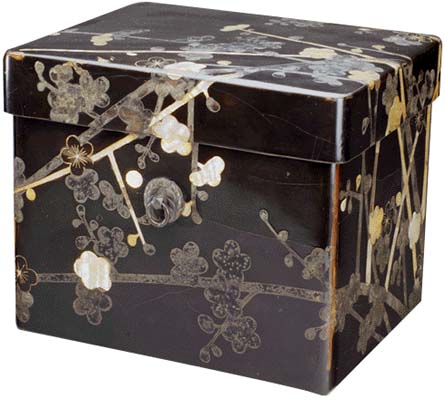
i found this wonderful piece, "a gorgeous [lacquer- work] box by the great Hon'ami Koetsu," on an equally wonderful blog, japanese-arts, which is fascinating, but i hope he finishes it! we will no doubt see this pattern again, in silverwork from france, i presume.

Labels:

newer posts older posts