japonisme

25 April 2009

why are there flowers?

i was in the large waiting room shared by two teams of doctors and a testing lab, reading in a ten year old issue of natural history magazine an article entitled 'why are there flowers?'; the answer, which the magazine clearly thought would shock its readers, was quite obviously sex.
as it is, perhaps, for us humans as well. is it any wonder that we all, men and women alike, admire being, and/or seeing, the flowers? and when the hormones are flooding, we women often feel it of ourselves too: the lightness of purpose and the dance of life.
but most of us women know, or learn sooner or later, that that's not it; gender falls away in the face of substance. we are all quite more, men and women again alike, than the pursuit of the sum of our parts. (i remember suddenly realizing, at the age of three, that all the songs on the radio were love songs. how absurd! i thought.)
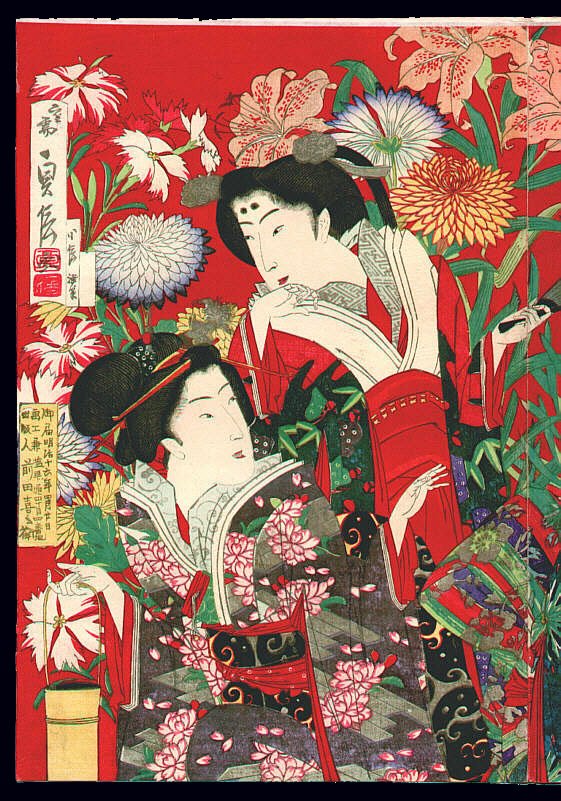
that's why when i come across an image of a woman who is not being portrayed for her loveliness first and foremost, it catches my attention. images of women who are thinking of something, who are complex, who have more knowledge than they are expected to have, sadly, often fall into the categories of dejection or exhaustion. but wait -- is there a glimmer more?
Each cell has a life. There is enough here to please a nation. It is enough that the populace own these goods. Any person, any commonwealth would say of it, “It is good this year that we may plant again and think forward to a harvest. A blight had been forecast and has been cast out.”
Many women are singing together of this: one is in a shoe factory cursing the machine, one is at the aquarium tending a seal, one is dull at the wheel of her Ford, one is at the toll gate collecting, one is tying the cord of a calf in Arizona, one is straddling a cello in Russia,
one is shifting pots on the stove in Egypt, one is painting her bedroom walls moon color, one is dying but remembering a breakfast, one is stretching on her mat in Thailand, one is wiping the ass of her child, one is staring out the window of a train
in the middle of Wyoming and one is anywhere and some are everywhere and all seem to be singing, although some can not sing a note.
Anne Sexton from “In Celebration of My Uterus” from The Complete Poems of Anne Sexton (Boston: Houghton Mifflin, 1981). Copyright © 1981

Labels: , , , , , , , , , , , ,

21 July 2007

famous last words

japanese prints are certainly very interesting, as japanese prints -- in other words as long as they stay in japan.


a people should not appropriate what belongs to another race; in so doing, they are apt to make stupid mistakes.


there would soon be a kind of universal art, without any individual characteristics.

-- renoir 1

Labels: , , , , ,

21 February 2007

lest we forget II

Problems arose for our people almost as soon as we arrived. In 1900, the mayor of San Francisco described us as completely inassimilable. The Issei, who were the first generation of immigrants that came to America had the hardest time fitting into society but began the basis of community that made things easier for each successive generation. When we tried to enter our children into the schools the people of San Francisco feared that we would flood the public schools with ignorant foreigners. In 1905 California newspapers campaigned against our potential threat to public schools calling it, "yellow peril". Both houses of the California legislature passed resolutions calling for the exclusion of our peoples on the grounds that we were unable to assimilate.

Furthermore, in 1908 President Roosevelt meet with Japanese officials to form the Gentlemen’s Agreement. This doctrine called for no new passports to be given to any more of our people outside of those who had already arrived here. This was an attempt to reduce the number of our people allowed to immigrate.

• • •

The U.S economy was in a depression in the beginning of the 1870s, which resulted in job opportunities for our people. So many people hated us because we were taking away numerous jobs from the whites and becoming successful. This hatred is what led to the Chinese Exclusion Act of 1882. Between 1871 and 1880, there were 123,201 of us who migrated to the U.S. As soon as this Act took effect, however, the popularity of Chinese migration dropped drastically. The Act was extended for ten years in 1892 and indefinitely in 1904. In 1943, however, 105 of us were allowed to migrate here because we were a wartime ally of the U.S. when the U.S. declared war on Japan in 1941.

It has been mistaken that all of us Chinese Americans are both physically and culturally the same. We are often mistaken for Vietnamese or Korean Americans, while the Japanese are mistaken for us. We are often thought of as "foreigners" and are seen on television as faceless and not valuing life. Despite the discrimination we face, we strive to work to the best of our ability and, therefore, can be considered quite ambitious. This is how we gained the title of "model minorities."

The first of our people who were workers were referred to as "coolies," "heathen," "mice-eaters," and "Chinks." In the 1860s and 1870s, feelings of hatred toward us were felt in union policies, political platforms, and in the press.

from Asian Immigration to the United States Presentation


what really is the topper for me is the style that was used to make these posters. sometimes it's called admiration. sometimes it's called looting.

Labels:

12 January 2007

lest we forget


In 1885, King Leopold II declared the Congo Free State (as large as the whole of Europe) to be his personal fiefdom and set about enriching himself and Belgium in earnest. In 1887, Scottish surgeon J B Dunlop used rubber for constructing inflatable tubes for bicycles and the demand for rubber grew sharply. The motor car was also becoming popular and Leopold sought to provide the rubber for the tyres. Leopold issued a decree in 1891 giving himself the monopoly on the trade in rubber and ivory. The same decree obliged natives to supply these products without payment. Those who refused or failed to supply enough had their villages burned down, their children murdered and their hands cut off, even if dead, as proof to the Belgian masters.1

Labels:

06 December 2006

change & exchange

No great artist ever sees things as they really are. If he did, he would cease to be an artist. Take an example from our own day. I know that you are fond of Japanese things. Now, do you really imagine that the Japanese people, as they are presented to us in art, have any existence? If you do, you have never understood Japanese art at all. The Japanese people are the deliberate self-conscious creation of certain individual artists. If you set a picture by Hokusai, or Hokkei, or any of the great native painters, beside a real Japanese gentleman or lady, you will see that there is not the slightest resemblance between them. The actual people who live in Japan are not unlike the general run of English people; that is to say, they are extremely commonplace, and have nothing curious or extraordinary about them.

In fact the whole of Japan is a pure invention. There is no such country, there are no such people. One of our most charming painters [whistler] went recently to the Land of the Chrysanthemum in the foolish hope of seeing the Japanese. All he saw, all he had the chance of painting, were a few lanterns and some fans. He was quite unable to discover the inhabitants, as his delightful exhibition at Messrs. Dowdeswell's Gallery showed only too well. He did not know that the Japanese people are, as I have said, simply a mode of style, an exquisite fancy of art. And so, if you desire to see a Japanese effect, you will not behave like a tourist and go to Tokio. On the contrary, you will stay at home and steep yourself in the work of certain Japanese artists, and then, when you have absorbed the spirit of their style, and caught their imaginative manner of vision, you will go some afternoon and sit in the Park or stroll down Piccadilly, and if you cannot see an absolutely Japanese effect there, you will not see it anywhere.
Oscar Wilde (1882)

Japan is more than just fancy but Wilde's senti- ments capture the mystique that surrounds the subject. When Americans first learned about Japan in the mid-19th century, it must have seemed a very peculiar place indeed. Nearly everything about the Japanese culture and lifestyle was a novelty and a complete enigma. Travelers to Japan, both then and now, attempted to discover the things which made Japan tick. Edward Said wrote in his book Orientalism that westerners have perceived the Orient through generations of enduring stereotype and even today there is an abundant literature by supposed experts on how to understand Japan and its people.*
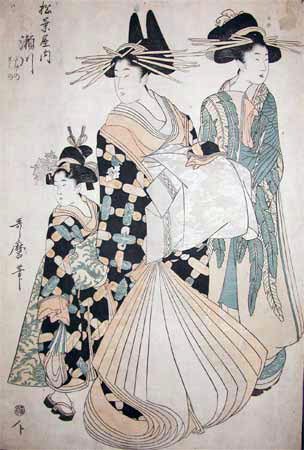
"I feel an irresistible desire to wander, and go to Japan, where I will pass my youth, sitting under an almond tree, drinking almond tea out of a blue cup, and looking at a landscape without perspective" - Oscar Wilde (1882)

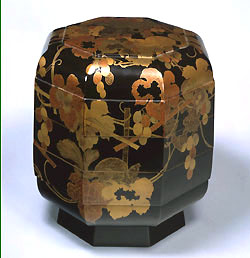
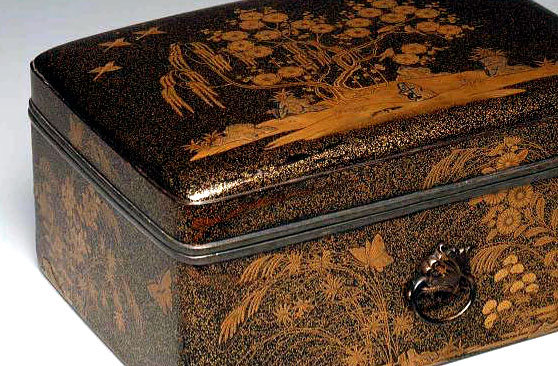
another tricky thing is.... even the "experts" nowadays can't tell, apparently, what the japanese made for themselves, and what they made strictly for expert. not just in prints, but in crafts as well, much of what we see in the aesthetic movement are reflections of japanese crafts that were designed specifically, and exclusively, for western markets.


we are fortunate, if we like this stuff. companies such as bradbury & bradbury have made many original wallpapers available again, beautifully. other companies as well are

reproducing papers, fabrics, furniture, and then, of course, there are the antiques. much is accessible through arts & crafts home.

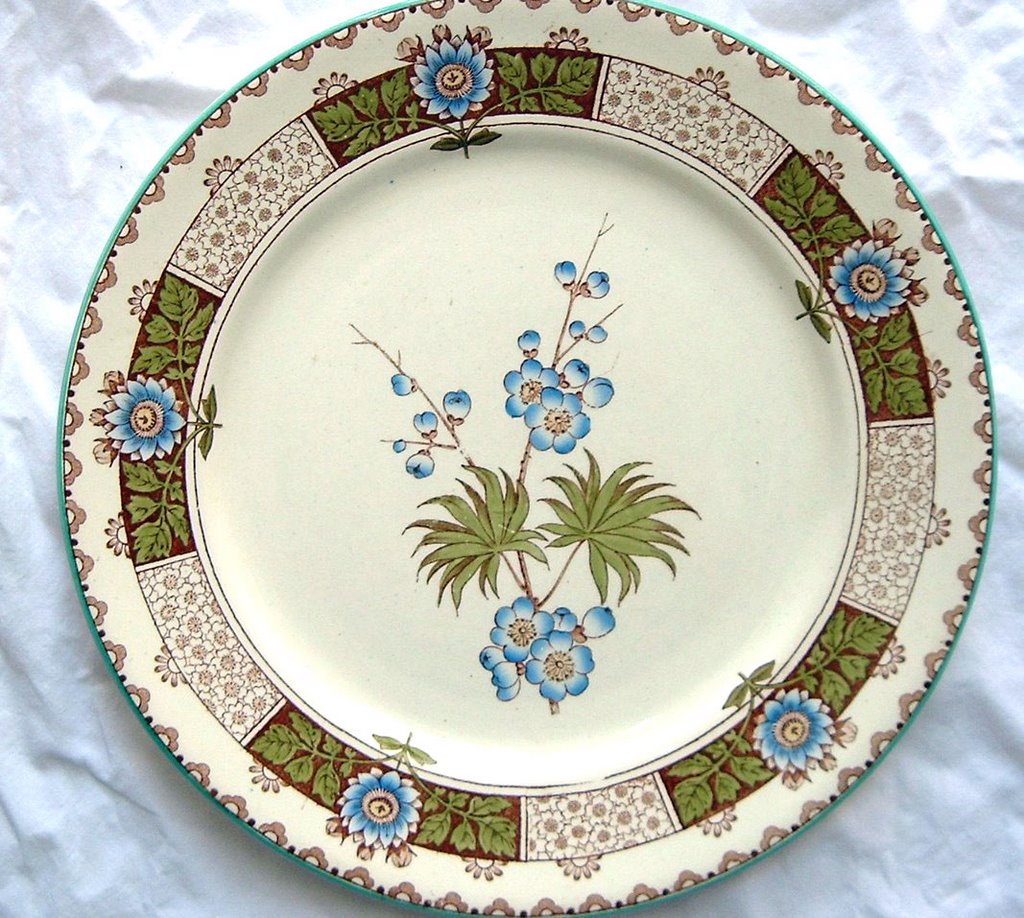
the upper right image is a godwin upholstery design for liberty & co., below it is a b & b wallpaper sample; the plates examples are wedgewood. even the most sophisticated of travellers still found it difficult to remember that china and japan were quite distinct nations. therefore, you saw "chinoiserie" china patterns named mikado.

Labels: , , , , ,

03 December 2006

of clothing, change & illusion

It is with the delicious surprise of the first journey through Japanese streets--unable to make one's kuruma-runner understand anything but gestures, frantic gestures to roll on anywhere, everywhere, since all is unspeakably pleasurable and new--that one first receives the real sensation of being in the Orient, in this Far East so much read of, so long dreamed of, yet, as the eyes bear witness, heretofore all unknown.

There is a romance even in the first full consciousness of this rather commonplace fact; but for me this consciousness is transfigured inexpressibly by the divine beauty of the day. There is some charm unutterable in the morning air, cool with the coolness of Japanese spring and wind-waves from the snowy cone of Fuji; a charm perhaps due rather to softest lucidity than to any positive tone--an atmospheric limpidity extraordinary, with only a suggestion of blue in it, through which the most distant objects appear focused with amazing sharpness.

The sun is only pleasantly warm; the jinricksha, or kuruma, is the most cosy little vehicle imaginable; and the street-vistas, as seen above the dancing white mushroom-shaped hat of my sandalled runner, have an allurement of which I fancy that I could never weary.

Elfish everything seems; for everything as well as everybody is small, and queer, and mysterious: the little houses under their blue roofs, the little shop-fronts hung with blue, and the smiling little people in their blue costumes. The illusion is only broken by the occasional passing of a tall foreigner, and by divers shop-signs bearing announcements in absurd attempts at English.

Nevertheless such discords only serve to emphasise reality; they never materially lessen the fascination of the funny little streets.

lafcadio hearn, 1891
how does that jibe with: "with lightning intensity, japan entered the modern era. clans were abolished in 1871; a railroad was opened... in 1872. ...in 1877 , telephones were first used..."1 development occurred in everything from the novel to bicameral government, to the development, as we have seen, of universities, sciences, warfare, much that the japanese felt the west had to teach.

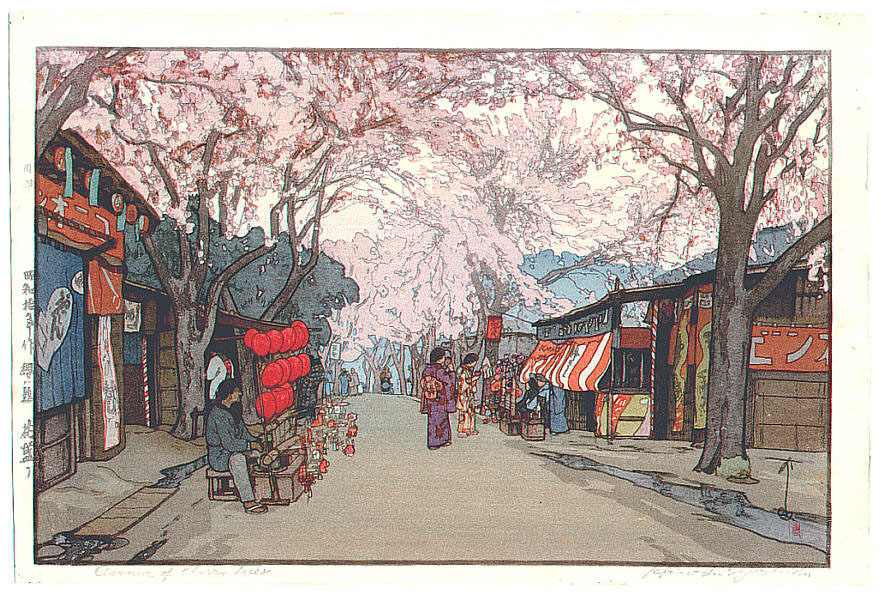
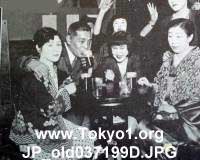
how does yoshida hiroshi's lovely view of a cherry-blossoming japan's women jibe with photos of how women really looked in 1935, when that print was made?


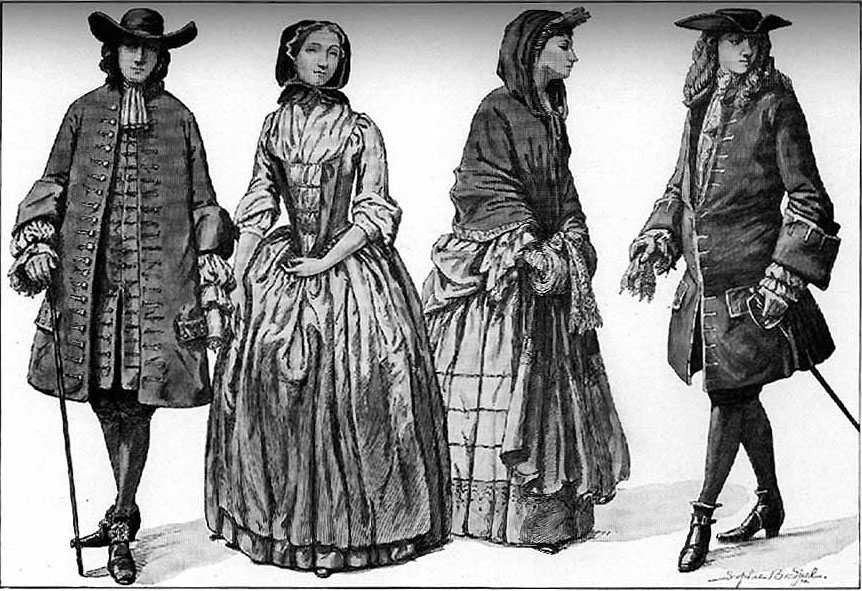
and lastly.... it's true, that in the 1600s, when the japanese cut off contact with the outside world, western women were wearing dresses. unfor- tunately, so were the men.

if the west had been isolationist for nearly 250 years, what would we have been wearing in 1853 when another culture sailed in and broke up our isolation?

no, i don't think hearn set out to mislead, i'd more suggest rosy-colored glasses. and yoshida only sought to sell his work: the producers of shin hanga realized no one really wanted to buy images of japan how it was beginning to look: they wanted to buy the fantasy. perhaps we still do.

1. joseph kestner, university of tulsa

Labels: , ,

30 November 2006

i just want to say....

...that there are many things to be learned here, some of which i'd just as soon never have learned. part of it may have been what led americans to put us citizens into "interrment camps" during the second world war: while we relished many of the gifts of the japanese, many of her first western visitors in over 200 years did not see the japanese as people. certainly not as equals.

"they" were either "toys" (being so little when compared to many westerners), erotic playthings (what else to think of a culture of "heathens" where sex is not a sin, and where the women of highest education and stature were the courtesans), or simply curiosities.

"conquerers" have always done that of those they seem to "better." blacks were only "part of a person--was it 5/8?-- in america for how long? women didn't have souls in many cultures.

maybe the japanese had traits that distinguished them from other cultures--what culture doesn't? but just as the octopus is only two chromosomes away from humans (or whatever), every single human on the planet has so overwhelmingly more in common than different that the difference is a trifle, even if it's a trifle that intriques, terrifies, and delights.

we can talk all we want about xenophobia being genetically coded in all of us, but on a practical basis, since refrigeration has been invented, functioning on that level only leads to war.

and i hate to give it up too! the idea of a people all luxe, calme, et volupte, skilled at things like tea, and flower-arranging, and empowering beauty above all things is a lovely fantasy. and ignored the humans for the humans they were.

Labels:

01 November 2006

she stoops to conquer?

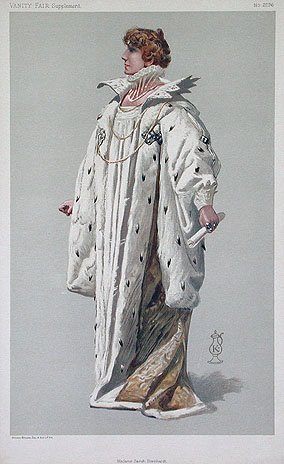
david wondered at the artists of the day portraying dancers, loie fuller, josephine baker, in so much artwork. so what else is new? these are the superstars, the sex-goddesses. it was always thus. and here we are again with sarah bernhardt. and courtesans, the more combs and layers the better. whom other do we have without tv and rock videos?

some fascinating differences that i noticed, though. it was difficult to find any image of sarah bernhardt without her head held high. pride? arrogance? i think we'd probably be surprised to find her bowed.

but we find the geisha, the bijin, the courtesan-poets almost no other way.

beautiful woman in the west stands tall and smiles. beautiful woman in the east does neither. does this legacy hold? i doubt it. but this is what the artists recorded for several centuries in japan. it's hard for me to see it except through western eyes. what does it mean?

Labels: , , , , , ,

15 October 2006

it's rarely a narrative

i realize that i've been somehow trying to make this into a narrative (much as i tend to do with my own life), and, like my life, it just isn't. so this blog now becomes randomized. there's just so much, so much beauty, so much irony, so much of dreadful interest, that to try to make it orderly is to create a deceit. it's complex and complicated and redundant and contradictory, and so it is. when, if, connections appear i'll do my best to notice. feel free, if you notice, to let us know.

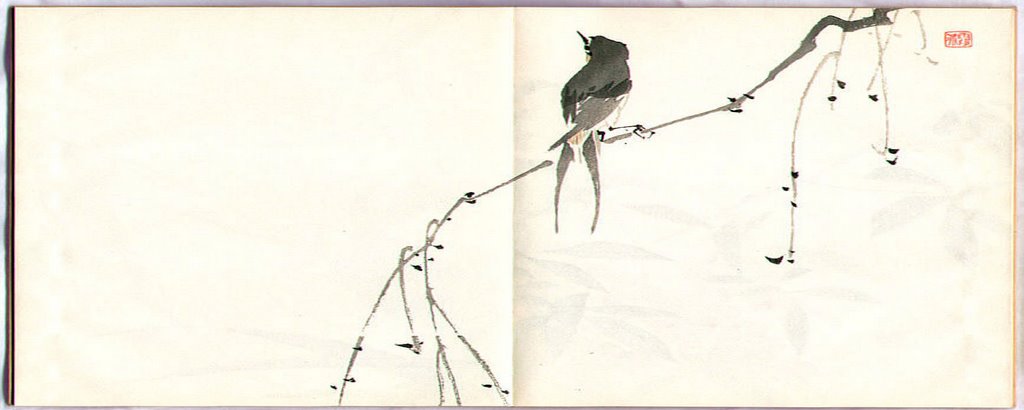
in 'international arts and crafts,' by livingstone and parry, a 1898 review from 'house beautiful' is quoted as saying, "the japanese have taught us much, but nothing more clearly perhaps than that beauty does not depend upon intricacy or elaborateness of design and ornamentation."


the article, however, was comparing grueby pottery, seeing it as 'japanesque,' and grueby pottery is simple, as was much pottery coming from japan. it still is.


but not all of it was, as you can see.


nor were many of the prints any more simple than what was happening in the west, as the japanese print and the american magazine cover from the same time period illustrate.


not to mention that that which was called 'japonesque' was often far from simple.


mystification, again. the west needed something simple--freedom from the clutter of the victorian era, distance from the clamor of the industrial age--and japan was just different enough, just unknown enough, to use to fill that bill.


Emile Galle
"Alla Japonica", 1900

Labels: , , ,

26 September 2006

japonisme kitch

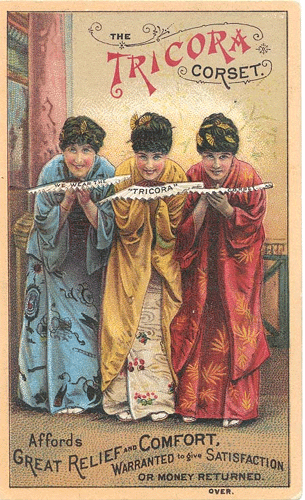
from the ephemera society, "With the opening of Japan to trade in 1854, the American market was flooded with goods from the Far East. Later on, exhibits of Japanese goods at the Centennial Exhibition in 1876 in Philadelphia and the success of Gilbert and Sullivan’s operetta The Mikado as well as New York’s exhibit The Japanese Village, both in 1885, exposed more Americans to Japanese wares and design.
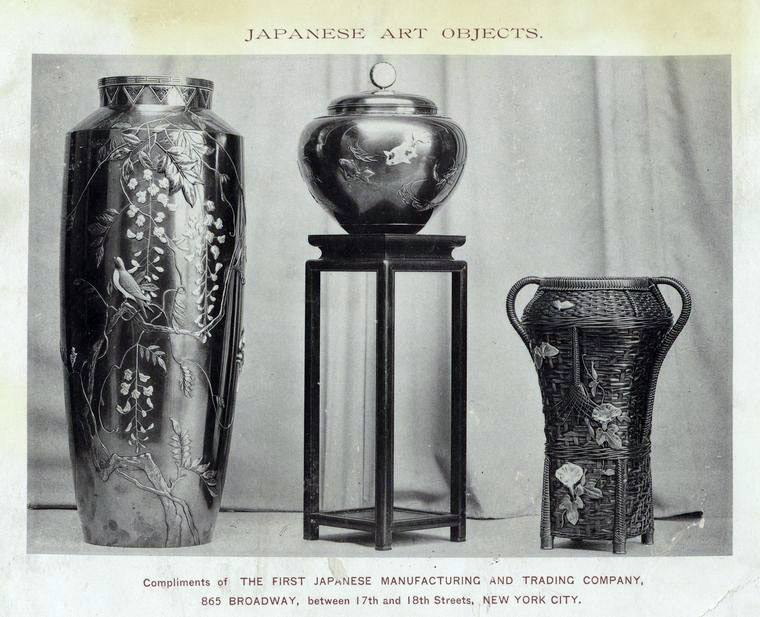

Japanese novelty stores in major cities in the 1870s made goods
more accessible and cheaper for customers. American companies
also incorporated Japanese imagery in their advertising to cash
in on the craze.

This selection of trade cards shows a wide variety of products being advertised, using Japanesque illustration and characters."

[at least in neither of these has the artist tried to make the women look japanese. we were no better at making the japanese look japanese that the japanese are at making americans look american. 'nother topic... later....]

in an interview with kimi kodani hill, granddaughter of chiura obata, a well-known artist from this period, she said, "Now, as you know the 1910's, 1920's, the blatant prejudice shown against the Japanese community was something that all the Japanese- American community had to deal with. And my grandparents were no exception. My grandfather, obata, had physical encounters on the streets of San Francisco because he'd be walking down the street and he'd be hit or attacked or spat upon simply because of his ethnicity. And yet ironically at the same time there was this interest in japonisme or the 'Oriental Arts,' and stores like Gump's and the City of Paris all commissioned him to decorate their Oriental rooms to sell their Asian arts."

Labels:

older posts