japonisme

21 May 2011

the style that dare not speak its name

one studies in order to learn new things but, as any researcher will tell you, you are more likely to come away far more aware of how much you don't know. what i thought i knew: 1. what items from the aesthetic movement looked like; 2. when the aesthetic movement was; and 3. who were its biggest names. i was right about the names.

as for the rest, i currently have over a foot of books, piled on top of each other, on my desk, about twenty-five windows open in my browser (don't you love it?), and if i'm getting a clue, it's only the sweet whisper of one.


what i thought aesthetic movement china looked like (in their japonisme) was almost like collages, little overlapping stamps on an international letter, with extraneous flowery or fan-shaped decorations, and probably a couple of birds. you could find it all, in fewer colors, in the lacquers from japan which were their inspiration.

okay, but there's the rub, and it gets complicated. yes, i could, i have, show you perfect examples. so let's see if i can say this in a comprehensible manner. well, first let's say that the images on the right are by christopher dresser, and on the left are examples from one of the series in the lambert-rousseau dinner- wear (see more here).

the images of japanese goods with which i could illustrate the correspondences may very well have been made after the works they were supposed to have inspired. seems i have not paid close enough attention to dates. even more convoluted are the facts that many of these very designers began visiting japan, not only to study, but to set up with artisans in japan to produce for export good which looked like they might have inspired the japonisme wares being sold in the west! bing insisted on it.

now, christopher dresser is definitely one of those names. and yes, his designs, particularly as seen in the plate to the right, match the image i had in my head for 'aesthetic.' so, though, do the images on the left, but those designers do not appear on my lists. but here's another problem. the chronology i've always understood of all this was that the aesthetic movement followed very quickly on the tails of the arrival of japanese goods in the west, the 1850s to the 1860s, yet all of these are from the late 1880s! why do you people keep coming here when i clearly know nothing!

granted, dresser was quick out the gate, getting very involved with learning about, and writing about, during the 1860s, but that ends up seeming less germinal to this discussion than to understand what the aesthetic movement really is; hint: those little fans are only an emblem, an honorarium, a fad.

whomever you credit with beginning the era, ruskin, morris, or a number of others competing for primogenitor status, what it boils down to, in my opinion, is yet a number of new faces with the real name of japonisme. (but don't tell the pre-raphaelites.)


i will grant you, it had a different name in every country where it occurred, accompanied by what were very distinguishable national differences. but whether it's the desire for handmade, simple goods, or a cult of nature, or a new understanding of space, line and color, it all began with one catalyst: japan.

Labels: , , , , ,

12 May 2007

i can see clearly now....

i was having a discussion the other day with someone about the astonishing amount of material online nowadays (just think of all that sheet music!). he said that pretty soon books will be out-of-date.

well, i have a lot of books on this subject.... i started to say... and he inter- rupted: and you never use them anymore, right?

not right! it drives me crazy how much stuff is in these books that is simply not online yet--i sometimes search for hours. sometimes i get lucky, sometimes not so much.

the thing i was hunting for today: in my bible, 'japon- isme,' by sigfried wichmann, referenced is a book, or collection of books, from the early 1800s. they are quite literally handbooks of japanese horticulture.

when all the other japanese influences were arriving on western shores, botany was as well (see the posters above for advertisements for horticultural expositions at the world's fairs),


and when you see these simple drawings alongside the glass creations from nancy, the galle and the daums.... and the baccarat, and the others you see here, the designs of the plants and flowers are as much copies as were the van gogh geisha. i have tried my best to give you an idea from what i could find, but that sound you hear is me grinding my teeth.

Labels: , , , , ,

29 November 2006

from china to paradise

one thing i haven't yet gotten into all that much is the fact that china started it.

i think calligraphy, writing, is at the base of design. in the west the alphabet grew, over the centuries, more and more straight-lined; in the east, it grew less so. yes, japan changed the lines of the chinese arts, crafts, religion, etc. as much as did the french, for example, when the line crossed the continent. perhaps, the japanese loosened it even further, and the french found some middle-ground.

well, i'm getting way off the point here. i could talk about aryan nature religions entering into china, then proceeding into japan.... in any case, and however one explains it, that is the route it took.

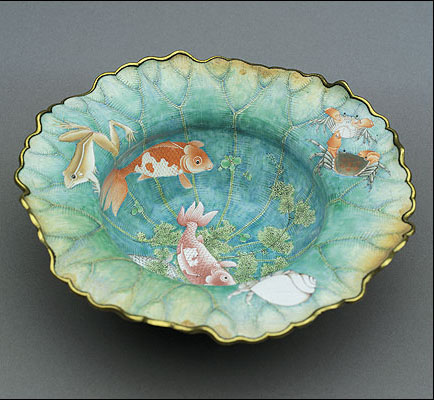
when i was in tokyo, i went to the tokyo national museum (whose website features some incredible treasures), and i saw one imari ware plate, with lotus and herons, that looked to me like "the missing link." it really did look like it was halfway between the japanese ceramics i was seeing around me, and what i'd seen of art nouveau. (sorry i can't reproduce it--the photo in my book isn't good, and the museum website seems to be down).

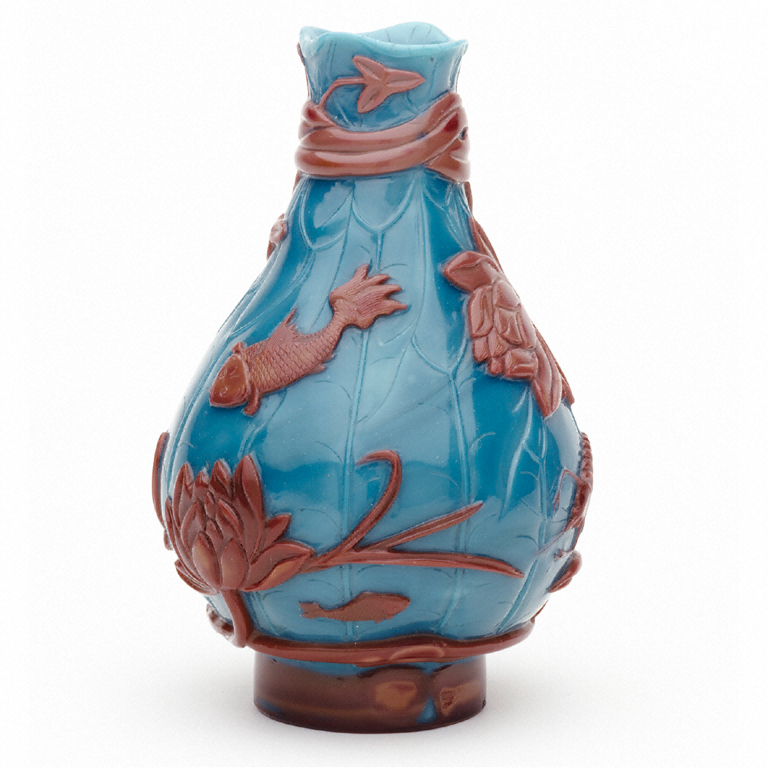
i felt the same way when i was looking through a book from the library and saw this vase from the 1700s--an example of 'peking glass.' this was chinese! (it's currently at the victoria and albert museum.)

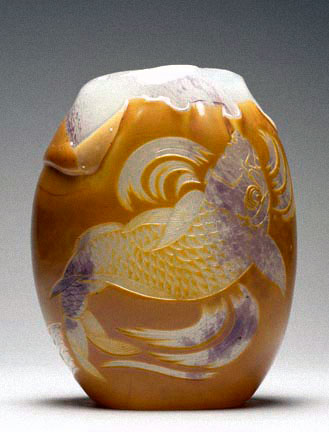
the extra- ordinary 'cameo glass' vase is about as 'art nouveau' as it gets, but doesn't it now begin to look less 'nouveau' when you see it in context? it's by eugene rousseau, and it's from about 1880.


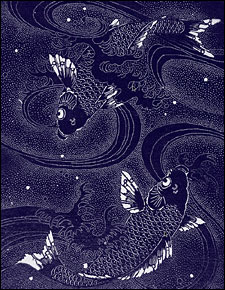
during the meiji period (1868-1912), stencils like this were used in the making of kimono fabric in japan. An exhibit is running from oct. 19 to 20 jan. 2007 at the maison de la culture du japon in paris. (via nathako )


this charming print by hiroshi yoshida is from 1926


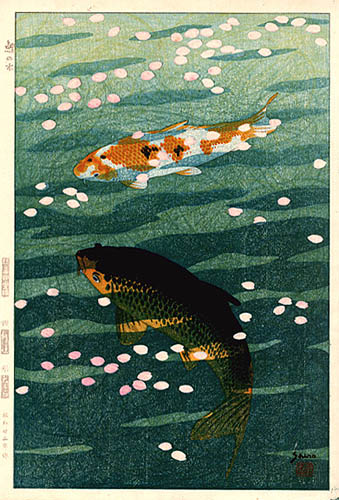
and this one, by shiro kasamatsu, is from 1957!


and this book is from some time in-between!


and the one at the top? china. qing dynasty -- that's sometime between 1736 and 1795.

Labels: , , , ,

older posts