bamboozled?
 as a quiet, ubiquitous symbol, the bamboo has featured in japonisme wherever it occurred. whether it's pictured, or used, or imitated (silver bamboo handles, for example), it has become an instant communication of the east.
 it's interesting, however, to look into its usage in japan itself. where it's found, or wherever i was able to find it anyway, wasn't necessarily where i had expected.
 yes, it can be found on kimono textiles, and on crafts, like the inro.
in the west there were few instances of crafts where it wasn't used. it's irresistible because it's so graceful, so simple, so emblematic of all that we had accepted the east to be.
 in japanese prints, however, there seem to be unexplained limits to it's usage: we will see it, again, as a pattern on kimono.
and, as we've seen before, one might find bamboo in a book of style suggestions.

 we will also see it as part of a kabuki backdrop, and it's always used to geographically
place tigers.

but, it seems, and as far as i could find, picturing bamboo groves or forests almost never existed until late in the 19th century. this one hokusai image is the only one i could find. compare their frequency to that of pines.
 the yoshida's, father and son, loved them, as did many other artists on into the twentieth century. i can not only find no reason for this, but not even any mention of it.
 now this is not to suggest that the bamboo is not beloved in japan. in fact, The sound of the wind in this bamboo forest has been voted as one of 'one hundred must-be-preserved sounds of Japan' by the Japanese government. 1
but although hiroshige did use bamboo's wonderful verticality to accompany the flight of a bird (a sparrow), as did others, the forests and groves were rarely seen.
 as 'meaningless,' and quite lovely decoration, though, it could be found in droves throughout europe and the americas.

may we be reassured that these appearances reflected our passion for the illusions we'd formed of japan?

and if so, were these illusions perpetrated by the japanese themselves, or by us?
 and, at last, does it matter at all? fashion is as fluid as the wind; listen, you can hear it now. it's a sound which must be protected.
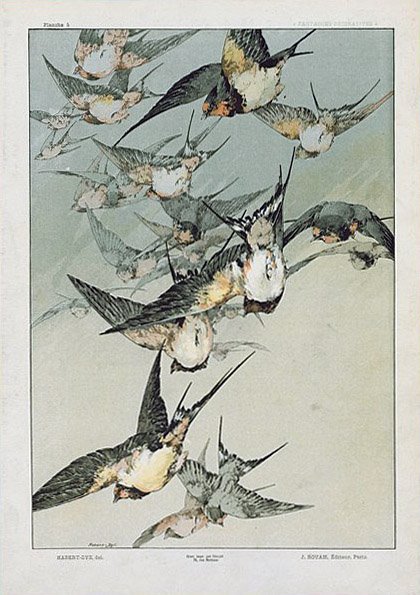
 instead, gratitude is a fine option. thank you to tiffany. thank you to rookwood. gratitude to habert-dys. thank you to heintz.
 translation is an odd art. what appears to be literal can really only be approx- imate, romanticized, inspirational.
 which is quite acceptable.
 as 'meaningless,' and quite lovely decoration, though, it could be found in droves throughout europe and the americas.
may we be reassured that these appearances reflected our passion for the illusions we'd formed of japan?

and if so, were these illusions perpetrated by the japanese themselves, or by us?
 and, at last, does it matter at all? fashion is as fluid as the wind; listen, you can hear it now. it's a sound which must be protected.
 instead, gratitude is a fine option. thank you to tiffany. thank you to rookwood. gratitude to habert-dys. thank you to heintz.
 translation is an odd art. what appears to be literal can really only be approx- imate, romanticized, inspirational.
 which is quite acceptable.
Labels: habert-dys, hiroshi yoshida, hiroshige ando, hokusai, kohn, Kunisada Utagawa, kunitero, louis comfort tiffany, Ôoka Shunboku, otto heintz, rookwood, utagawa yoshikazu, xaudaro, zeshin sabata
posted by lotusgreen at 12:17 PM
2 comments