santo kyoden
 i realized that i couldn't just be done with this guy: he was too fascinating. let me show you some of the things people write about him:
*SANTŌ Kyōden (1761-1816) was a popular writer of gesaku fiction in late eighteenth century Edo. He wrote in many genres of popular fiction, including kibyōshi (satiric picture books), sharebon (witty books about fashion), kokkeibon (comic fiction), hanashibon (humorous books), gōkan (bound picture books), and yomihon (reading books). He also was known as an illustrator, artist, poet, and collector of antiques.1
Santo Kyoden, was a multitalented artist of the Edo period (1603–1867). Kyoden, whose activities crossed media boundaries, was successful as an ukiyoe painter, writer of popular novels and designer.
Kyoden was born in 1761 in Fukagawa Kibacho, Edo (Tokyo). His real name was Iwase Samuru. At the age of 15, he became an apprentice of leading ukiyoe artist Kitao Shigemasa, and renamed himself Kitao Masanobu. A precocious genius, Masanobu became one of the best three ukiyoe artists of that time in just five years.
At the time, various forms of popular literature, generically termed gesaku, or popular books, were in fashion. The gesaku genres included: sharebon, literally translated as “witty books,” which told stories about life in the red-light district; kibyoshi, or yellow backs, which were illustrated, satirical books for adults; and gokan, or books of illustrated long stories, often of a moralistic nature.
Kyoden started out illustrating for kibyoshi, however, by the time he was 20, he had begun to write stories of his own and these would become very popular. At first, writing remained a sideline, but the weight of work gradually shifted from that of illustrator to writer.
In 1785, when he was 24, Kyoden was already a successful kibyoshi writer, but upon venturing into writing sharebon, he became the leading author in that genre. When he was at the peak of his writing career, the Kansei Reforms were initiated by the Tokugawa shogunate, and kibyoshi and sharebon became subject to regulation as publications liable to corrupt public morals. Under the new laws, Kyoden was arrested and detained for 50 days by the authorities. Deciding it was not worth the bother, Kyoden quit writing sharebon and opened a store selling tobacco pouches in Ginza. His artistic genius was expressed again in the new business. To promote his products, Kyoden made advertising flyers, in which he used to wrap his tobacco pouches. The promotion was highly successful. Customers bought the products to see the flyer filled with the art and the taste of the designer. Kyoden's other area of expertise thus became well known.
There is no other artist/writer in the Edo period that was as versatile and multitalented as Kyoden. He died in 1816 at the age of 55. He is said to have been enthusiastic about creative art until his death.2
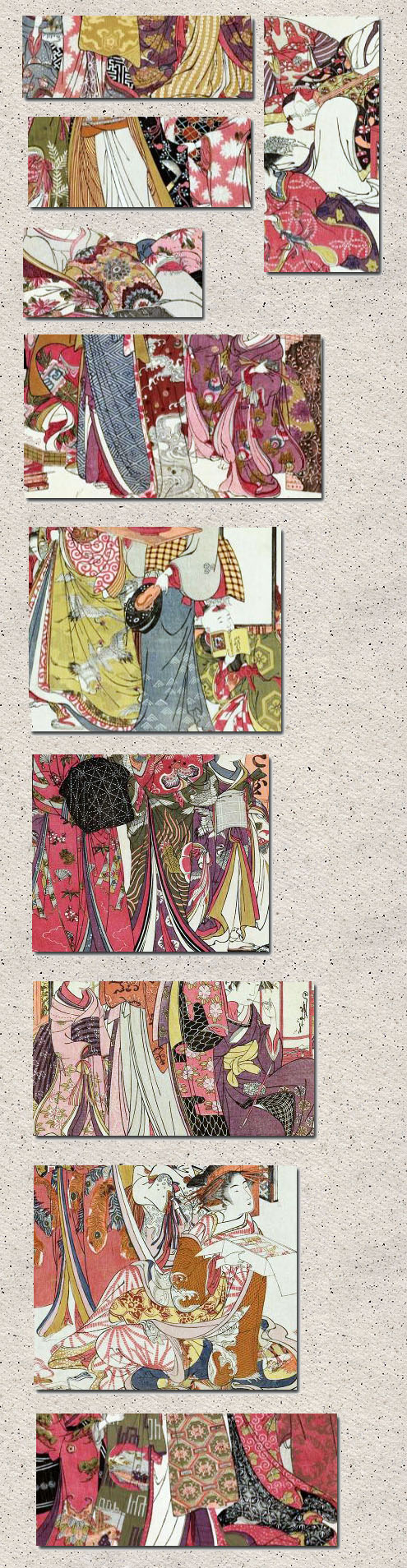
harvard professor adam l. kern's pdf introductions to his new book on the origins of manga can be found here and here; they contain fascinating and amusing insights, perspectives, into santo kyoden's career and life. and utamaro features him (lower left), in his own element, even in his own style.
Labels: santo kyoden, Utamaro Kitagawa
posted by lotusgreen at 9:14 AM
0 comments