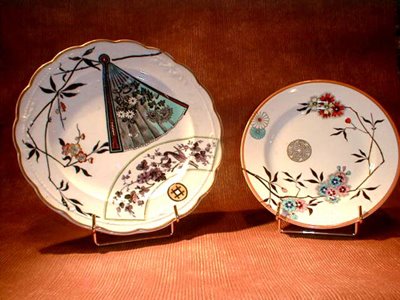
rookwood


posted by lotusgreen at 8:56 PM
0 comments


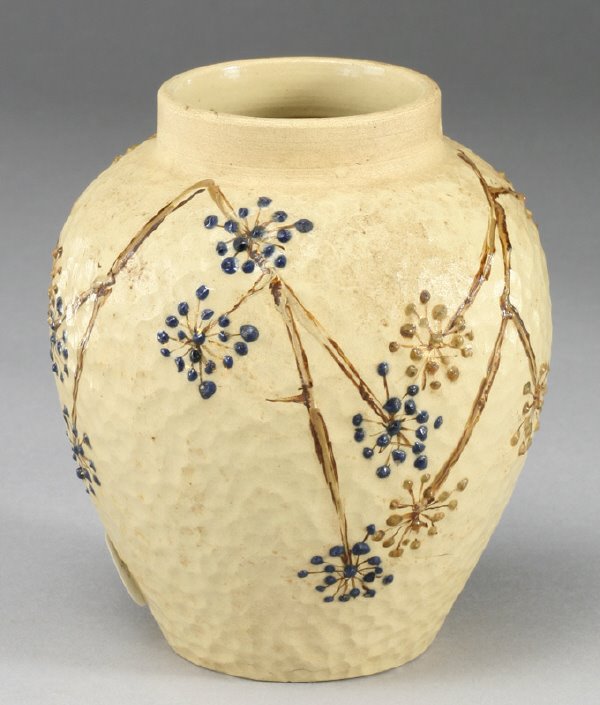
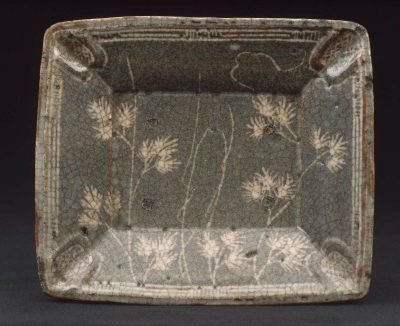 each of these pieces of pottery are listed with their provenance as saying:
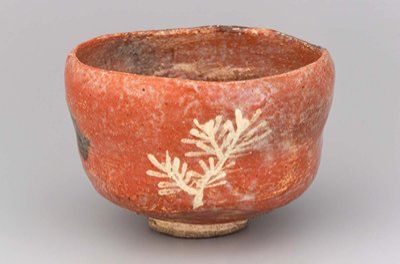 shellmound along with the brachiopods, eventually collected, classified, and catalogued over 5,000 ceramic items during his visits to japan. he became known as “the father of japanese archaeology.”
 that in fact the japanese themselves did not collect or value this work. morse purused the entire country, explored sheds with piles of the stuff in the cobwebby corners, awaiting trash day, and began to notice the different techniques in different parts of the country.
Labels: edward morse
posted by lotusgreen at 6:30 PM
0 comments
 edward morse got into a lot of trouble as a kid. he was thrown out of every school he attended, and occasionally punished harshly in the process when he, for instance, carved up his desk.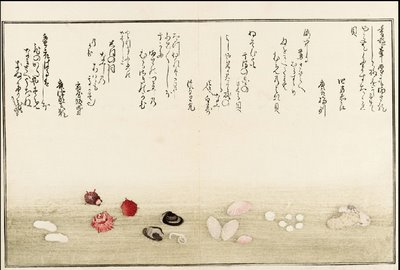
Labels: edward morse, Utamaro Kitagawa
posted by lotusgreen at 10:24 AM
0 comments
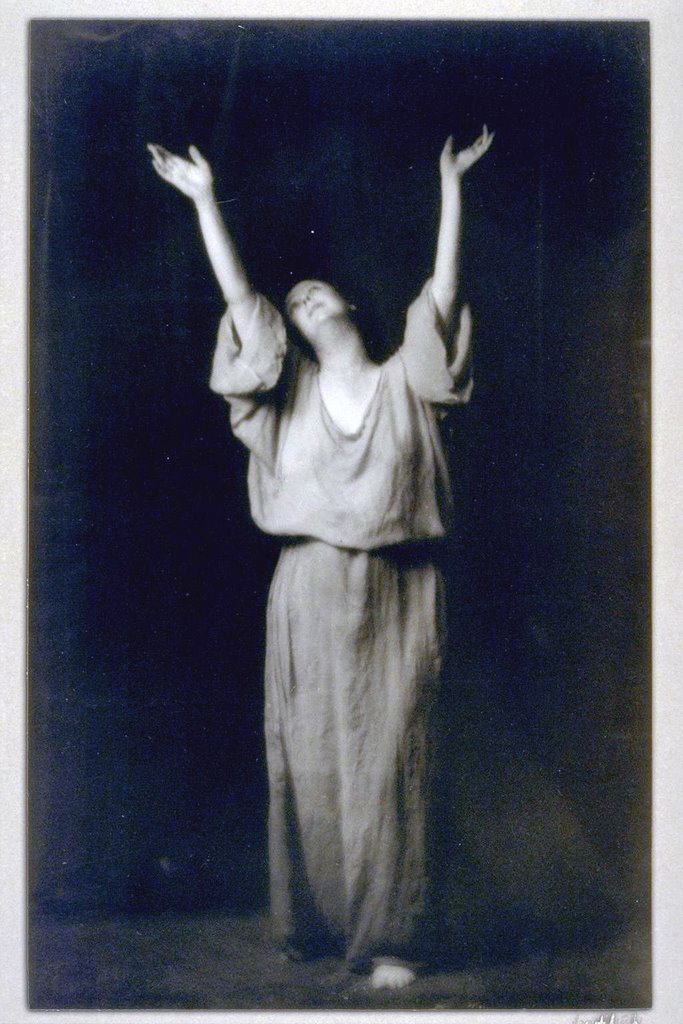
Labels: dance, fashion, isadora duncan
posted by lotusgreen at 2:08 PM
0 comments
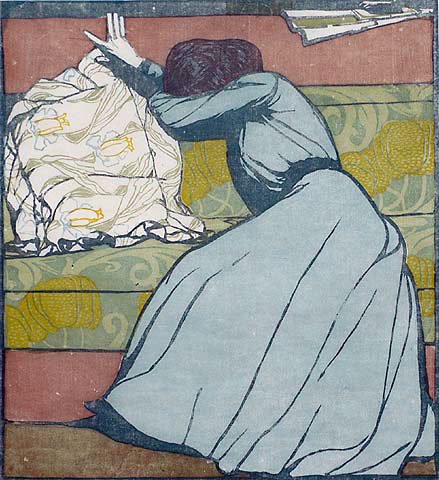 max kurzweil, a founding member of the vienna secession, lived a charmed life, filled with love, sunlight, and the sparkling waves. though he may have been outshone by his fellows (klimt, moser), he was an enthusiastic contributor to the movement's journal ver sacrum (sacred spring), loved teaching as well as being a father.
 kanae yamamoto was an innovator as well, being a pioneer in the sodaku hanga movement in which unlike the generations before him, the artist himself carried out the whole process of creating the prints, from cutting the wood to doing the printing. he also joined with others in the movement to start their own magazine, hosun (little things).
Labels: kanae yamamoto, max kurzweil
posted by lotusgreen at 9:08 AM
2 comments
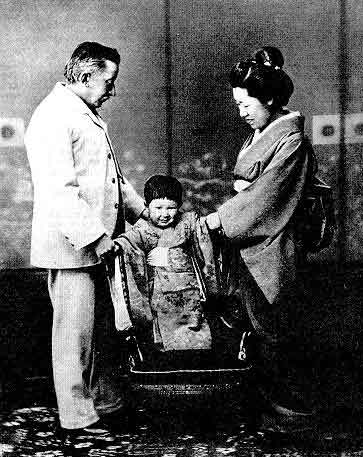 "Because people cannot see the color of words, the tints of words, the secret ghostly motion of words;
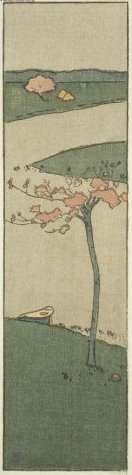 would accuse Hearn of exoticizing Japan, but as the man who offered the West some of its first glimpses into pre-industrial and Meiji Era Japan, his work still offers valuable insight today." (from wikipedia)
Labels: arthur wesley dow, lafcadio hearn
posted by lotusgreen at 6:53 PM
0 comments
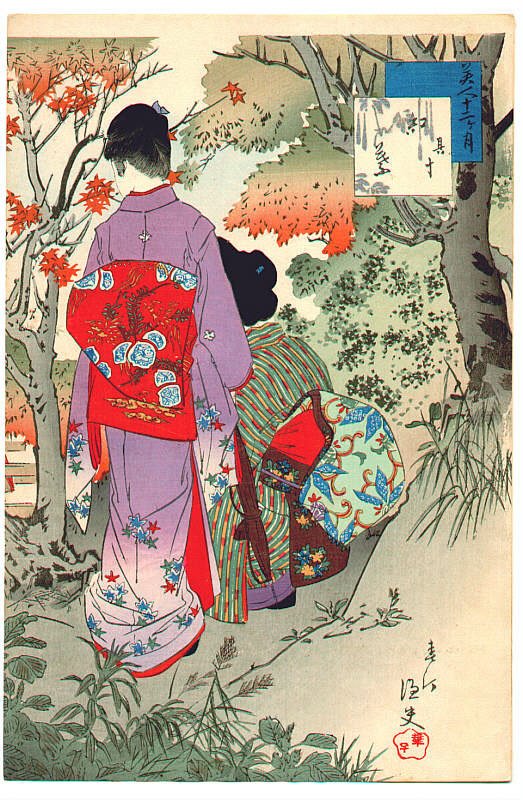 one thing that continues
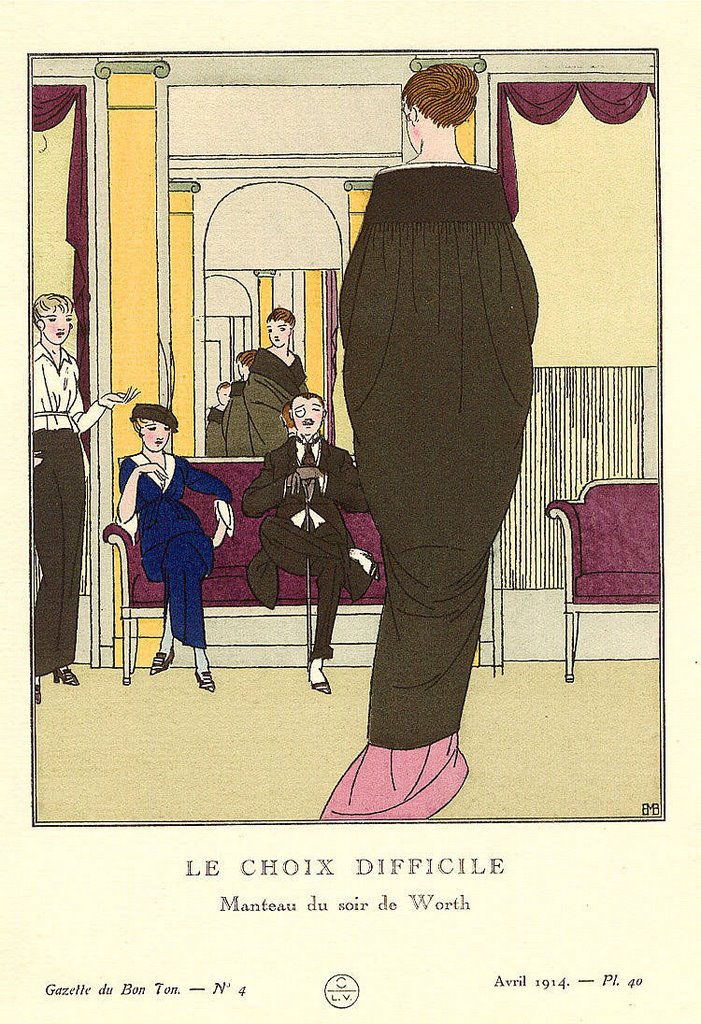 to strike me is how similar
  the silhouettes of women's clothing during the fin-de-siecle
 period to the japanese silhouettes of that and previous eras.
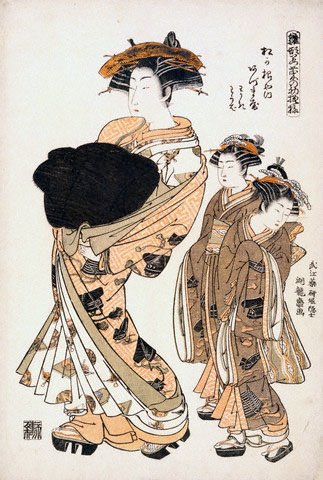 if you sort of squint or see them
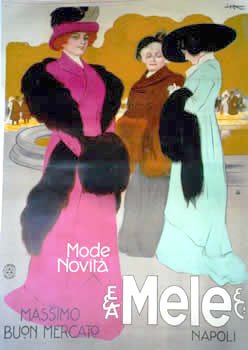 in just thumbnails, it's really hard to tell just which you're seeing, other than, perhaps,
  the use of pattern
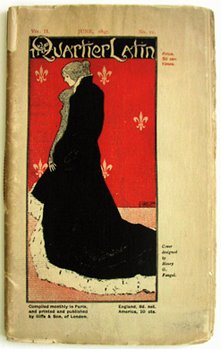 on the japanese fabrics.
Labels: aubrey beardsley, boutet de monvel, Eisen Ikeda, fashion, sencho, Shuntei Miyagawa
posted by lotusgreen at 10:37 AM
5 comments
 a gentleman on livejournal asked if anyone knew the significence of ginkgo leaves because they were used quite a lot in art nouveau architecture. his web site features the best of 40 years of taking 2500 photos of these buildings. it's an extraordinary place(s) to visit.

posted by lotusgreen at 1:05 PM
2 comments
 unlike the nasturtium, however, morning glories are plentiful in both cultures, though in japan they are very likely to be found in poetry known as death haiku. along with the cicada, and dew in the grass, the morning glory appears as a reminder of both life's beauty and life's brevity.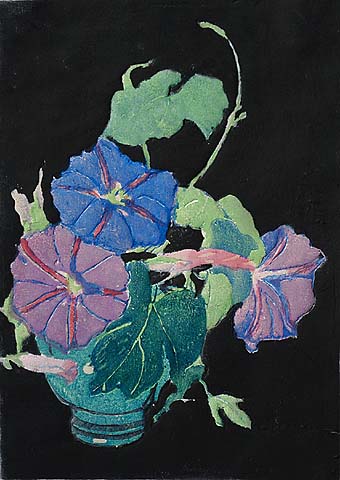
 (the first image is by ide gakusui; the second is margaret jordan patterson, third is katei taki, and last is g. lebart.)
Labels: G. Lebart, haiku, ide gakusui, katei taki, kato, margaret jordan patterson
posted by lotusgreen at 8:10 PM
0 comments
 one thing that i have found
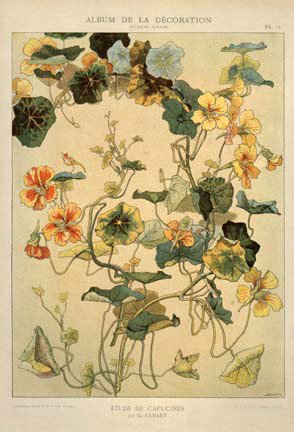 is that while nasturtiums seem to be
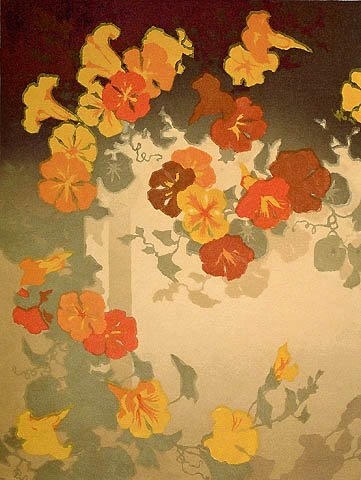 they don't seem to exist at all in
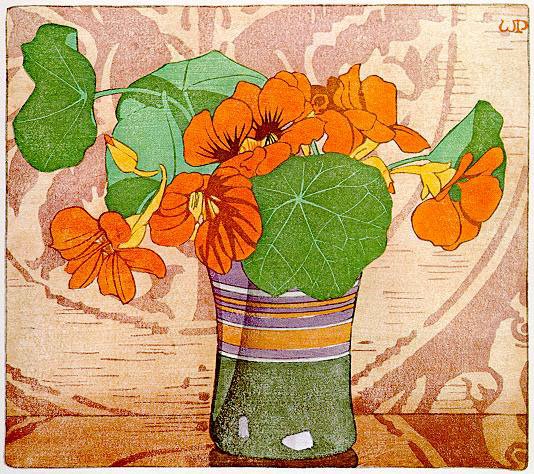 this is the only case of this i've found
 (voysey is the first one, then G. Lebart, then oscar droege, and lastly, walter j. phillips.
Labels: G. Lebart, Maurice Verneuil, oscar droege, walter j phillips
posted by lotusgreen at 11:22 AM
2 comments
 how interesting. this image, by bairei kono from an 1892 manga, is clearly part of this "set"!
Labels: bairei kono
posted by lotusgreen at 4:04 PM
2 comments
 trying to make this into a narrative (much as i tend to do with my own life), and, like my life, it just isn't. so this blog now becomes randomized. there's just so much, so much beauty, so much irony, so much of dreadful interest, that to try to make it orderly is to create a deceit. it's complex and complicated and redundant and contradictory, and so it is. when, if, connections appear i'll do my best to notice. feel free, if you notice, to let us know.
 by livingstone and parry, a 1898 review from 'house beautiful' is quoted as saying, "the japanese have taught us much, but nothing more clearly perhaps than that beauty does not depend upon intricacy or elaborateness of design and ornamentation."
 grueby pottery, seeing it as
 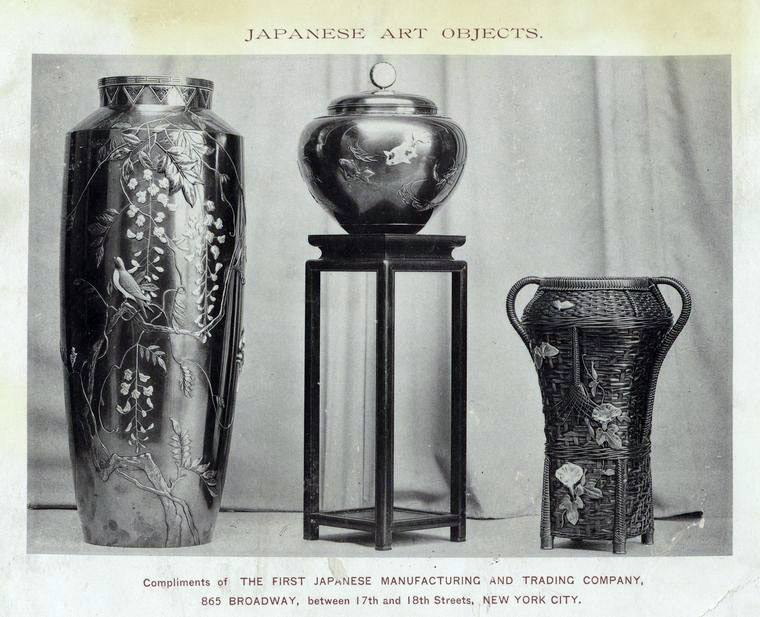 'japanesque,' and grueby pottery is simple, as was much pottery coming from japan. it still is.
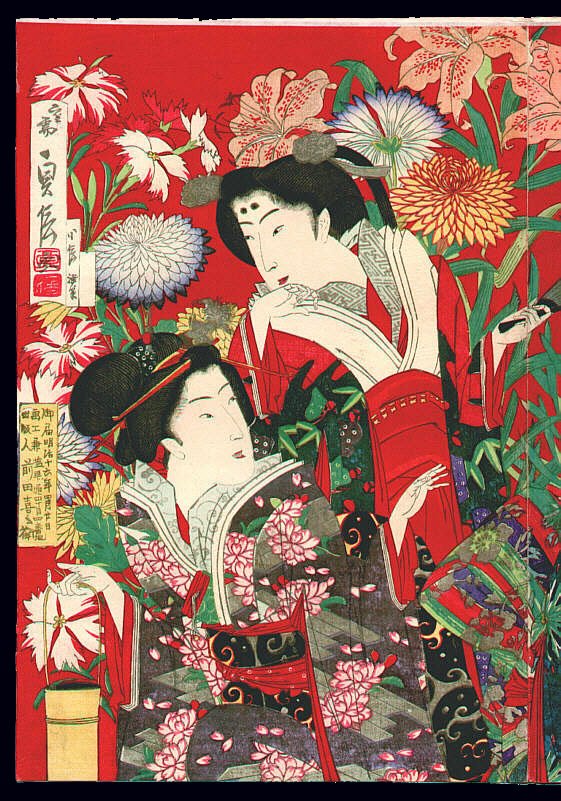 any more simple than what was happening in the west, as the japanese print and the american magazine cover from the same time period illustrate.
 japonesque' was often far from simple.
Labels: comment, galle, grueby pottery, nancy
posted by lotusgreen at 5:18 PM
0 comments
 the sunflower and lily became to the aesthetic movement. and the artist most associated with the flowers was oscar wilde. below he is pictured in one of many cartoons of him from the magazine punch, and as both sides of a teapot as well. (perhaps this illuminates the previous cartoon a bit more fully.)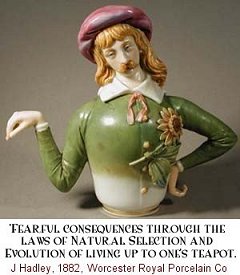
 artists for saying that they were doing exactly the same thing.
Labels: aesthetic movement, oscar wilde, punch
posted by lotusgreen at 5:42 PM
0 comments
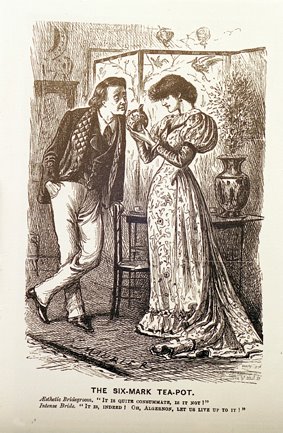 but no appellation received more parody, derision, scorn and satire than the aesthetic one. i've already mentioned gilbert and sullivan's "punch version of japonism" -- 'the mikado,' but their 'patience' is a musical poke in the eye of aestheticism.
Labels: aesthetic movement, punch
posted by lotusgreen at 1:03 PM
8 comments

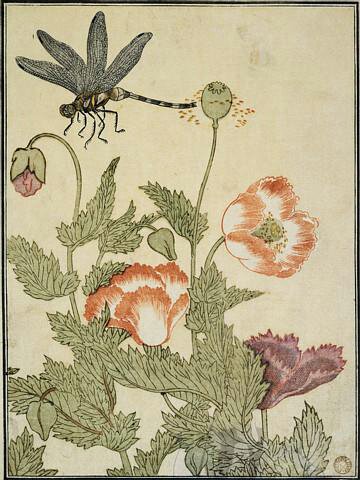
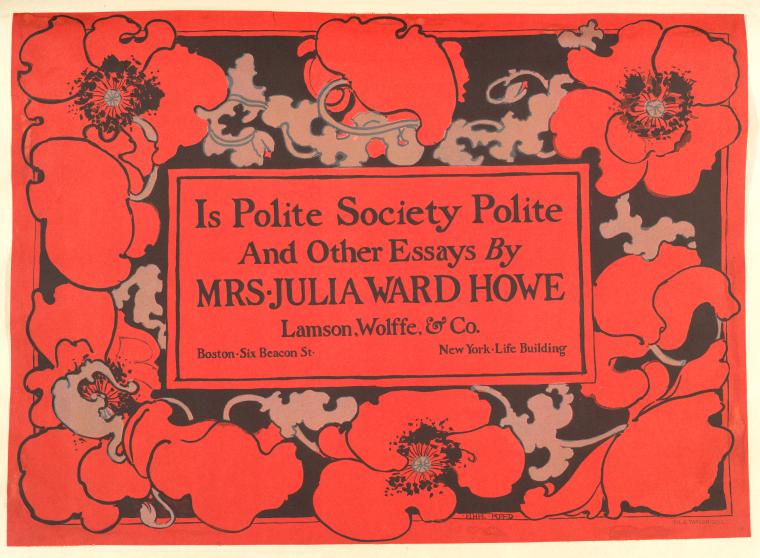
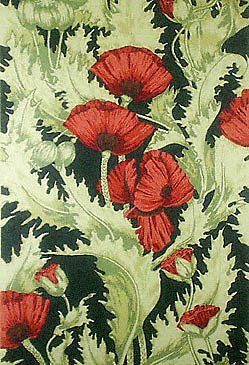 bookjackets, and more.
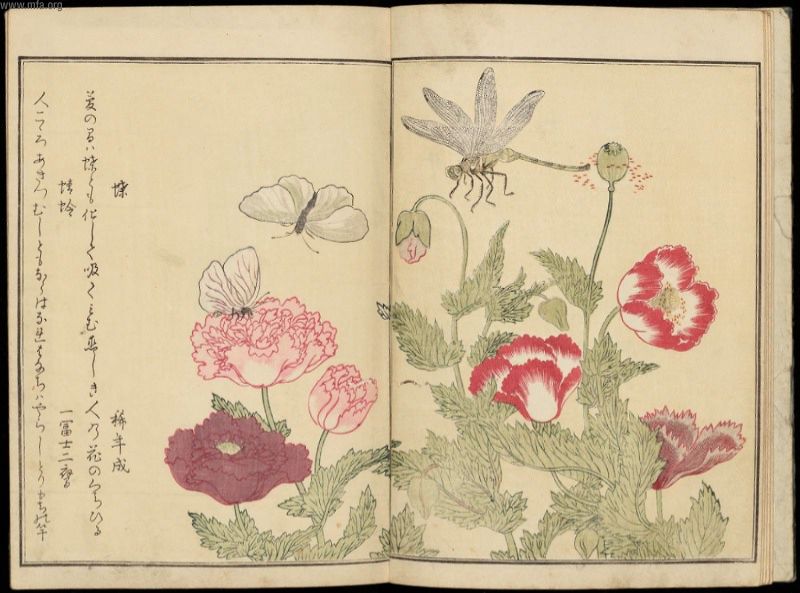 goods and information no context, no genuine way to understand, but rather images only; a grand mystification of context was laid upon them. perhaps the joyful way this flower looked when portrayed from a stance of nature's presence rather than nature's dominance was seized upon and set up to be something that the japanese artists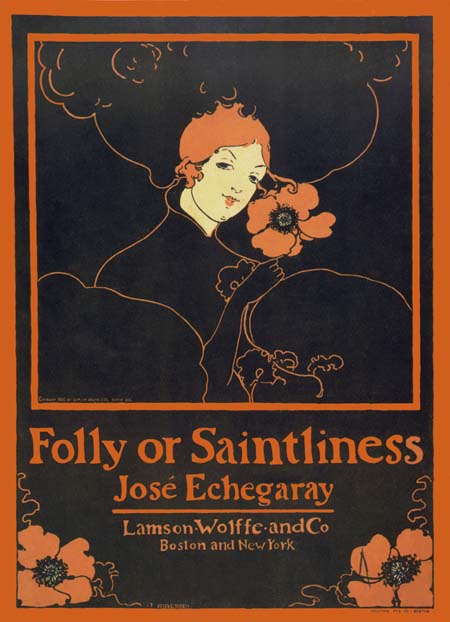
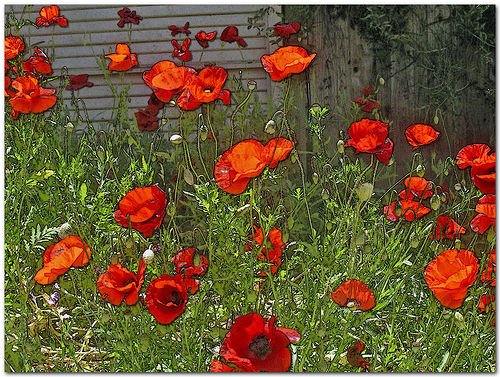 neighborhood.
Labels: ethel reed, hiroshige ando, Utamaro Kitagawa
posted by lotusgreen at 9:08 AM
7 comments