japonisme

17 September 2006

japonisme: craftsman style


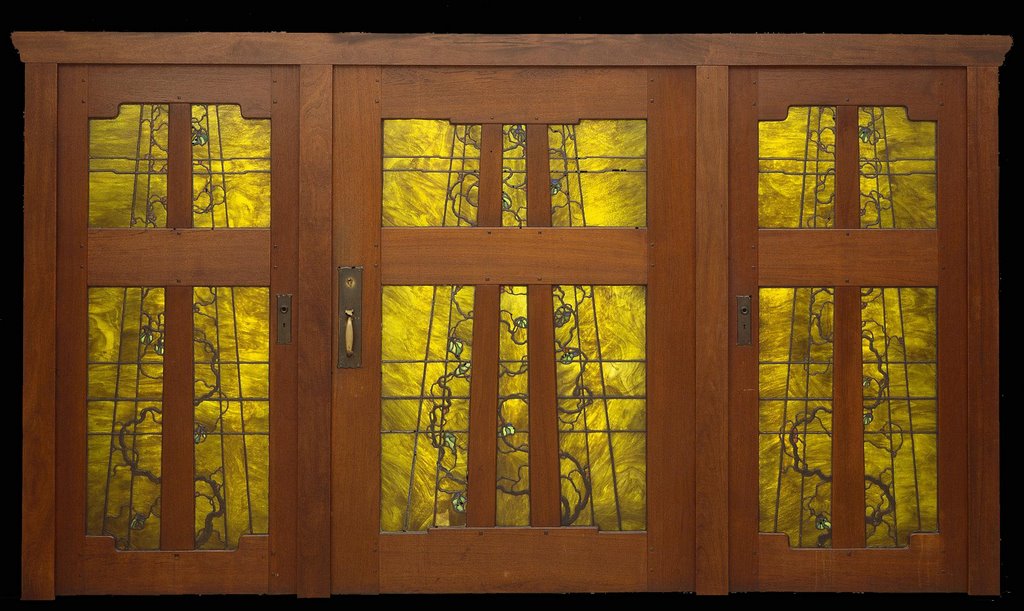
greene and greene, from pasadena, california, remain the architects perhaps most identified with craftsman-style design of homes. with the stonework, the patterns in the stained glass, and the methods of woodwork, structurally as well as aesthetically, these homes owe much inspiration to the japanese.

these stained glass doors are from the entry hall of the robert t. blacker estate in pasadena, 1907-1909, and are on display at
the de young museum in san francisco.

Labels: ,

16 September 2006

poetry & haiku

the influx of japanese art, craft, and idea is most commonly known for what it
did to art and craft in the west. idea has perhaps not been recognized as clearly. but in a culture where poetry had always rhymed, the japanese influence was profound.

Labels: ,

15 September 2006

europa 1900

and a lovely mackintosh-styled site, it is

by any other name


i guess we haven't yet mentioned many of the other names or styles that are japonisme, in one way or another, in disguise. Of course art nouveau, but also jugendstil, liberty style, arts and crafts, and many more.

the parts of japanese style elaborated on might be different in each, but a little research and the secrets are handed up easily.

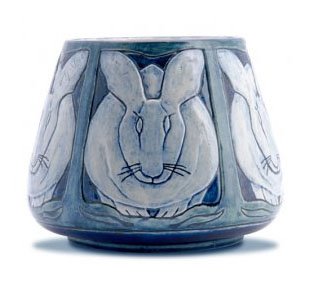
how else does a japanese family crest, usagi, become a vase made by Marie de Hoa LeBlanc in 1902, a member Newcomb Pottery in louisiana, and expect to draw $75,000 at auction?

Labels:

14 September 2006

ornament


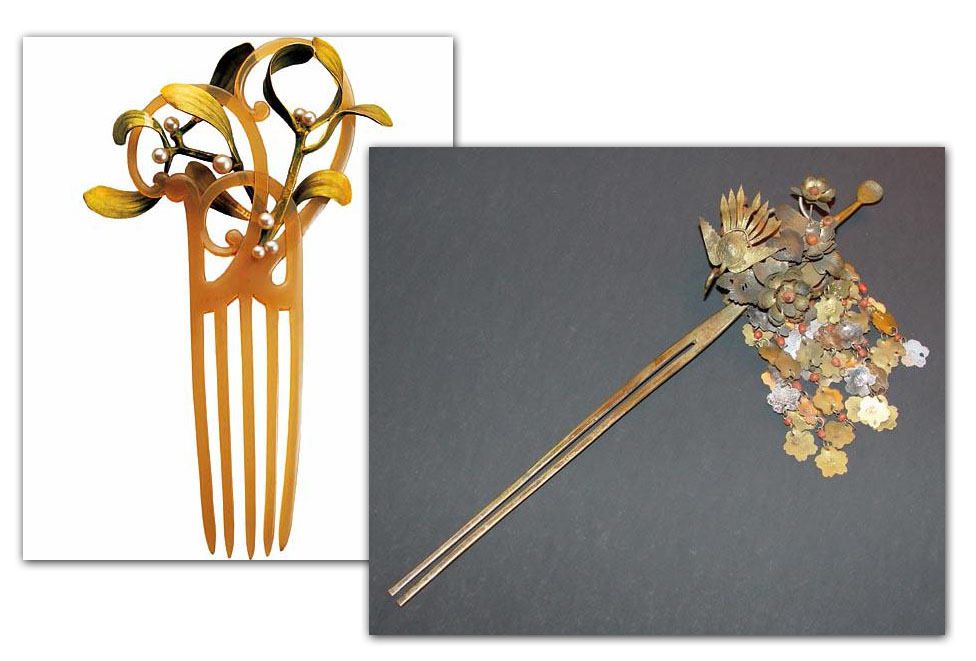
(Paul et Henri VEVER, peigne Gui, 1900, corne, or, perles, émail. musée des arts decoratifs, paris. Bira-Bira Kanzashi Hair Ornament, brass, gilded, silver, coral; Meiji period (1868-1912), japan.)

Labels:

13 September 2006

japonisme: so many faces

i would really love to try to describe all the different kind of things that get labeled with that term, by someone or other. i would like to illustrate each with an example, but this sounds too ambitious for one sitting, so i'll just get started and add things as i go along.

  • at a most basic level what i have learned are the keystones that marked japonisme were these: blocks of flat color, blocks of intricate pattern (cloth, wallpaper), asymmetrical layout, an unusual framing, and a stronger than previously seen in the countries where it occurred: an emphasis on nature and daily, domestic life. these were the features in the japanese prints that most notably were adapted by the new art, l'art nouveau.
  • another whole side of that happened at that moment, with regard to the art world only, to start with, was the philosophy that accompanied the new imports. for the first time, a concept of the present moment as having value in and of itself, of the deep importance of the simple play of light across the arm of the woman at the table across the way, or off the water, the simple sound of a bird in a tree, the serious wonder of a mother bathing a child: these things unheard-of in western art were now embraced. impressionism was born.
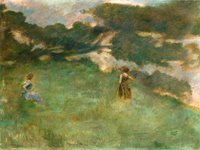
yes, there were other factors: a reaction to the industrial revolution, the arrival of the affordable train trip "out to nature" (which was, of course, ironically, part of that very revolution), new scientific discoveries into how humans see, even the invention of the portable painting kit, but the very number one thing without which the movement never would have started: that someone should say, in a place where westerners would hear it, essentially, "be here now."


(the two images here are jane avril by toulouse-lautrec, and the hermit thrush by thomas dewing. can you hear it singing?)

Labels: , ,

12 September 2006

more bindings inspired by the orient

and one last binding, for the moment anyway (there are some exquisite covers for some lafcadio hearn books i have to dig up from my files somewhere....), from another stunning collection here.

Labels: ,

the vienna secession and wiener werkstätte

not that paris, that art nouveau alone, were influenced by the influx of japanese goods. many artists developed signatures or marks to mimic those used by the japanese. toulouse-lautrec's is famous (click for the exhibition):

but here are eight more. eight??! must be a group show or something? clicking on the image will take you to index. it's a fascinating collection, and the introduction is interesting as well.

Labels:

11 September 2006

japonisme: books part I

i was thrilled to find an online bookseller with an entire section devoted to japonisme! handsome books, and the descriptions of the books, the authors, the designers and illustrators, and of japonisme itself, are priceless.

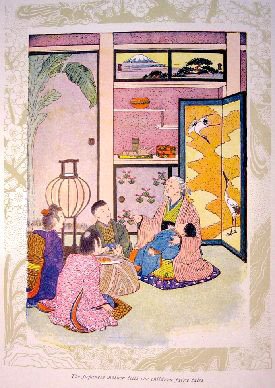
here is an illustration by sanchi ogawa for a book called japanese fairy tales, by teresa pierce williston. this brings me to a question to which i don't yet know the answer: why were children's books, around the world, so quick to embrace japonisme? maybe i'll learn that while i do this blog.


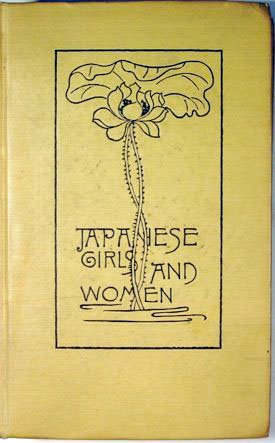
this beautiful cover is from c. yarnall abbott. while the previous example was a purely japanese scene done in a somewhat western manner, this image is clearly directly inspired by the japanese print: both subject and style.


this as well is another stunning example of the western hand borrowing from the east. even the lettering is designed not so much to imitate japanese calligraphy as to imitate japanese architecture!

the book, from 1902, is designed by sarah wyman whitman.

these and many more can be seen at the bookstore website, at the bookstore itself, and, along with many other booksellers, on ebay (user name: handbooks). i've discovered that ebay is a wonderful way to see old illustrated books; many sellers even display the entire book's illustrations: what a joy!

Labels: , ,

from west to east, too

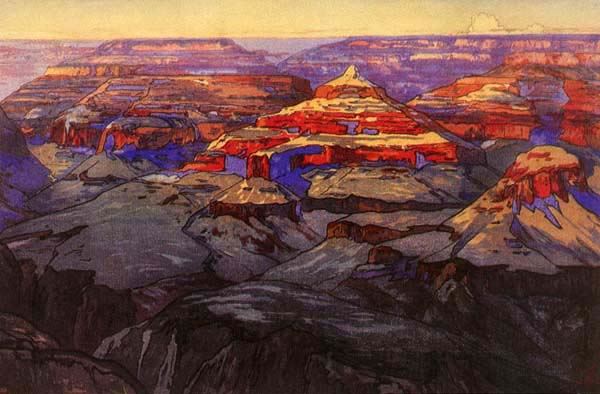
there were western influences on the japanese during this period as well. leaving aside for the moment all of these but those of some printmakers, i would like to point to two: hiroshi yoshida and yumeji takehisa .

hiroshi yoshida studied in the west, and in doing so was influenced in his use of color and perspective. & this is the grand canyon!


yumeji takehisa, i don't know as much about as yet, but though he has employed some trademark japanese print techniques, pattern, blocks of flat color, still this print appears to have more in common with the fashion illustrations in vogue than with ukiyo-e. (of course, this also illustrates how much the illustrators for vogue were influenced by the japanse!)

Labels: ,

10 September 2006

what is japonisme? part I

for the last several days i have been scouring the internet for resources and find there's little agreement to anything (not that this should come as a surprise), mainly, the definitions, but also the history behind it, the range of its influence, etc. so today i will do my best to lay out what i have learned japonisme to be, and will return often, i'm sure, to correct, amend, edit and embellish, etc., and with your help perhaps arrive at something definitive.

in 1854 japan's doors were opened to trade by admiral matthew perry and his black ships. what followed was nothing short of life-altering. not only would art and design be changed, but music, theater, dance, religion, and philosophy as well.

there were two elements coming from japan at that time that comprised the strongest influencing factors: calligraphy and buddhism; both underlay everything else, and both had been borrowed from china. (see gaillard chair, above, with lines almost imitating japanese calligraphy, which had developed into something graceful, a tree limb in place of a ruler, poetry in place of prose.)

also coming from china was an ethic that some say was the breeding ground for buddhism itself: ancient chinese nature- worshipping religions. this, along with a developed buddhism as well switched the human/nature/deity paradigm that had developed in the west on its ear. very quickly nature went from what humans controlled to what humans were.

Labels:

08 September 2006

more dutch japonisme

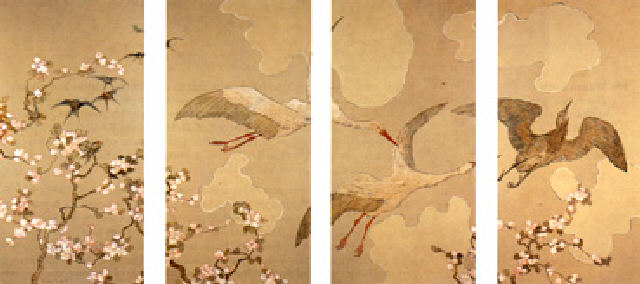
Theodoor van Hoytema
Swallows, storks and a heron flying over blossom branches
1893
Oil on Canvas laid on Panel
72 x 148 in. / 183 x 376 cm.

Labels:

japonisme: the birth of modern art


at princeton a group of students in a class called
'Impressionism & the Making of Modern Art
have created a wonderfully comprehensive website
which touches down into japonisme quite often,
most notably in the cases of whistler,
monet, cassatt, bonnard,
and van gogh.

07 September 2006

the nabis

yet another of the metropolitan museum's wonderful exhibitions that deal with artists with a strong, clear sense of japonisme in their work.
see selections from the exhibition
here
"At the turn of the last century a group of artists that included Bonnard, Denis, Roussel, Vuillard, and their circle—known as the
Nabis, from the Hebrew word for prophet—took up the call to move beyond conventional easel paintings...."

more about the nabis later....

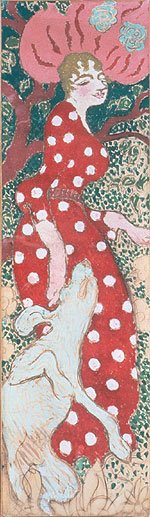
in this image by bonnard, note the flat fields of color, and the emphasis on the patterns on her dress. further, note the lines of the images, the woman, the dog, the tree, all with a grace, a line, heretofore unseen in western artwork.

Labels:

the history of japonisme

one preliminary, interesting, discussion of the arrival of the japanese aesthetic to the west can be found here.

a wonderful introduction in the form of a review by the director of the center for the study of japonisme at rutgers, phillip cate, of a book on the formost progenitor of japonisme, of l'art nouveau (his shop in paris), s. bing. here.

henri riviere


one printmaker from the height of the japonisme movement in paris whom i adore is henri riviere. he's painting france, but he's doing it in a medium and style which are both very japanese.

Labels:

defining the past

i am wondering if any of the distinctions i made yesterday hold any validity. i haven't heard anyone else say them, and i keep thinking of exceptions. still, i think it's interesting to explore this stuff, by which i''ve been obsessed for 40 years, out loud.

06 September 2006

"japanese prints"

this beautiful illustration from 1918 is the frontpiece for the first book Dorothy Pulis Lathrop ever illustrated. she would go on to become the first winner of the caldecott prize for illustrations for a children's books.

this book is called 'japanese prints,' by john gould fletcher (which i took out of the library). it's a series of poems of varying quality, but i find the one opposite this illustration kind of interesting:

of what is she dreaming?
of long nights lit with orange lanterns,
of wine-cups and compliments and kisses of the two-sword men.

i would call this 'japonaiserie' rather than 'japonisme' because the latter is western work, generally, done with japanese design and execution standards. japonaiserie, rather, is more like chinoiserie: western work which mimics the work from one of these two asian countries.

i don't mean to imply that there is a hard, fast rule, a line that everything falls on one side of or the other. also, both movements occurred in the same era, the end of the 19th century (a time when the west was being flooded by goods from japan for the first time in 250 years), and the beginning of the 20th.

so i would suggest that this image is quite a western one of an exquisite asian theme.

several interesting bios lathrop are available at (sandwiched between a couple of relatives):
lathropgenealogy.blogspot.com/2005_03_01_lathropgenealogy...

Labels: ,

04 September 2006

art nouveau

roll the clock back, though, 15 or 20 years, and there i am a young hippy hitting san francisco for the first time. also for the first time, posters from the art nouveau period were being mass-produced, and were quickly selling through head shops around the world. not for 75 years had there been such interest in the art from that era, and now it had exploded once again.

i'll never forget walking into a crowded little store on upper grant street in north beach, in san francisco, and seeing this poster.

that moment changed my life.


Labels:

japonisme

first time i heard the word, was when i saw this book in the gift shop of the berkeley art museum, 1981, while i was there delivering the very first issue of a magazine i was publishing at the time (yellow silk).

for some reason i can recognize but not explain, my first reaction was, "yeah, sure. people are always trying to see things that aren't there, just to sell a book.

by the time, a couple of years later, that i not only "got it," but felt more passionately about it than i could imagine, the book was nowhere to be found. even it's publisher who was also my publisher had no copies.

my first day in paris i went to l'orangerie (the basement of which is the closest thing to church i've ever been in) and there at the bookstore, i found this book. even a momentary glance would convince the most heedless sceptic; the more one reads, the more one sees:

fortunately the book has now been reprinted in paper and is available once again.
newer posts older posts