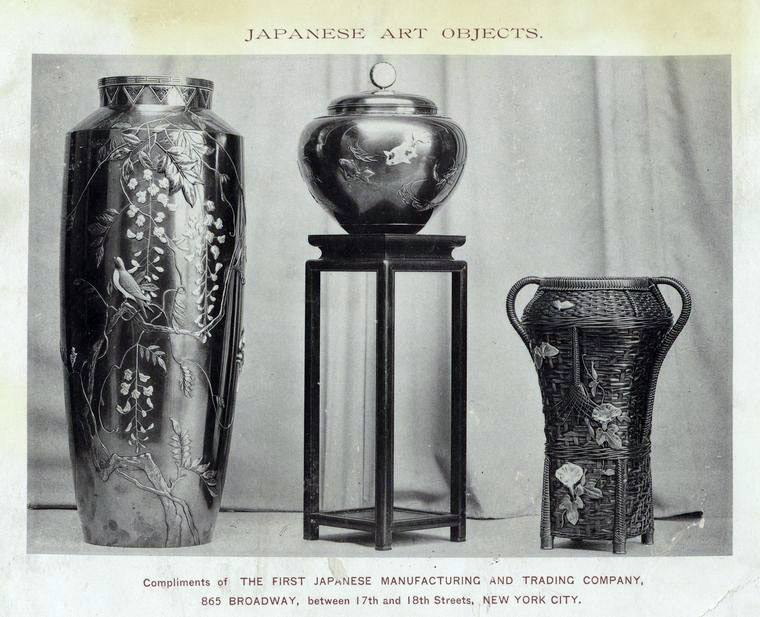
japonisme

26 October 2006

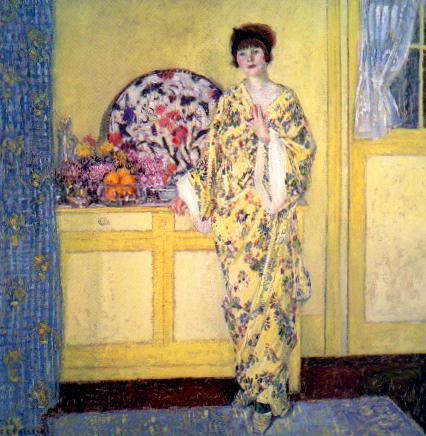
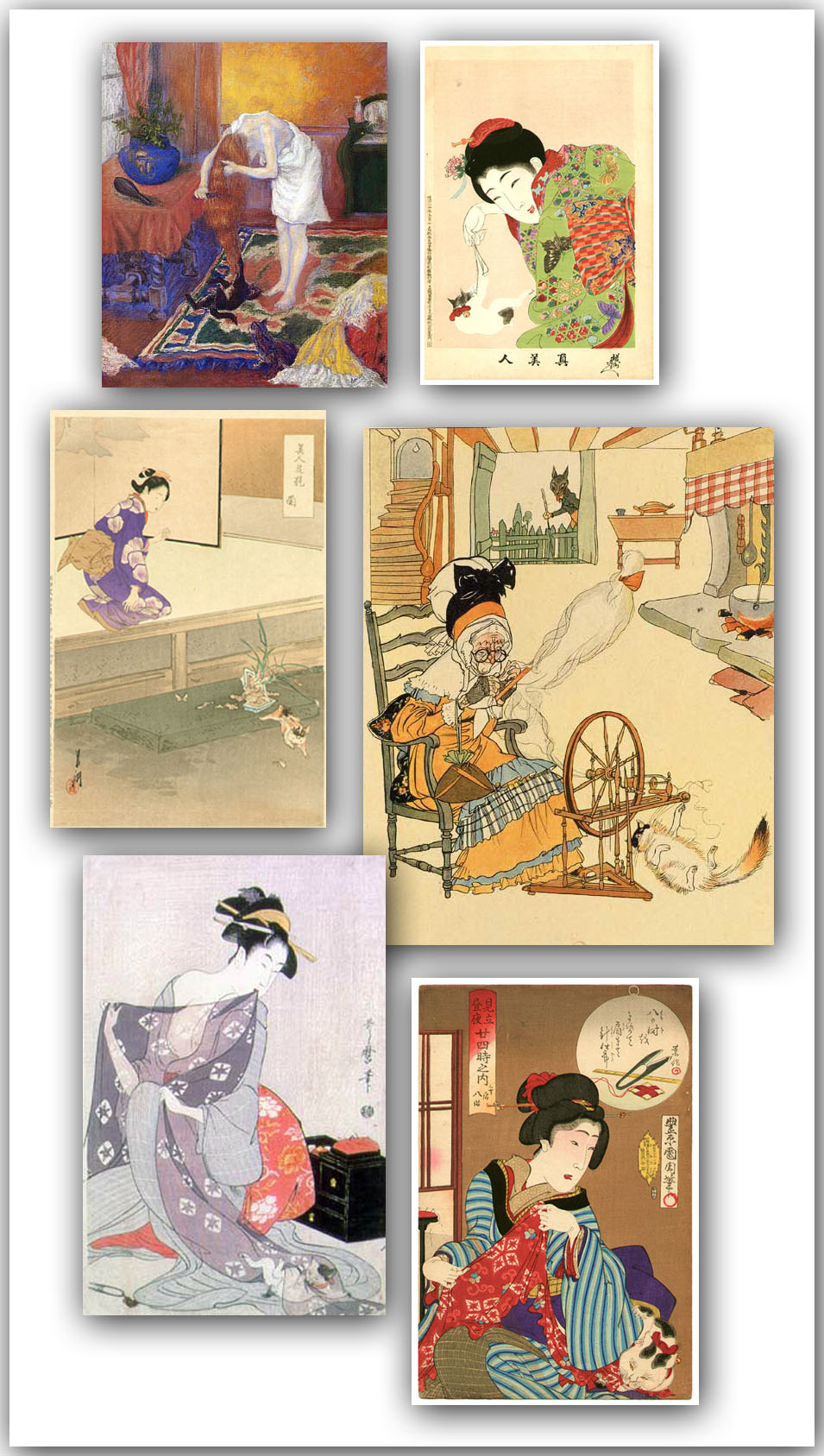
kimono bleu

'the
yellow
kimono'
by
frieseke


while it seems
that
the majority
of kimono
and
kimono-
inspired


'the
blue
kimono'
by
pearson


clothing to
be found
in the west,
in paintings,
clothing,


1912
velvet
and
lame
evening
coat


or designs,
seems to be
blue
or yellow,


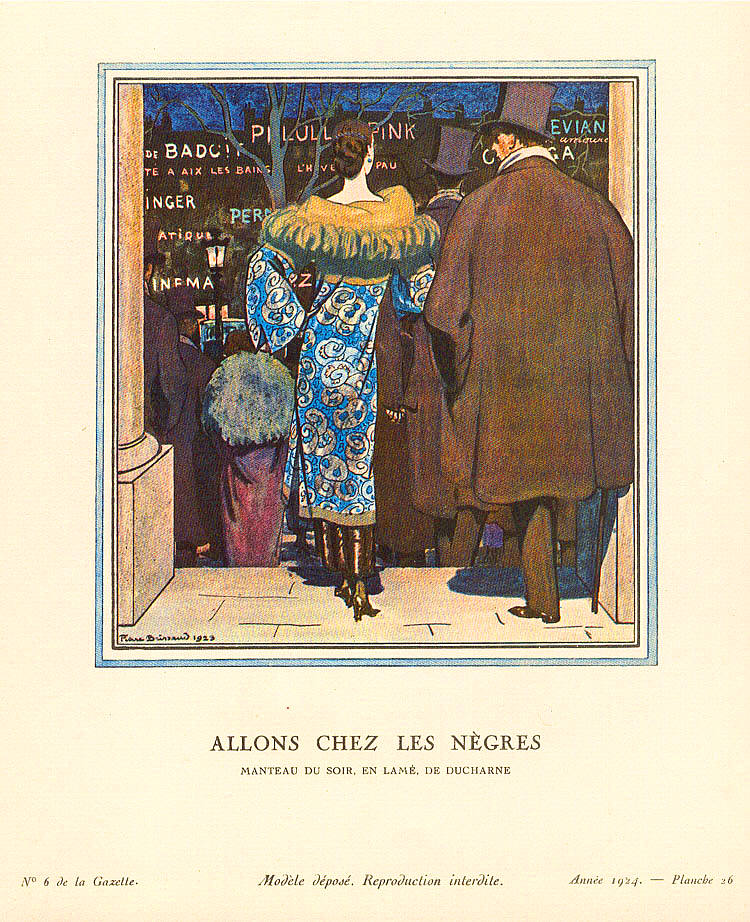
coat by

de beer,
drawing by
brissaud


in the
japanese
prints one
is most
often likely
to find
blue or
yellow
'the
blue
futon'
attributed
to
kunisada


in the robes
of the men,
not the
women.

Labels: , , , ,

24 October 2006

which came first? woman or silly bad cat?


Labels: ,

at the time of shakespeare

this screen, credited to matahei by ernest fenollosa was considered a national treasure and was sent to the exhibition of 1900 in paris by the japanese government.

fenollosa was a friend of morse's and was called to japan by him. in 1911 he wrote about the screen in epochs of chinese and japaense art. more about him later, but i think his descriptions of the 'hikone screen' illuminate the screen as well as the culture as much as its background of gold.

"[the screen] represents graceful figures of men and girls and children in rich colors upon a gold ground, seated upon the mats in utterly unrestrained japanese attitudes. in the center of one screen an old blind musician is giving a lesson in samisen-playing to two girls, while a party of young people nearby play a game of go. behind those two groups a beautiful landscape screen, evidently by kano motonobu, is unfolded. another group shows us all slender girls walking, while a gay young samurai leans in a most unconventional attitude upon his long sword. this shows us a tendency to dissipation that may well become the degeneration of the whole buke class*, if not checked...."

two more gold-backed screens by this artist are known.
fenollosa places all of these works in the early 1600s, about when shakespeare was working continents away.

i believe it is of someone in these two that fenollosa says, "...the lines of the young girl seated upon the bench with withdrawn knees are among the most graceful in all japanese art."

some credit matahei with having been the founder of the ukiyo-e school of painting, but some credit others. this kind of thing happens a lot.


* he was right. the bukes were the samurai.

Labels:

23 October 2006

art history


Dasha Shishkin You’re My Horse, I’m Your Cowboy
2006 Grimm / Rosenfeld


"Shishkin’s work is a riot of styles and artists: Bacon,
Brueghel, Bonnard, Lautrec and Henry Darger meet Japonisme,
the decorative painter Ludwig Bemelmans and various demented
children’s-book illustrators."


Jerry Saltz


Sept. 16-Oct. 28, 2006, at Grimm / Rosenfeld,
530 West 25th Street, New York, N.Y. 10001


(jerry saltz is art critic for the Village Voice,
where this review first appeared.)

Labels:

separated at death?

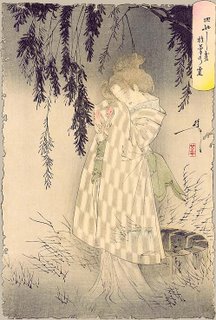
in the kabuki play Bancho Sarayashiki, Okiku is a maid at the mansion of the Japanese samurai Tessan Aoyama. The samurai wants to seduce the lovely girl but she rejects his advances. Aoyama uses a trick. He hides one of ten valuable Dutch plates and threatens Okiku to make public that she had stolen the plate unless she agrees to become his mistress. In her desperation Okiku throws herself into the well and drowns.

Okiku's ghost comes out every night, counting from one to nine and then breaks out into a terrible howling and sobbing. Finally Aoyama goes insane by the daily apparitions at night. on the right is her ghost, as depicted by yoshitoshi.

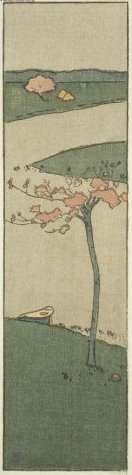
the one on the left is by koloman moser, a founding member of the vienna secession. it is an illustration for rilke's poem,


Early Spring

Harshness vanished. A sudden softness
has replaced the meadows' wintry grey.
Little rivulets of water changed
their singing accents. Tendernesses,

hesitantly, reach toward the earth
from space, and country lanes are showing
these unexpected subtle risings
that find expression in the empty trees.

Translated by Albert Ernest Flemming

i couldn't find another translation. also, not really sure how the illustration relates to it. anyone have any ideas? moser said the one in black and white is the duchess, a character in the poem. ??? i could find no other rilke poem about spring. as always, all commentary is welcomed.

Labels: , , ,

22 October 2006

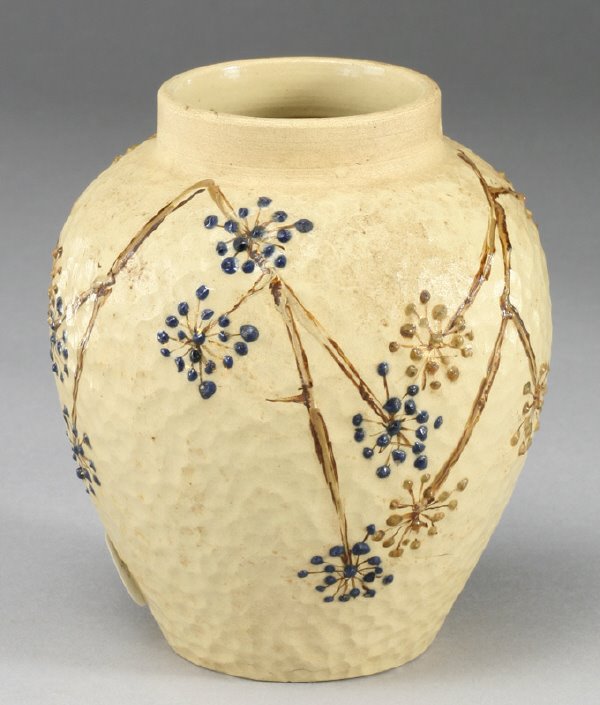
rookwood

the morse collection

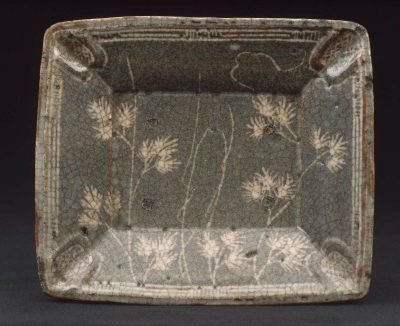
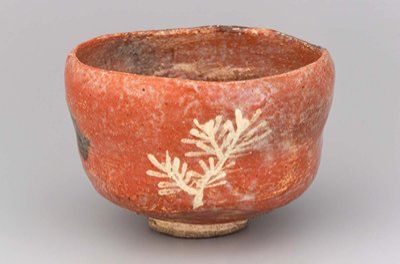
each of these pieces of pottery are listed with their provenance as saying:
purchased by edward sylvester morse in japan between 1877 and 1892. deposited to the mfa boston in 1892.

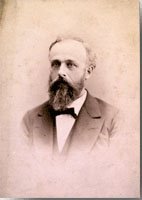
morse, who found shards of pottery in the shellmound along with the brachiopods, eventually collected, classified, and catalogued over 5,000 ceramic items during his visits to japan. he became known as “the father of japanese archaeology.”

as geocentric as that sounds, you have to understand that in fact the japanese themselves did not collect or value this work. morse purused the entire country, explored sheds with piles of the stuff in the cobwebby corners, awaiting trash day, and began to notice the different techniques in different parts of the country.

yes, though he was instrumental in both creating the museum for showing this work, and for advocating what eventually became law, that these artifacts could no longer be exported, but not before he had himself exported what appears in the boston mfa today.

to this time, the japanese had not distinguished between "art" and "craft."

Labels:

the omori shell mounds: morse, part one

edward morse got into a lot of trouble as a kid. he was thrown out of every school he attended, and occasionally punished harshly in the process when he, for instance, carved up his desk.

this gave him great freedom to roam the country sides and sea shores of maine, which is what he really wanted to be doing anyway. his discovery of a previously unknown species of snail (tympanis morsei) caught the attention of his elders and he was soon mentored and taught by the best of them.

in 1877 he decided to challenge himself with the largely unexplored seashores of japan. while he was looking fro brachiopods, he found much more as well--a more extensive archeological site, the omori shell mounds, than had been found to that date.


morse's success with both the zoological and the archeological fields in japan were rewarded with laboratories and professorships and as his information became more and more trusted, he was often asked to recommend other teachers from the west. together they set up programs for which the japanese were clamoring: zoology, archeology, sociology, biology, and even darwin.

his work in organization of the japanese imperial museum tied together many facets of his life, which i'll cover in part two.

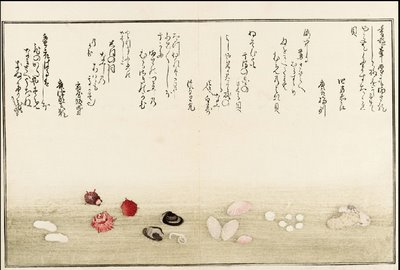
(this wonderful utamaro print of shells is part of an extraordinary exhibit at the new york public library about japanese artists' books. this one was a collaboration of poets and the artist. many thanks to fade theory for the pointer!)

Labels: ,

21 October 2006

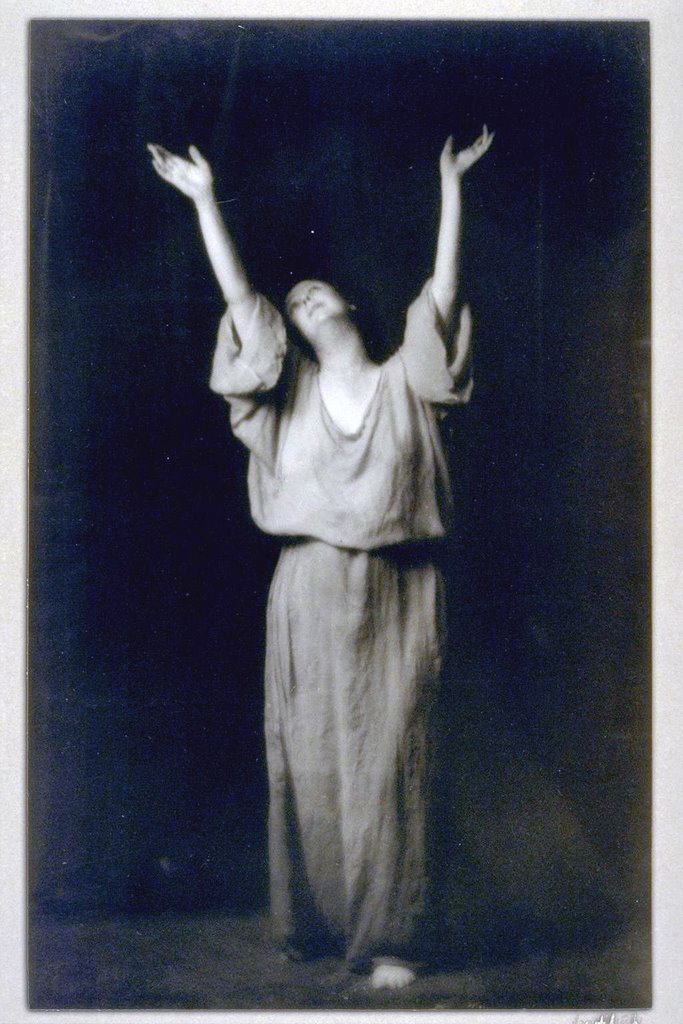
isadora's dance


isadora duncan credited seeing the japanese prints with women in kimono as her inspiration to loosen, to free, her clothing and her dance.

Labels: , ,

love & destruction

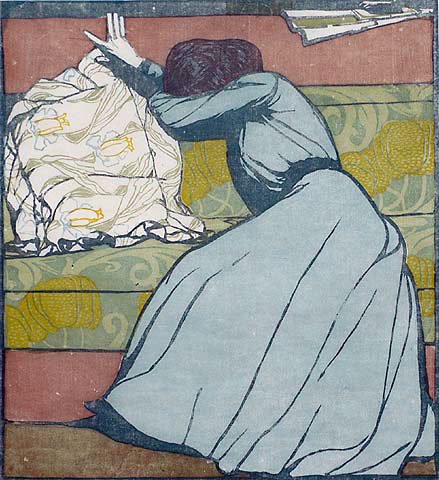
max kurzweil, a founding member of the vienna secession, lived a charmed life, filled with love, sunlight, and the sparkling waves. though he may have been outshone by his fellows (klimt, moser), he was an enthusiastic contributor to the movement's journal ver sacrum (sacred spring), loved teaching as well as being a father.

or so it appeared until he killed himself in 1916 at the age of 49. he made this print of his wife in 1903.


kanae yamamoto was an innovator as well, being a pioneer in the sodaku hanga movement in which unlike the generations before him, the artist himself carried out the whole process of creating the prints, from cutting the wood to doing the printing. he also joined with others in the movement to start their own magazine, hosun (little things).

having come from a modest family, kanae was supporting himself as an illustrator from an early age. while in europe to explore the art movements there, he became aware of the socialist movements gaining strength, and when he returned to japan, he worked tirelessly to bring art education to children and the poor.

having developed the obsession, though, he began to ignore his own artwork. just before he died of a cerebral hemorrhage at 64 he destroyed all of the woodblocks of his works with a hatchet.

(thanks to bibliodyssey for turning me on to kanae.)

Labels: ,

20 October 2006

continental drift

"Because people cannot see the color of words, the tints of words, the secret ghostly motion of words;
"Because they cannot hear the whispering of words, the rustling of the procession of letters, the dream-flutes and dream-drums, which are thinly and weirdly played by words;
"Because they cannot perceive the pouting of words, the frowning and fuming of words, the weeping, the raging and racketing and rioting of words;
"Because they are insensible to the phosphorescing of words, the fragrance of words, the noisomeness of words, the tenderness or hardness, the dryness or juiciness of words, the interchange of values in the gold, the silver, the brass and the copper of words;
"Is that any reason why we should not try to make them hear, to make them see, to make them feel?"

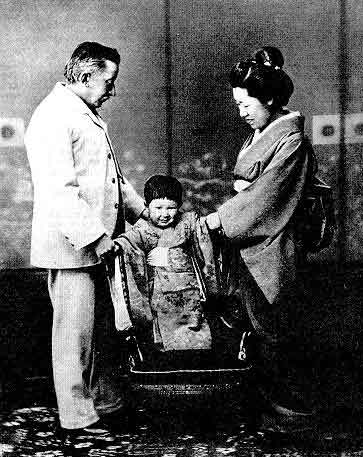
these are the words of lafcadio hearn (pictured here with his family), just one of the westerners, mainly americans, who became intrigued with japan and made it a major part of their lives, thus becoming invaluable conduits for this cultural exchange that was going on.

i want to talk in depth about each of them (and of others i'm sure to find along the way), but i wanted to do a short introduction of each first.

"In the late 19th century Japan was still largely unknown and exotic to the Western world. With the introduction of Japanese aesthetics,
however, particularly at the Paris World's Fair in 1900, the West had an insatiable appetite for exotic Japan, and Hearn became known to the world through the depth, originality, sincerity and charm of his writings. In later years, some critics would accuse Hearn of exoticizing Japan, but as the man who offered the West some of its first glimpses into pre-industrial and Meiji Era Japan, his work still offers valuable insight today." (from wikipedia)

over time, i want to go more fully into the contributions of hearn, as well as those commodore matthew perry, edward morse, ernest fenollosa, ezra pound, bertha lum, helen hyde, arthur wesley dow, and of course, s. bing. it's fascinating to me, how the two cultures became intertwined. but i also don't want to lose track of the questions that keep cropping up: did the westerners "exoticize" japan? was it helpful to the japanese to redefine for them the nature of their own arts?

aggh.... too long a post already.... one step at a time....

blueinall

Labels: ,

19 October 2006

separated at birth?

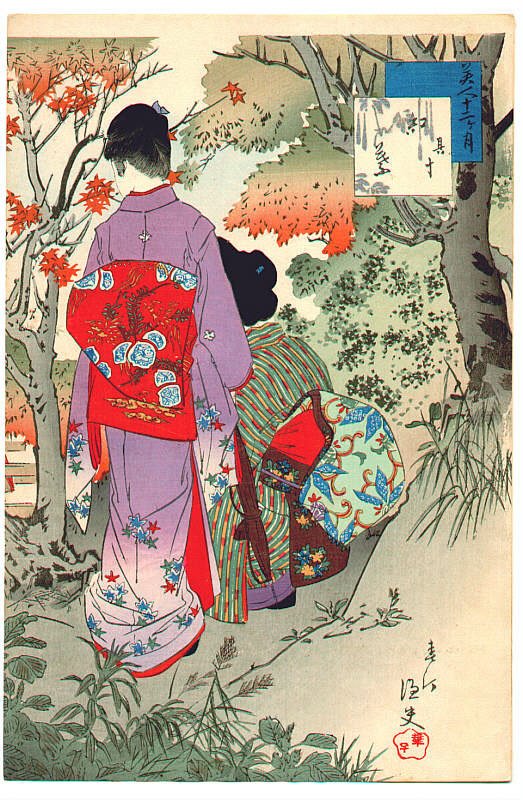
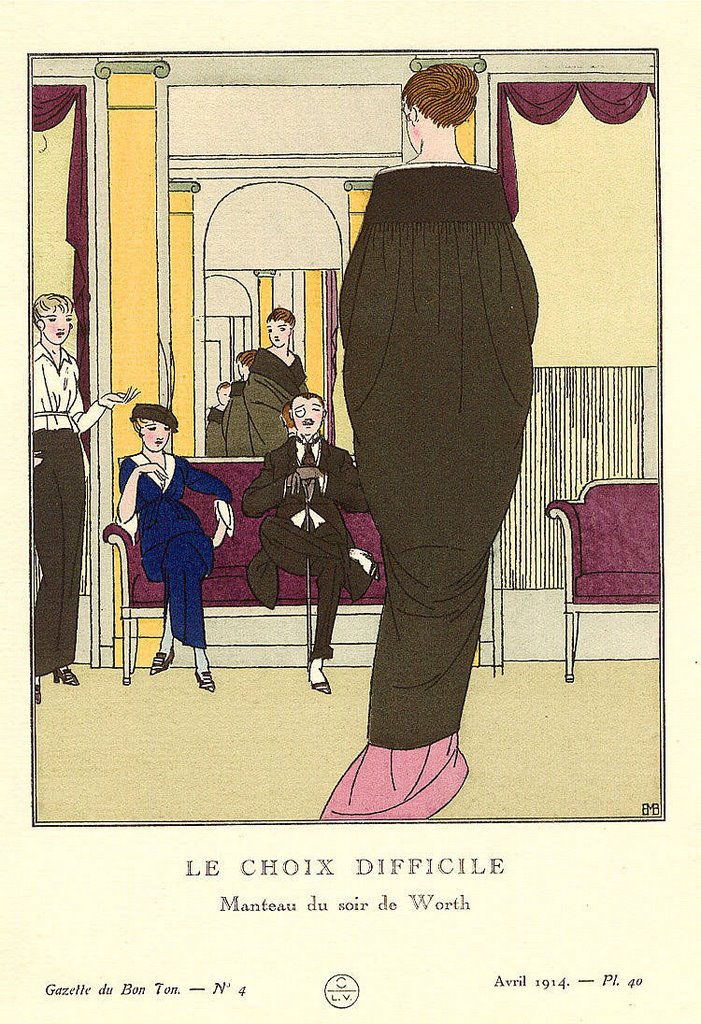
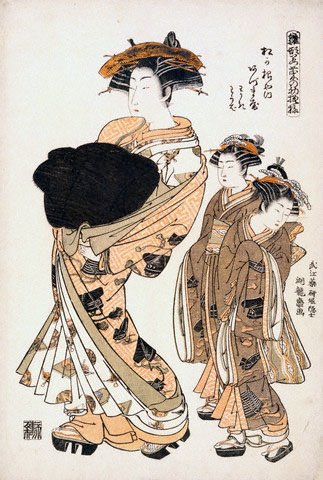
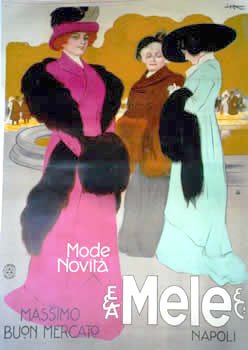
one thing that continues to strike me is how similar the silhouettes of women's clothing during the fin-de-siecle period to the japanese silhouettes of that and previous eras.

if you sort of squint or see them in just thumbnails, it's really hard to tell just which you're seeing, other than, perhaps, the use of pattern on the japanese fabrics.

Labels: , , , , ,

18 October 2006

ginkgo

a gentleman on livejournal asked if anyone knew the significence of ginkgo leaves because they were used quite a lot in art nouveau architecture. his web site features the best of 40 years of taking 2500 photos of these buildings. it's an extraordinary place(s) to visit.

the ginkgo leaf, in japan, can represent love, long life, and health.


(click either of these two smaller images and you will find yourself in the art section of another amazingly comprehensive site: the ginkgo pages! the big one on top is ' Pigeons on Ginkgo Branch' by ohara koson.)

17 October 2006

death and morning glories

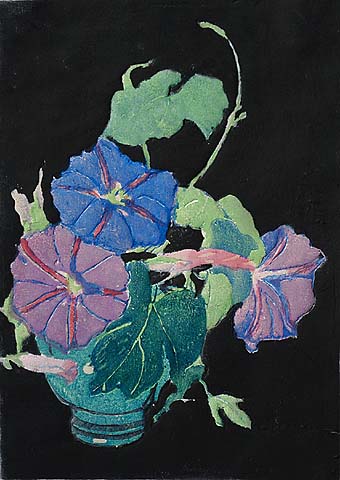
unlike the nasturtium, however, morning glories are plentiful in both cultures, though in japan they are very likely to be found in poetry known as death haiku. along with the cicada, and dew in the grass, the morning glory appears as a reminder of both life's beauty and life's brevity.

the moon departs:
frost falls upon the
morning glory.

asagao ya
tsuki no wakare o
hana no hie

kato

(the first image is by ide gakusui; the second is margaret jordan patterson, third is katei taki, and last is g. lebart.)


Labels: , , , , ,

a curious case

one thing that i have found
interesting and curious


is that while nasturtiums seem to be
fairly ubiquitous in art nouveau,


they don't seem to exist at all in
japan.


this is the only case of this i've found

so far.


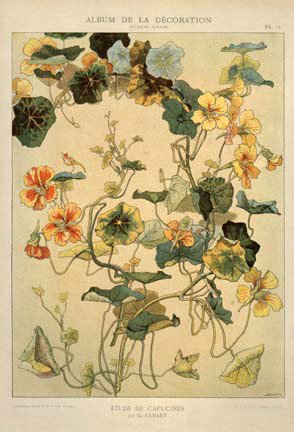
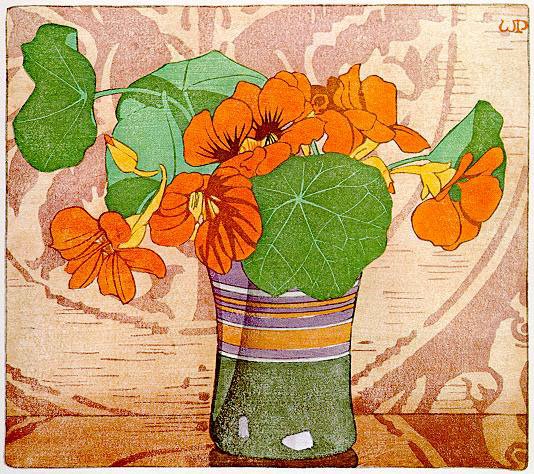
(voysey is the first one, then G. Lebart, then oscar droege, and lastly, walter j. phillips.
i don't know who did the seed packet!)


(added on 1.9.2010: i have no idea what i was talking about! it seems to be saying that here was the only japanese example i could find, but there's no japanese example, and i still can't find one!)

Labels: , , ,

16 October 2006

interrelationships

how interesting. this image, by bairei kono from an 1892 manga, is clearly part of this "set"!

Labels:

15 October 2006

it's rarely a narrative

i realize that i've been somehow trying to make this into a narrative (much as i tend to do with my own life), and, like my life, it just isn't. so this blog now becomes randomized. there's just so much, so much beauty, so much irony, so much of dreadful interest, that to try to make it orderly is to create a deceit. it's complex and complicated and redundant and contradictory, and so it is. when, if, connections appear i'll do my best to notice. feel free, if you notice, to let us know.

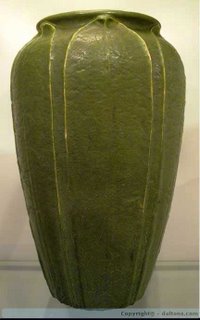
in 'international arts and crafts,' by livingstone and parry, a 1898 review from 'house beautiful' is quoted as saying, "the japanese have taught us much, but nothing more clearly perhaps than that beauty does not depend upon intricacy or elaborateness of design and ornamentation."


the article, however, was comparing grueby pottery, seeing it as 'japanesque,' and grueby pottery is simple, as was much pottery coming from japan. it still is.
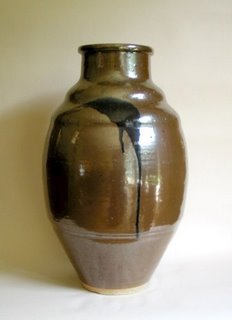
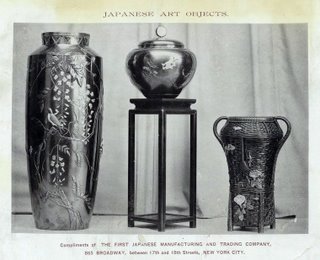


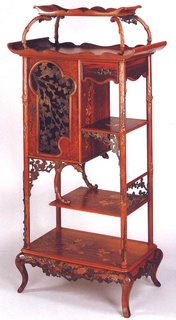
but not all of it was, as you can see.


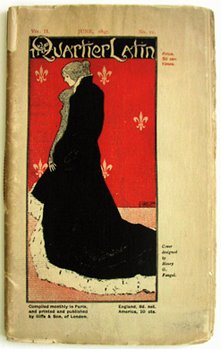
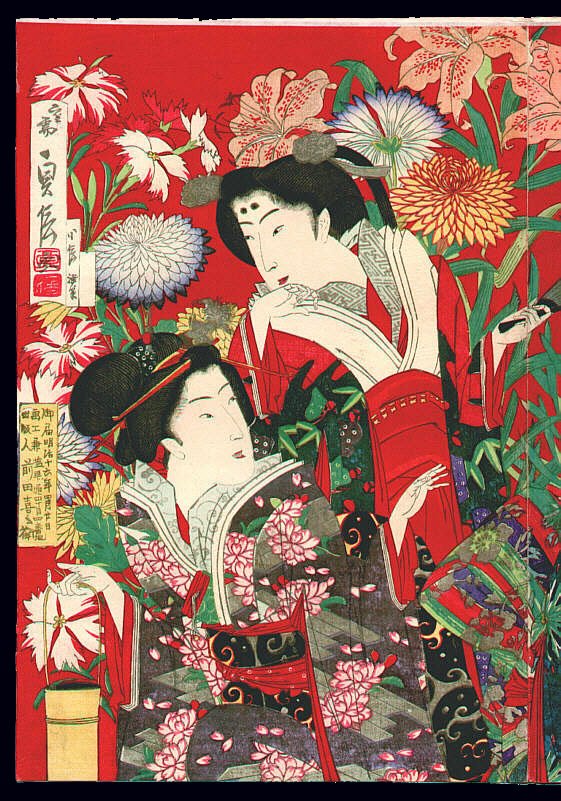
nor were many of the prints any more simple than what was happening in the west, as the japanese print and the american magazine cover from the same time period illustrate.


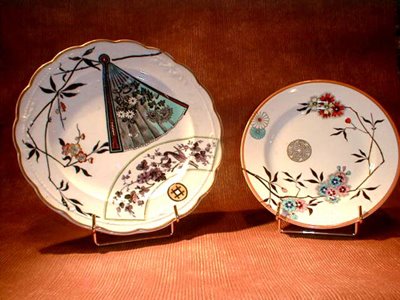
not to mention that that which was called 'japonesque' was often far from simple.


mystification, again. the west needed something simple--freedom from the clutter of the victorian era, distance from the clamor of the industrial age--and japan was just different enough, just unknown enough, to use to fill that bill.


Emile Galle
"Alla Japonica", 1900
Labels: , , ,

the japonistic aesthete
newer posts older posts