japonisme

11 April 2012

Haven't They Always Been Saints?

Washington D.C., Jan 20, 2012 / 06:02 am (CNA/EWTN News)

The recent announcement that Blessed Kateri Tekakwitha has been approved for sainthood is generating great excitement among the Native American community. “There’s an awful lot of interest,” said Monsignor Paul A. Lenz, the vice postulator of Bl. Kateri’s cause for sainthood. Msgr. Lenz told CNA on Jan. 19 that he has seen an “unbelievable response” to the news of the canonization, with reactions pouring in from all over the United States and Canada. Msgr. Lenz, who previously worked in the Black and Indian Mission Office in Washington, D.C., said that Native Americans are extremely excited about having a saint come from within their own community.

Although the date for the canonization has not yet been announced, he said that multiple groups are already organizing pilgrimages to Rome to be present when the first Native American is officially elevated to sainthood. When the date for the canonization is made public, Msgr. Lenz believes it will attract lots of attention in both the religious and secular media.

Known as “the Lily of the Mohawks,” Bl. Kateri Tekakwitha was born in upstate New York in 1656. Her father was a Mohawk chief, and her mother was an Algonquin who was raised Catholic. She was orphaned at age four by a smallpox epidemic that left her with poor eyesight and a badly scarred face. After encountering several Jesuit priests, Bl. Kateri was baptized, despite objections from her family.

Her conversion caused her tribe to disown her, so Bl. Kateri fled to Canada, where she lived as an outcast, devoted to prayer and the Blessed Sacrament. She died at age 24. After her death, witnesses said that the scars on her face disappeared, leaving her skin radiantly beautiful.

In 1980, she became the first Native American to be beatified. On Dec. 19, Pope Benedict XVI formally recognized a miracle attributed to the intercession of Bl. Tekakwitha, clearing the way for her canonization. The miracle involved a young boy in Seattle who was inexplicably cured from a flesh-eating bacteria that had disfigured his face and left him near death.

Msgr. Lenz said that the boy, who is of Native American descent, looked “worse than a leper.” However, he completely recovered after his family prayed and asked Bl. Kateri to intercede with God for him.

Msgr. Lenz explained that Catholic Native Americans have a strong faith and devotion to Bl. Kateri, whom they are familiar with from the Jesuit writings that have been handed down since the time of her death. In his 35 years of working with Native Americans, Msgr. Lenz has found that they are almost “always a friend” of Bl. Kateri Tekakwitha. “They’re very proud” of her, he said. (from)

But... wait a minute...! All of the notables here are pictured with halos, and for good reason.

By the Jewish calendar, we are currently in the holiday of Passover, where Jews celebrate with a ritualized dinner called a Seder. (The Last Supper was a Seder.) There is a word sung in a joyous song at the Passover Seder. The word is Dayenu and means “it would have been enough.” It is a word of gratitude and awe. 1 Dayenu lists the 15 gifts and miracles (like parting the Red Sea) bestowed upon the Jewish people by God in the Book of Exodus. The idea that each blessing would be enough on its own, even without further or more profound blessings, is a central theme during the holiday. 2

Looking back at the deserved sainthood of may generations of Native Americans, I think we can make a Dayenu for them easily.

If you had brought us seeds and foodstuffs in exchange for blankets of disease -- Dayenu!

If you had honorably tended your land and kept your faiths in the face of those who would steal both from you -- Dayenu!

If you had taught us to tap the Sugar Maple for her sweetness while your voices were silenced -- Dayenu!

You begin to see what I mean. May we all spend our Easter and Passover goodwill on tolerance and respect, perhaps the most difficult tasks any human being has to face.

Labels: , , , , , , , , ,

21 October 2008

by the shores

fascination with the native americans, the indians, the indigenous peoples, began pretty much exactly the moment when europeans first hit the americas. and at the same time, not surprisingly, fear of them started too.

but there were waves of artistic inspiration which always followed fear. during one of these, in 1855, longfellow joined many existing native myths into one epic poem (a form he wished to revive), and came out with hiawatha.

the poem, which in my opinion is one of the most beautiful uses of the english language ever to have been written, is 22 chapters long, book-length -- much too long to post here. the entire work is here, though, and i shall try to find some passages so delectable your toes may curl. accompanied, of course, by another wave of artistic awe, at the time of japonisme, and its influences.

Downward through the evening twilight,
In the days that are forgotten,
In the unremembered ages,
From the full moon fell Nokomis,
Fell the beautiful Nokomis,
She a wife, but not a mother.

And Nokomis fell affrighted
Downward through the evening twilight,
On the Muskoday, the meadow,

On the prairie full of blossoms.

"See! a star falls!" said the people;

"From the sky a star is falling!"

There among the ferns and mosses,
There among the prairie lilies,

On the Muskoday, the meadow,
In the moonlight and the starlight,
Fair Nokomis bore a daughter.

And she called her name Wenonah,
As the first-born of her daughters.
And the daughter of Nokomis
Grew up like the prairie lilies,

Grew a tall and slender maiden,

With the beauty of the moonlight,

With the beauty of the starlight.

And the West-Wind came at evening,
Walking lightly o'er the prairie,

Whispering to the leaves and blossoms,

Bending low the flowers and grasses,
Found the beautiful Wenonah,
Lying there among the lilies,
Wooed her with his words of sweetness,

Wooed her with his soft caresses,

Till she bore a son in sorrow,

Bore a son of love and sorrow.

Thus was born my Hiawatha,
Thus was born the child of wonder.

•

There the wrinkled old Nokomis
Nursed the little Hiawatha,

Rocked him in his linden cradle,

Bedded soft in moss and rushes,
Safely bound with reindeer sinews;
Stilled his fretful wail by saying,

"Hush! the Naked Bear will hear thee!"

Lulled him into slumber, singing,

"Ewa-yea! my little owlet!
Who is this, that lights the wigwam?
With his great eyes lights the wigwam?
Ewa-yea! my little owlet!"

Many things Nokomis taught him
Of the stars that shine in heaven;

Showed him Ishkoodah, the comet,
Ishkoodah, with fiery tresses;
Showed the Death-Dance of the spirits,
Warriors with their plumes and war-clubs,

Flaring far away to northward
In the frosty nights of Winter;
Showed the broad white road in heaven,

Pathway of the ghosts, the shadows,

Running straight across the heavens,

Crowded with the ghosts, the shadows.

Then the little Hiawatha
Learned of every bird its language,

Learned their names and all their secrets,
How they built their nests in Summer,
Where they hid themselves in Winter,

Talked with them whene'er he met them,

Called them "Hiawatha's Chickens."


Of all beasts he learned the language,
Learned their names and all their secrets,

How the beavers built their lodges,

Where the squirrels hid their acorns,

How the reindeer ran so swiftly,

Why the rabbit was so timid,

Talked with them whene'er he met them,

Called them "Hiawatha's Brothers."


•

'In the land of the Dacotahs
Lives the Arrow-maker's daughter,

Minnehaha, Laughing Water,

Handsomest of all the women.

I will bring her to your wigwam,
She shall run upon your errands,

Be your starlight, moonlight, firelight,
Be the sunlight of my people!"

Still dissuading said Nokomis:
"Bring not to my lodge a stranger

From the land of the Dacotahs!

Very fierce are the Dacotahs,

Often is there war between us,

There are feuds yet unforgotten,

Wounds that ache and still may open!"


Laughing answered Hiawatha:
"For that reason, if no other,
Would I wed the fair Dacotah,

That our tribes might be united,
That old feuds might be forgotten,
And old wounds be healed forever!"

--Henry Wadsworth Longfellow

Labels: , , , , , , , , , , ,

14 March 2008

japonisme in the land of the pueblo (etc.) IV

(click images to enlarge)

(cont.)
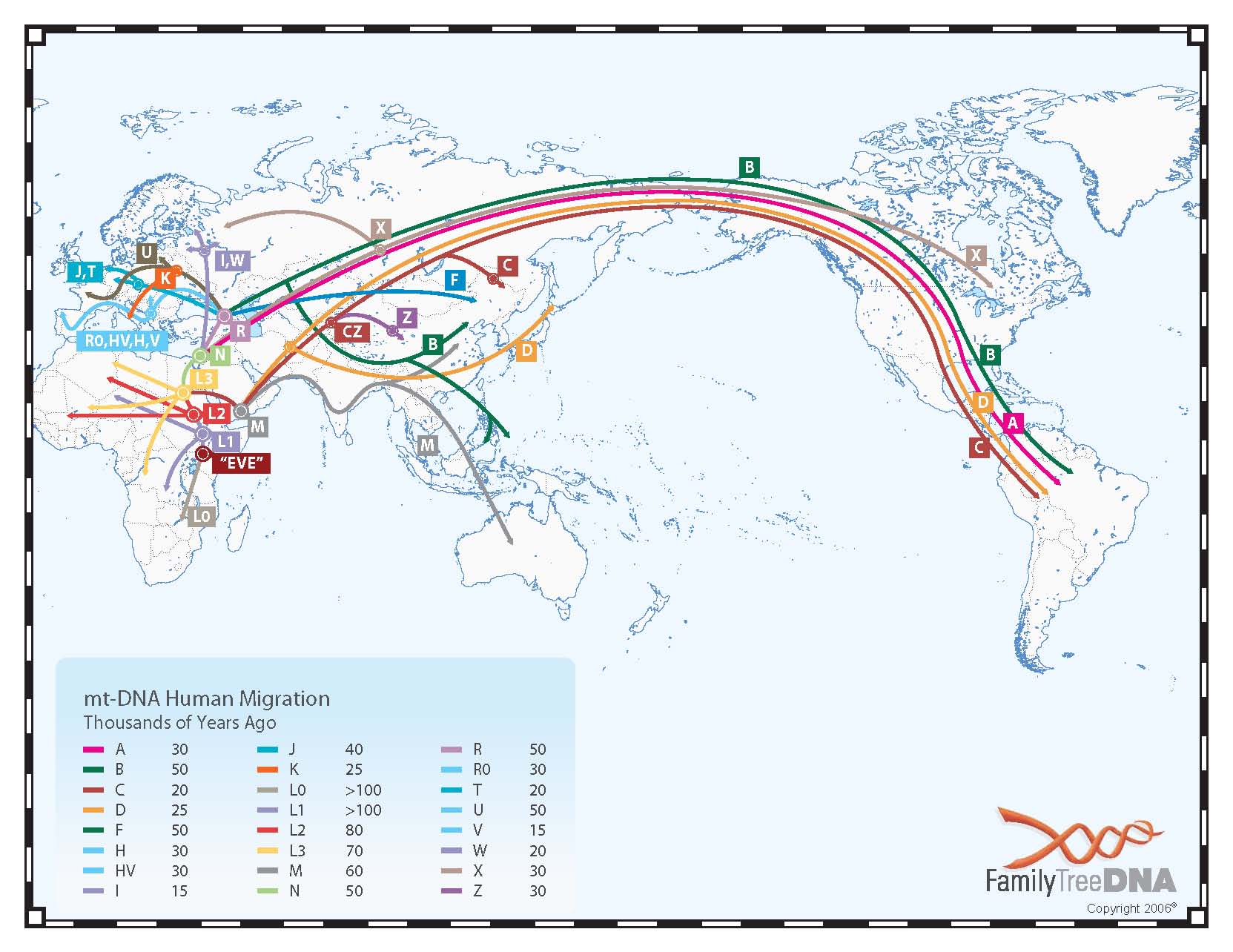
at first i figured it probably was more evidence that the american indians were descended from travellers from asia. well, the dna does uphold this evidence, but does that explain the art?

this migration was something like 50000 years ago 1; does that explain in any way the relationship between this fritz scholder, whose grandmother was luiseno, but who considered himself an american from missouri, from around 1979, and the utagawa toyokuni from about 1779. and anyway, those migrations covered most of the planet, but there is no other culture whose art so resembles one the other.

i also wondered abut the idea of 'primative cultures' creating similar arts. well, as tonto would have said, 'who you calling primitive, white woman?'

what i was to learn was, as my old friend artie rausch used to say, 'neither that simple nor that complex.'

Labels: ,

older posts