japonisme

25 September 2011

why i don't believe in hell

my father kinda looked like a mixture of mayor bloomberg and alexander nikolaevich yakovlev (photo composit). today would have been his 99th birthday, if he had not died in 1980.


he smoked a pipe, sometimes cigarettes, he had a manhattan every night when he got home from the office. with a cherry. and he played 'fur elise' on the piano. he bought himself an eames chair, and was always the second son, the one least favored.


as a pup, he had done some disc jockeying on the radio, and he was the best dancer i ever met.


when i came home from dates, he would be sitting at the dining room table eating corn flakes and reading the paper.


as i thought about him, new of his talents kept popping into my mind. singing 'scarlet ribbons.' acting in musicals at the jewish center -- 'captain sammy's showboat' (directed by my mother). he could draw middling good, and had wanted to go to art school, but ended up following in his older brother's footsteps to go to medical school at the university of chicago.

a month before he died, my mother's mother died. in the car on the way to the funeral he cracked jokes the whole time.


when i look at him in the tangle of my memory, i can only seem to find a mangled creature, partially melted into himself, some darkened parts that look like they might be from burns.


no, i don't think i'm seeing him now. i thinking i'm finally seeing him with clarity, he who will always be in my memory. how can one believe in hell? a man may spend some kind smiles in his lifetime but if he also places his own pain & fear & terrors onto his children with a scream and the back of a hand, he is being rightly tortured at that time.

Labels: , , , ,

18 August 2011

involved in the minutiae


(interview between ada calhoun & michael lewis, here)

Ada
: I was taken aback by some of the things in [your new book, Home Game: An Accidental Guide to Fatherhood], like, if I can read you one quote: "At some point in the last few decades the American male sat down at the dining room table with the American female, and let us be frank, got fleeced." I was shocked by that, because when I look it our generation, it seems like men are happy to play their part.


Michael: Ah, well, you must know different men than me.

Ada: I think I do.


Michael
: Bear in mind that most of the men I'm surrounded by are in Berkeley, California. So, the men I know are very much in the left end of the spectrum. Relatively highly involved dads. On the one hand, it is completely true that there are a lot of men who take great satisfaction in being involved in the minutiae and messiness of actually raising children. But, it is a much smaller universe of men who take any pleasure in the newborn stage. Men, I think, tend to engage once they start to be able to play with the thing and talk to it and have some kind of communication.

But, even so, there is just a wealth of bitching and moaning about the responsibility that I hear and it never really gets voiced. In the universe I'm talking about it's men who are potentially breadwinners at the same time that they are having all these new caretaking responsibilities and they don't have a real mental model to use....

But I do think that there is just enormous friction about who is supposed to do what. I think, actually, that when men are made to do things they don't want to do, like take care of a child, which they assumed the mother was going to take care of — I think they can get enormous rewards from it, but nevertheless it can be messy getting to that place.
(continued here)

Labels: , , , ,

24 November 2009

connect the dots

how do you choose what to wear? are garments always costumes, assuring that you will be taken by others as the role you wish to fill? there are those who suggest that every single item of clothing is a choice communicated, down to the last nuance, and a statement made, down to the last whisper.

me, i am driven by color. and cotton. and though i believe i have no consciousness of what is fashionable whatsoever, there remains something of great importance about it all.

i can remember the white empire-waisted sheath that i wore for high- school graduation. it had a black cummerbund with white polka dots. i was, and still am, quite delighted that i could find an enameled bracelet that was white with black polka dots to match.

several times here we've discussed the volumes of identity revealed in various cultures by hairdo, or costume, detail, or grand gesture. if it was true then, it must be true now. something as 'simple' as a woman's fingernails might immediately brand her as 'one of us' or not.

do you want it to be true for you? do you communicate through appearances consciously? might you be kidding yourself, telling a different story entirely than the one you believe you're telling? how is your identity spelled out by your clothes?

i have come to believe that identity, appearance, opinion are, for most of us, invisibly malleable -- we think what we think, wear what we wear, even know ourselves to be who we think we are... to fit into the group of our life. it could be dangerous not to.

to be born 'outside the box' changes the perception of this, but does not wholly negate its pull. we like to think we create ourselves out of free will, but if that were true best friends wouldn't dress alike, nobody would call to ask what to wear to the party.

that old song, 'you've got to be taught how to hate,' well, you've got to be taught everything else too. how can something so unimportant be the most important thing of all?

Labels: , , , , , ,

27 July 2009

her parrot accomplice

MAY COLVEN

False Sir John a wooing came
To a Maid of beauty fair,
May Colven was
this Ladys name,
Her Fathers only Heir.

He woo'd her butt,
he woo'd her ben,
He woo'd her in the Ha';
Until he got
this Lady's consent,
To mount and ride awa'.


He went down to
her Father's bower,
Where all the Steeds
did stand;
And he's taken one of
the best Steeds,
That was in her Father's hand.

He's got on, and she's got on,
And fast as they could flee,
Untill they came to a lonesome part,
A Rock by the side of the Sea.


Loup off the Steed says false Sir John,
Your bridal bed you see;
For I have drowned Seven Young Ladies,
The Eight one you shall be.

Cast off, Cast off, my May Colven,
All and your silken Gown,
For it's o'er good, and o'er costly,
To rot in the Salt Sea foam.


Cast off, Cast off,
my May Colven,
All and your
embroider'd shoen,
For they are o'er good,
and o'er costly
To rot in the Salt Sea foam.

O turn you about
O false Sir John,
And look to the leaf
of the Tree;
For it never became
a Gentle Man,
A naked Woman to see.

He turnd himself straight round about,
To look to the leaf
of the Tree;
So swift as
May Colven was,
To throw him
in the Sea.

O help, O help my May Colven,
O help, or else
I'll drown;
I'll take you home to your Father's bower
And set you down safe and sound.

No help, no help you false Sir John,
No help nor pity thee;
Tho' seven Kings Daughters you
have drown'd
But the Eight
shall not be me.

So she went on her Fathers Steed,
As swift as
she could flee;
And she came home to her Father's bower
Before it was
break of day.

Up then spoke
the pretty Parrot,
May Colven where
have you been,
What has become of
false Sir John,
That woo'd you
so late the streen.

He woo'd you butt,
he woo'd you ben,
He woo'd you in the Ha',
Until he got your own consent
For to mount and gang awa'.


O hold your tongue my pretty Parrot,
Lay not the blame upon me,
Your Cup shall be of the flowered Gold,
Your Cage of the Root of the Tree.


Up then spake
the King himself,
In the Bed Chamber
where he lay,
What ails the Pretty Parrot,
That prattles so long or day.

There came a Cat
to my Cage Door
It almost a worried me,
And I was calling
on May Colven,
To take the Cat from me.

(there are many versions of this, all anonymous)

Labels: , , , , , , , , , ,

15 May 2009

Created half to rise, and half to fall

so what then, peace or passion, passion or peace? animal nature or buddha nature? at birth: sinner, or buddha? can the impetus to quiet the mind to reach one's inner buddha, or one's outer god, effect one's art? internal v external motivation, or lack of any motivation at all?

DEAD MY OLD FINE HOPES
AND DRY MY DREAMING
BUT STILL...
IRIS, BLUE EACH SPRING

SHUSHIRI
1

these questions, of course, are older than time.


from ESSAY ON MAN, Epistle II

I. Know, then, thyself, presume not God to scan;

The proper study of mankind is man.
Placed on this isthmus of a middle state,
A being darkly wise, and rudely great:
With too much knowledge for the sceptic side,
With too much weakness for the stoic’s pride,
He hangs between; in doubt to act, or rest;
In doubt to deem himself a god, or beast;
In doubt his mind or body to prefer;
Born but to die, and reasoning but to err;
Alike in ignorance, his reason such,
Whether he thinks too little, or too much:
Chaos of thought and passion, all confused;
Still by himself abused, or disabused;
Created half to rise, and half to fall;
Great lord of all things, yet a prey to all;
Sole judge of truth, in endless error hurled:
The glory, jest, and riddle of the world!

Alexander Pope

passion or peace, peace or passion
must one choose? can one choose?

1814

.我庵や花のちいさいかきつばた
waga io ya hana no chiisai kakitsubata

AT MY HUT
AN IRIS WITH THE TINIEST
BLOSSOMS

ISSA


THE DIVINE IMAGE

To Mercy, Pity, Peace, and Love
All pray in their distress;
And to these virtues of delight
Return their thankfulness.

For Mercy, Pity, Peace, and Love
Is God, our father dear,
And Mercy, Pity, Peace, and Love
Is Man, his child and care.

For Mercy has a human heart,
Pity a human face,
And Love, the human form divine,
And Peace, the human dress.

Then every man, of every clime,
That prays in his distress,
Prays to the human form divine,
Love, Mercy, Pity, Peace.

And all must love the human form,
In heathen, Turk, or Jew;
Where Mercy, Love, and Pity dwell
There God is dwelling too.

William Blake

what i find myself wondering is if this is why i so love this moment in history-- what is life without passion, what is life without peace? in the moment of japonisme, we have a grand collision into a grand dance.

1812

.辻だんぎちんぷんかんも長閑哉
tsuji dangi chinpunkan mo nodoka kana

A CROSSROADS SERMON
GIBBERISH
SPRING PEACE

ISSA


In my article, "The Dewdrop World: Death and Other Losses in the Haiku of Issa," I write:

Issa regards the crossroads sermon as a lot of "gibberish"--long-winded and fundamentally meaningless. However, his attitude is not one of disdain, but rather of quiet, peaceful acceptance, for the sermon, too, is part of the lovely spring day. The final words, nodoka kana, translate literally as, "peacefulness!" but in the shorthand of haiku nodoka specifically connotes the tranquility of springtime. Hence the monk, his listeners, Issa, and the crossroads are all seen as part of a greater picture--the spring day itself: green fields, blue sky, and the peace evoked without and within. The poet is not condemning the sermon or the monk; his calling the sermon gibberish, in the whole context of the poem, sounds almost like a loving tribute, for the outdoor sermon is as much a sound of spring as the warble of birds. However, its content is evidently not to be taken seriously. Modern Haiku 16. No. 3 (1985): 20-31 2

Labels: , , , , , , , , , , , ,

24 December 2008

(everybody!)

Love, love, love.
Love, love, love.
Love, love, love.

There's nothing you can do that can't be done.
Nothing you can sing that can't be sung.
Nothing you can say but you can learn how to play the game.
It's easy.

Nothing you can make that can't be made.
No one you can save that can't be saved.
Nothing you can do but you can learn how to be you in time.
It's easy

All you need is love.
All you need is love, love.
Love is all you need.

All you need is love.
All you need is love, love.
Love is all you need.

Nothing you can know that isn't known.
Nothing you can see that isn't shown.
Nowhere you can be that isn't where you're meant to be.
It's easy.

All you need is love.
All you need is love, love.
Love is all you need.

All you need is love (all together, now!)
All you need is love. (everybody!)
All you need is love, love.
Love is all you need (love is all you need).

Yee-hai!
Oh yeah!
She loves you, yeah yeah yeah.


C John Lennon 1967

Labels: , , , , , , , ,

14 March 2008

japonisme in the land of the pueblo (etc.) IV

(click images to enlarge)

(cont.)
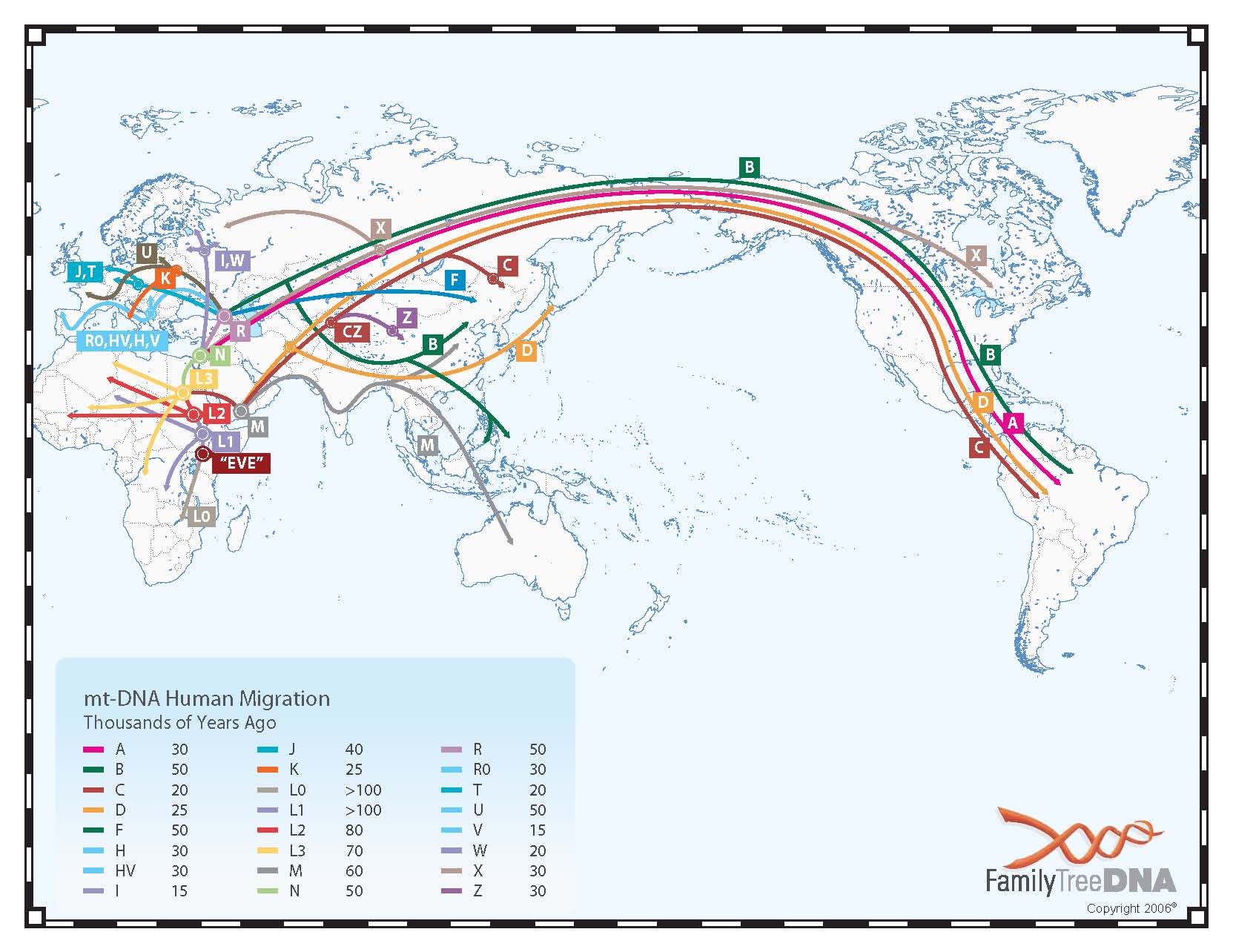
at first i figured it probably was more evidence that the american indians were descended from travellers from asia. well, the dna does uphold this evidence, but does that explain the art?

this migration was something like 50000 years ago 1; does that explain in any way the relationship between this fritz scholder, whose grandmother was luiseno, but who considered himself an american from missouri, from around 1979, and the utagawa toyokuni from about 1779. and anyway, those migrations covered most of the planet, but there is no other culture whose art so resembles one the other.

i also wondered abut the idea of 'primative cultures' creating similar arts. well, as tonto would have said, 'who you calling primitive, white woman?'

what i was to learn was, as my old friend artie rausch used to say, 'neither that simple nor that complex.'

Labels: ,

03 November 2007

harmony

[T]richotomy is a pattern of American Culture. [I]t is, and will probably continue to be, an important cognitive category in American (an Old World) culture.

As for how individuals learn about the pattern, there are probably many sources. Three dimensions of space, the three tenses of time, and the good-better-best paradigm all exert some influence.

But an Am- er- ican three-year-old has already been exposed to the category in folkloristic form, perhaps before he realizes the space, time, and linguistic features.

For are there not three men in a tub? three bags of Baa Baa Black Sheep's wool? three little kittens who lost their mittens? three little pigs? Is not the third item called for by Old King Cole his fiddlers three?


Is there an American child who has not heard the story of the three bears? This latter story is a narrative listing of trichotomies in which the mediating third term is invariable "just right." (Note that the third term is associated with the child bear rather than the mother and father bears.)


The child is conditioned by his folklore to expect three and his culture does not disappoint him. Language, social organization, religion, and almost all other aspects of American culture confirm the pattern.

Trichotomy exists but it is not the nature of nature. It is part of the nature of culture. At this point, if anyone is skeptical about there being a three-pattern in American culture, let him give at least three good reasons why.

Alan Dundes 1

Labels: , ,

older posts