japonisme

16 June 2011

don't tell me it isn't happening

NEW

The long path sap sludges up
through an iris, is it new

each spring? And what would
an iris care for novelty?


Urgent in tatters, it wants
to wrest what routine it can


from the ceaseless shifts
of weather, from the scrounge


it feeds on to grow beautiful
and bigger: last week the space


about to be rumpled
by iris petals was only air

through which a rabbit leapt,
a volley of heartbeats hardly
contained by fur, and then the clay-
colored spaniel in pursuit


and the effortless air
rejoining itself whole.

William Matthews


all the irises
these are the sixteen kinds of irises that grow in my garden.
the ones with their names attached DID NOT BLOOM this year.
profuse iris, with, at most, one bloom.

i called the local experts,
and they said that they're hearing this from a lot of people;
i said that in 20 years this has never happened,
and they said that they're hearing about things
that haven't happened in as long as 100 years.

Labels: , , , , , , , , ,

14 January 2011

what they never told me....

AFFIRMATION

To grow old is to lose everything.
Aging, everybody knows it.
Even when we are young,
we glimpse it sometimes, and nod our heads
when a grandfather dies.
Then we row for years on the midsummer
pond, ignorant and content. But a marriage,
that began without harm, scatters
into debris on the shore,
and a friend from school drops
cold on a rocky strand.

If a new love carries us
past middle age, our wife will die
at her strongest and most beautiful.
New women come and go. All go.
The pretty lover who announces
that she is temporary
is temporary. The bold woman,
middle-aged against our old age,
sinks under an anxiety she cannot withstand.
Another friend of decades estranges himself
in words that pollute thirty years.

Let us stifle under mud at the pond's edge
and affirm that it is fitting
and delicious to lose everything.

Donald Hall

Copyright © 2002 by Donald Hall.
All rights reserved
.


• they never told me i would take up sewing, knitting, but i have.

• growing a beard??! i know for certain i have never heard of this! shave! regularly!

• forget what number on the crossword puzzle i'm working on

• fall


洗たくの婆々へ柳の夕なびき
sentaku no baba e yanagi no yû nabiki

to the old woman
doing laundry, the evening
willow bows

issa*


1824

.日本にとしをとるのがらくだかな
nippon ni toshi wo toru no ga raku da kana

growing a year older
in Japan
is a comfort


One of Issa's patriotic haiku. The season word in this haiku, toshitori, ("growing old") relates to the year's ending; in the traditional Japanese system for counting age, everyone gains a year on New Year's Day. Shinji Ogawa believes that Issa may be punning with the words raku da ("comfortable") and rakuda ("camel"). Viewed in this light, the haiku's tone is "childishly comical."*


• to me though, i'll admit, i prefer hall's interpretation: that as we lose what we've believed is important, we come to know ourselves.

• age finally gifts us with
what therapy did not.

• and we surely do love our animal friends.


*translation and interpretation of issa's work by david g lanoue

Labels: , , , , , , , , , ,

07 January 2010

vamp 'til ready

i'm working on a project that is taking a looooooooong time,
so i thought i'd give you something to play with.


HODLER

ROBBE

HOYTEMA

CZESCHKA

POUND

YEATS

STEICHEN

PHILLIPS

YOSHITOSHI

CASSATT

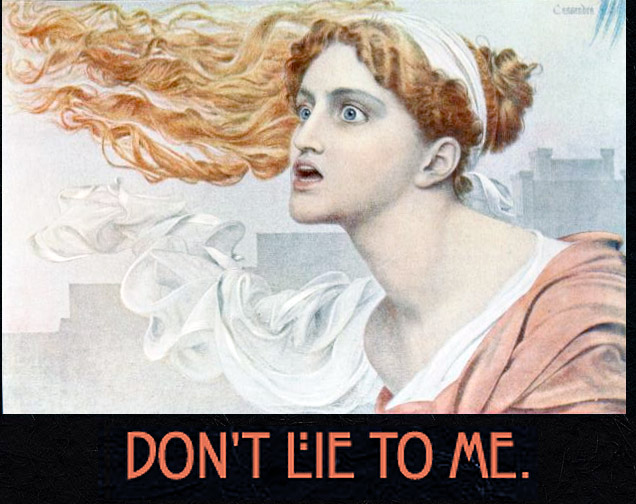
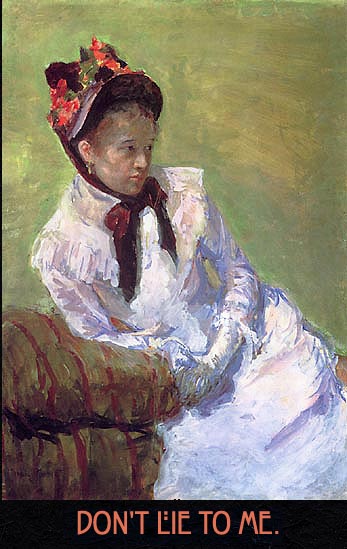
i tried finding photos of artists who have been featured here, when they were fairly young. for these artists, this is the best i could do. i could find no photographs of a young mary cassatt, only this painting. but i read something interesting while i was looking:

Although Mary Cassatt was a member of and surrounded by an astounding Impressionist circle, she was drawn to one genius and artist in particular. Edgar Degas and Mary Cassatt shared a very unique and intimate relationship. Both rejecting the conservative artistic directions, Cassatt and Degas' restless intelligence drew them together. Both Degas and Cassatt inspired and facilitated each other's artistic careers. Cassatt even proclaims “the first sight of Degas' pictures was the turning point in my artistic life.” In fact, it was the sight of Degas' pastel work that turned Cassatt onto pastel for the first time. Cassatt and Degas soon became quick supporters of each other's work. For instance, Cassatt bought one of Degas' pastels and brought it back to America, making it the first Impressionist artwork to come to America. 1

Labels: , , , , , , , , , , ,

16 November 2009

Our Mothers Depart

OUR MOTHERS DEPART


Our mothers depart from us,
gently depart
On tiptoe,
but we sleep soundly,
stuffed with food,
and fail to notice this dread hour.
Our mothers do not leave us suddenly,
no —
it only seems so 'sudden.'

Slowly they depart, and strangely,
with short steps down the stairs of years.
One year, remembering nervously,
we make a fuss to mark their birthday,
but this belated zeal
will save neither their souls
nor ours.

They withdraw ever further,
withdraw even further.
Roused from sleep,
we stretch toward them,
but our hands suddenly beat the air —
a wall of glass has grown up there!
We were too late.
The dread hour had struck,
Suppressing tears, we watch our mothers,
in columns quiet and austere,
departing from us.

Yevgeny Yevtushenko


(my mother died almost two years ago.
i have not cried. we weren't friends.
but how i loved her, as a child.
the more she pulled away from me
the more i craved her.)

Labels: , , , , , , , ,

23 July 2009

the bath, part 4


TEODORO LUNA CONFESSES AFTER YEARS TO HIS BROTHER, ANSELMO THE PRIEST, WHO IS REQUIRED TO UNDERSTAND, BUT WHO UNDERSTANDS ANYWAY, MORE THAN PEOPLE THINK

I am a slave to the nudity of women.
I do not know with what resolve

I could stand against it,
a naked woman
Asking of me anything.

An unclothed woman is
sometimes other things.
I see her in a dish of green pears.

Anselmo, do you know what I mean if I say
Without clothes

Her breasts are the two lions
In front of the New York Public Library,

Do you know that postcard of mine?
In those lions there is something

For which I have in exchange
Only sounds. Only my fingers.

I see her everywhere. She is the lions
And the pears,
those letters of the alphabet

As children we called dirty, the W,
The Y, the small o.

She is absolutely
the wet clothing on the line.
Or, you know, to be more intimate,

May I? The nub, the nose of the pear,
Do you know what I mean?
Those parts of the woman

I will call two Spanish dancer hats,
Or rounder sometimes,
doughboy helmets from the War.

Sometimes they are flat
in the late afternoon
Asleep. Like drawings,

Like a single rock thrown into the lake,
These parts of a woman
an imperfect circling

Gyre of lines moving out,
beyond the water.
They reach me at the shore, Anselmo.

Without fail, they are stronger,
And they have always been
faster than I am.

It’s like watching the lassoing man,
The man with the perfectly circling rope,

Pedro Armendariz in the Mexican movies,
Or Will Rogers. Wherever one is from,

Whoever this man is.
And he is always there.
Everybody knows one.

He always makes his big lasso,
twirling his rope
Around himself and
a woman from the audience

Only I am the woman,
do you understand, Anselmo?
Caught in the circling rope. I am the woman

And me thinking of a woman
Without clothes

Is that man and that rope
And we are riding on separate horses.

Alberto Ríos

from Teodora Luna's Two Kisses. Copyright © 2000 by Alberto Ríos.

are the men who are the capturers, the 'nurturers,' the captured, in fact? in the whole bath series, we have naked women being seen by (presumably) clothed men. i have tried to choose images in which the women are not apparently posing, apparently unaware of being observed. but in fact they are.

i have to admit that i don't exactly know what to make of all of this. when i used to do my magazine i realized that both male and female artists were most likely to feature their nudes female.
i like looking. feel comforted by looking.


so is it sexist? fashionable, yes (at that time, 'bathers' was a de rigour subject), but oppressive too? i just don't know. what do you think? if you are a woman, do you feel you are capturer or captured?
and men -- same question.

Labels: , , , , , , , , , , ,

16 July 2009

the bath, part 1

THE BATH

Washing Kai in the sauna,
The kerosene lantern set on a box
outside the ground-level window,
Lights up the edge of the iron stove and the
washtub down on the slab
Steaming air and crackle of waterdrops
brushed by on the pile of rocks on top
He stands in warm water
Soap all over the smooth of his
thigh and stomach
“Gary don’t soap my hair!”

—his eye-sting fear—
the soapy hand feeling
through and around the globes and curves of his body
up in the crotch,
And washing-tickling out the scrotum, little anus,
his penis curving up and getting hard
as I pull back skin and try to wash it
Laughing and jumping,
flinging arms around,
I squat all naked too,
is this our body?

Sweating and panting in the
stove-steam hot-stone
cedar-planking wooden bucket
water-splashing
kerosene lantern-flicker
wind-in-the-pines-out
sierra forest ridges night—
Masa comes in, letting fresh cool air
sweep down from the door
a deep sweet breath
And she tips him over gripping neatly,
one knee down
her hair falling hiding one whole side of
shoulder, breast, and belly,

Washes deftly Kai’s head-hair
as he gets mad and yells—
The body of my lady,
the winding valley spine,
the space between the thighs
I reach through,
cup her curving vulva arch and
hold it from behind,
a soapy tickle a hand of grail
The gates of Awe
That open back
a turning double-mirror world of
wombs in wombs, in rings,
that start in music,
is this our body?

The hidden place of seed
The veins net flow across the ribs,
that gathers
milk and peaks up in a nipple—fits
our mouth—
The sucking milk from this
our body sends through
jolts of light; the son, the father,
sharing mother’s joy
That brings a softness to the
flower of the awesome
open curling lotus gate I cup and kiss
As Kai laughs at his mother’s breast he now is weaned
from, we
wash each other,
this our body

Kai’s little scrotum up
close to his groin,
the seed still tucked away, that
moved from us to him
In flows that lifted with
the same joys forces
as his nursing Masa later,
playing with her breast,
Or me within her,
Or him emerging,
this is our body:

Clean, and rinsed, and sweating more, we stretch
out on the redwood benches hearts all beating
Quiet to the simmer of the stove,
the scent of cedar
And then turn over,
murmuring gossip of the grasses,
talking firewood,
Wondering how Gen’s napping,
how to bring him in
soon wash him too—
These boys who love their mother
who loves men, who passes on
her sons to other women;

The cloud across the sky. The windy pines.
the trickle gurgle in the swampy meadow

this is our body.

Fire inside and boiling water on the stove
We sigh and slide ourselves down
from the benches
wrap the babies, step outside,

black night & all the stars.

Pour cold water on the back and thighs
Go in the house—
stand steaming by the center fire
Kai scampers on the sheepskin
Gen standing hanging on and shouting,

“Bao! bao! bao! bao! bao!”

This is our body.
Drawn up crosslegged by the flames
drinking icy water
hugging babies, kissing bellies,

Laughing on the Great Earth

Come out from the bath.

Gary Snyder

“The Bath” from Turtle Island. Copyright © 1974 by Gary Snyder.
No Nature: New and Selected Poems (1992)

Labels: , , , , , , , , , ,

older posts