roses in france
posted by lotusgreen at 2:57 PM
0 comments


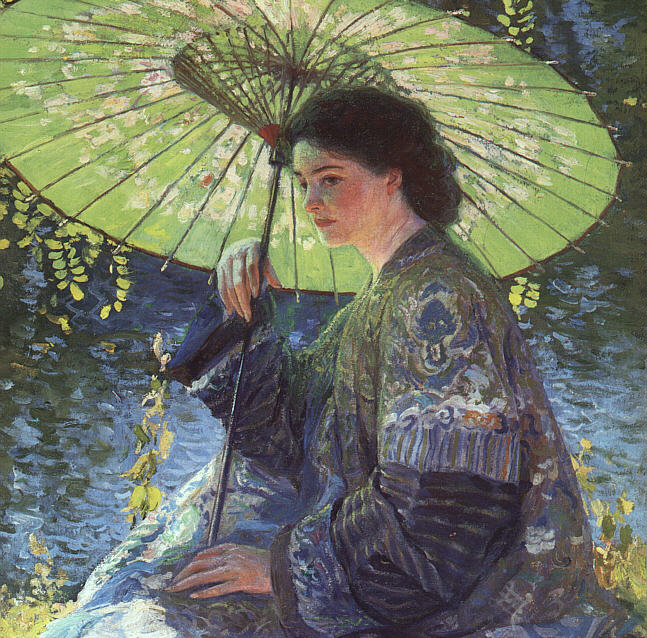
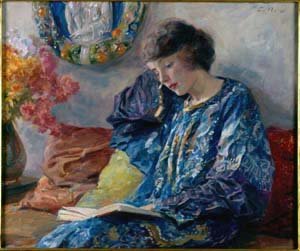
 guy rose and frederick carl frieseke, both american impressionists, from california and from michigan, loved the kimono and parasol look women were wearing that year. in fact on the french countryside at giverney, where both lived for many years, both painted frieseke's wife one summer afternoon.
Labels: frederick frieseke, guy rose
posted by lotusgreen at 12:45 PM
0 comments


Labels: bairei kono, walter klemm
posted by lotusgreen at 5:44 PM
0 comments

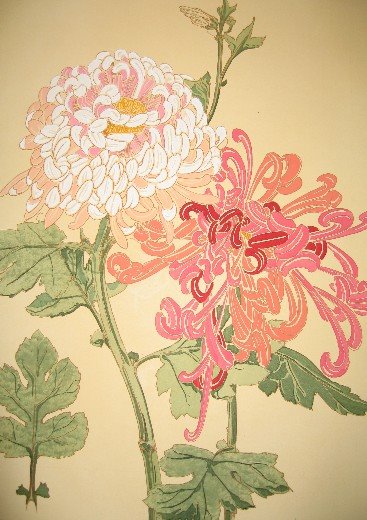
Labels: chrysanthemums, keika hasegawa, seguy
posted by lotusgreen at 2:02 PM
0 comments
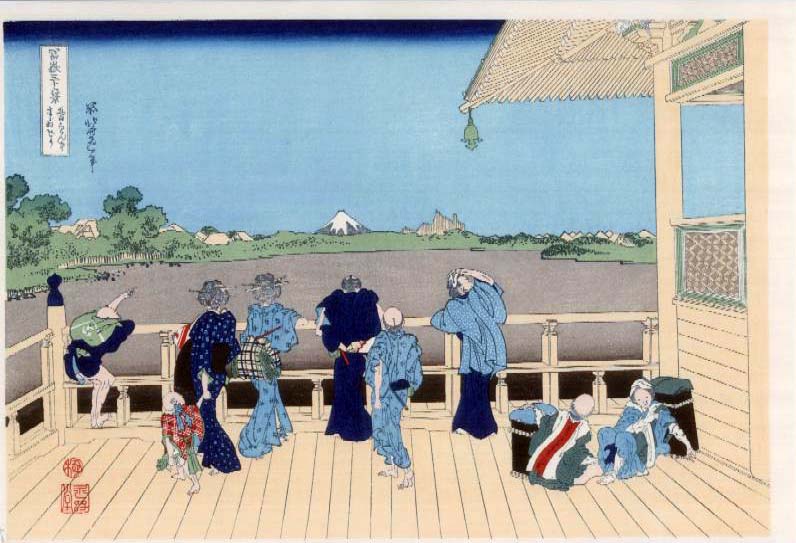 i have selected these two images for a couple of reasons: that this may be the hokusai that whistler saw that
  inspired his own balcony painting, for one thing, and for another, to note that whistler's painting, in addition to featuring the wearing of kimono, also features a common setting from the japan- ese prints, has it's own little "fuji" in the back- ground (hokusai's is from his '36 views of fuji' series), and has the main figure, in fact most of the company, with her back to the viewer.
posted by lotusgreen at 9:42 AM
0 comments
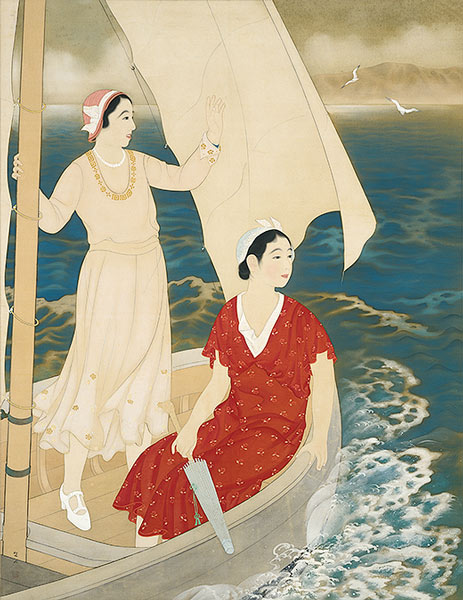 david asked here about the changes that went in the opposite direction. i don't know about that as much, but see that there's an exhibition at boston's mfa that bridges the gap somewhat:
(Miki Suizan, Fair Wind, 1933)
Labels: japanese impressionism, Miki Suizan
posted by lotusgreen at 7:22 PM
2 comments
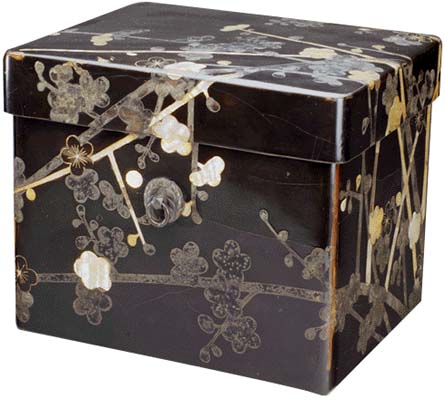 i found this wonderful piece, "a gorgeous [lacquer- work] box by the great Hon'ami Koetsu," on an equally wonderful blog, japanese-arts, which is fascinating, but i hope he finishes it! we will no doubt see this pattern again, in silverwork from france, i presume.
Labels: Hon'ami Koetsu
posted by lotusgreen at 1:48 PM
0 comments
 sure, everyone is familiar with monet's wife adorning the red kimono and gesturing her fan, and standing on the hill, several times, with the para- sol; you've probably seen van gogh's copying, transliterating, japanese prints; we've seen whistler's portrait in the peacock room (see in japonisme links, below) but have we seen this one, also nearly an exact reproduction, save for style? (the title of the piece is 'variations in flesh colour and green: the balcony.' in 1889 harper's called it, 'a japanese fantasy realized on the banks of the grey thames.')
 and there are many other impressionists, american and euopean, who followed this trend, and we'll see more of them in an ongoing way.
posted by lotusgreen at 3:16 PM
0 comments
 in addition to japan's influence, on the deepest levels, on painting, design, architecture, music, literature, theater, dance, etc., something else happened: japonisme was cool, hip, what everyone was either into or parodied.
Labels: bernhard gutmann
posted by lotusgreen at 2:37 PM
2 comments
 "Japonisme brought to the West a new coloration, a
posted by lotusgreen at 2:42 PM
0 comments

"This exhibition explores architect Frank Lloyd Wright’s great passion for Japanese woodblock prints, which he collected and sold throughout his career. While highlighting works by some of the most celebrated Japanese print artists from the 18th and 19th centuries, this exhibition also offers insight into this source of inspiration for Wright’s architecture."not only wright, but monet, van gogh, and many others, collected and were inspired by the influx of
japanese arts and crafts.
Labels: frank lloyd wright
posted by lotusgreen at 12:50 PM
0 comments
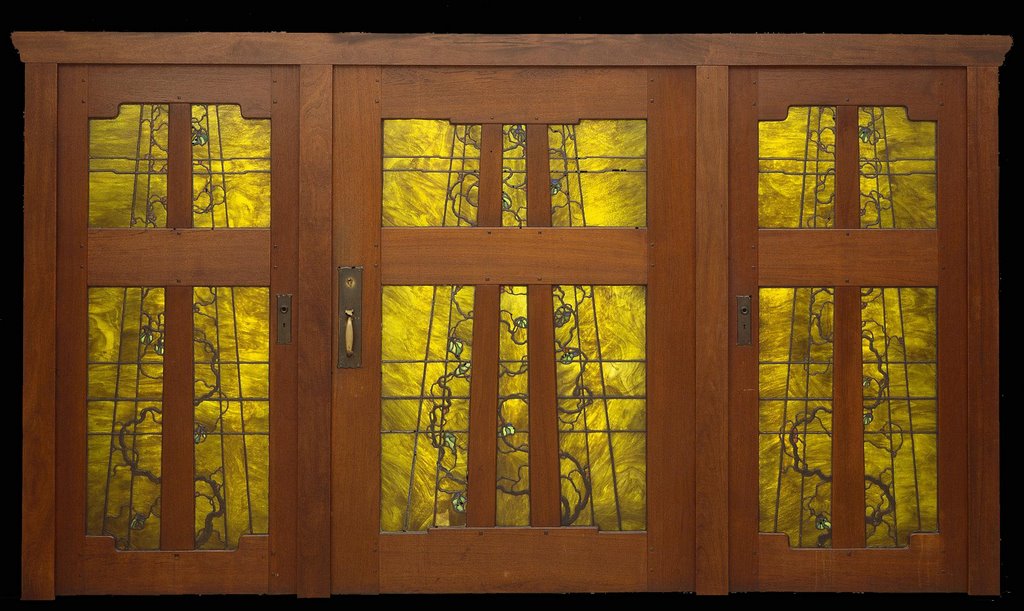
Labels: architecture, greene and greene
posted by lotusgreen at 1:59 PM
0 comments
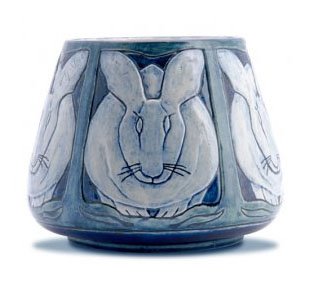
 i guess we haven't yet mentioned many of the other names or styles that are japonisme, in one way or another, in disguise. Of course art nouveau, but also jugendstil, liberty style, arts and crafts, and many more.
Labels: newcomb
posted by lotusgreen at 2:56 PM
0 comments
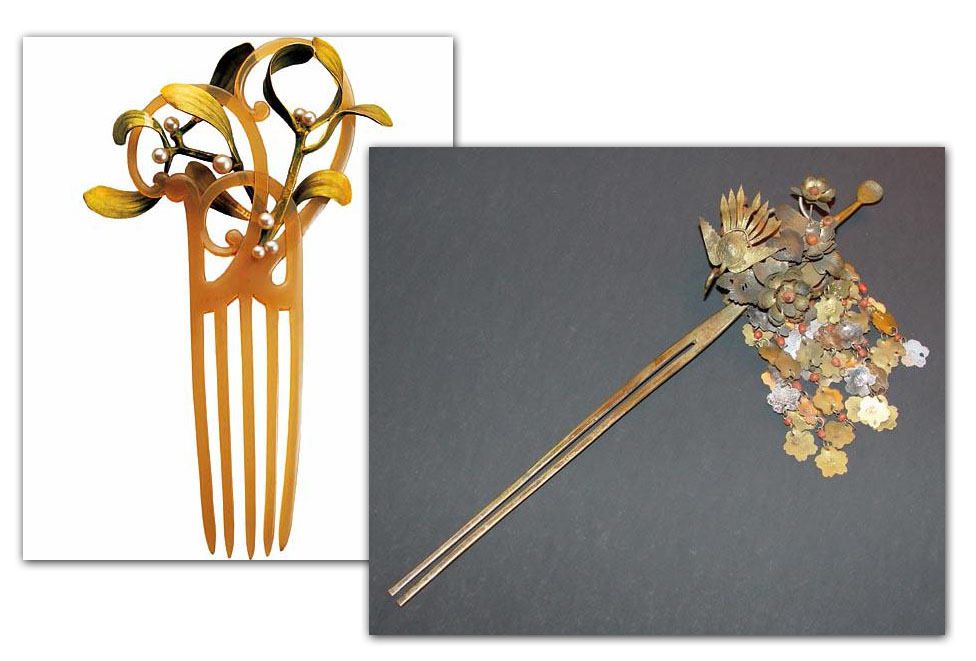
Labels: combs
posted by lotusgreen at 2:09 PM
0 comments
 at a most basic level what i have learned are the keystones that marked japonisme were these: blocks of flat color, blocks of intricate pattern (cloth, wallpaper), asymmetrical layout, an unusual framing, and a stronger than previously seen in the countries where it occurred: an emphasis on nature and daily, domestic life. these were the features in the japanese prints that most notably were adapted by the new art, l'art nouveau.
Labels: asymmetry, thomas dewing, toulouse-lautrec
posted by lotusgreen at 11:22 PM
0 comments
 and one last binding, for the moment anyway (there are some exquisite covers for some lafcadio hearn books i have to dig up from my files somewhere....), from another stunning collection here.
Labels: bindings, bookbinding
posted by lotusgreen at 7:55 PM
0 comments
 not that paris, that art nouveau alone, were influenced by the influx of japanese goods. many artists developed signatures or marks to mimic those used by the japanese. toulouse-lautrec's is famous (click for the exhibition):
Labels: wiener werkstatte
posted by lotusgreen at 12:52 PM
0 comments
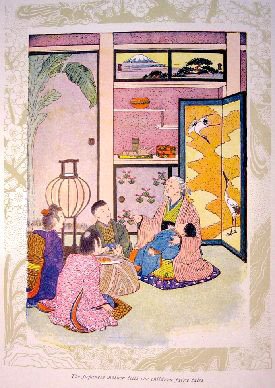 i was thrilled to find an online bookseller with an entire section devoted to japonisme! handsome books, and the descriptions of the books, the authors, the designers and illustrators, and of japonisme itself, are priceless.
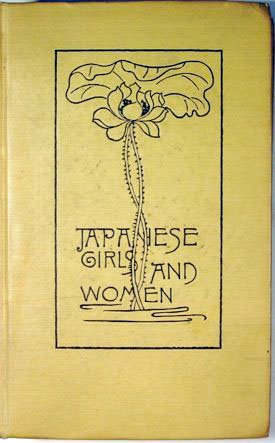
Labels: c yarnall abbott, sanchi ogawa, sarah wyman whitman
posted by lotusgreen at 5:41 PM
0 comments
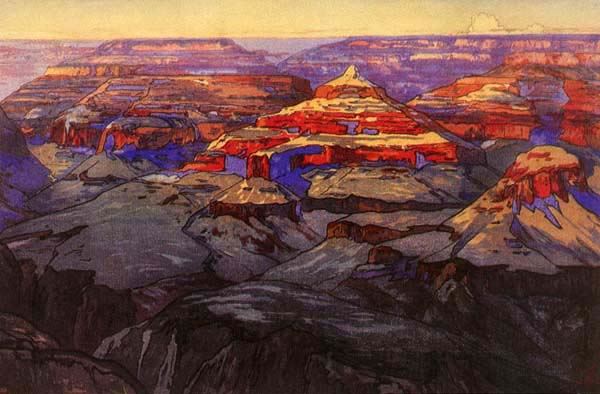 there were western influences on the japanese during this period as well. leaving aside for the moment all of these but those of some printmakers, i would like to point to two: hiroshi yoshida and yumeji takehisa .
Labels: hiroshi yoshida, takehisa yumiji
posted by lotusgreen at 3:18 PM
0 comments
 for the last several days i have been scouring the internet for resources and find there's little agreement to anything (not that this should come as a surprise), mainly, the definitions, but also the history behind it, the range of its influence, etc. so today i will do my best to lay out what i have learned japonisme to be, and will return often, i'm sure, to correct, amend, edit and embellish, etc., and with your help perhaps arrive at something definitive.
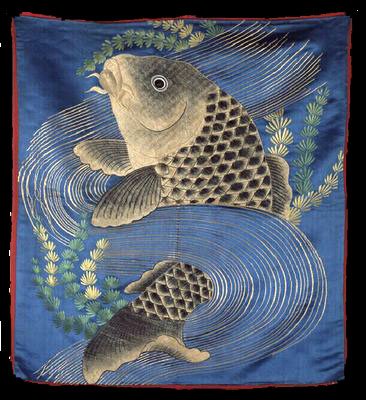 also coming from china was an ethic that some say was the breeding ground for buddhism itself: ancient chinese nature- worshipping religions. this, along with a developed buddhism as well switched the human/nature/deity paradigm that had developed in the west on its ear. very quickly nature went from what humans controlled to what humans were.
Labels: e. gaillard
posted by lotusgreen at 3:11 PM
0 comments
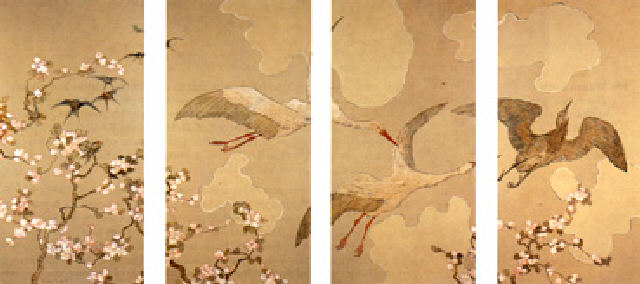 Theodoor van Hoytema
Labels: theo van hoytema
posted by lotusgreen at 10:56 PM
0 comments
posted by lotusgreen at 3:22 PM
0 comments
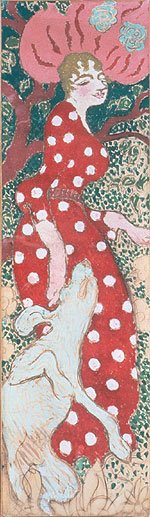 yet another of the metropolitan museum's wonderful exhibitions that deal with artists with a strong, clear sense of japonisme in their work.
Labels: pierre bonnard
posted by lotusgreen at 9:59 PM
0 comments
 one preliminary, interesting, discussion of the arrival of the japanese aesthetic to the west can be found here.
posted by lotusgreen at 11:10 AM
0 comments

Labels: henri riviere
posted by lotusgreen at 10:51 AM
0 comments
posted by lotusgreen at 10:43 AM
0 comments
 this beautiful illustration from 1918 is the frontpiece for the first book Dorothy Pulis Lathrop ever illustrated. she would go on to become the first winner of the caldecott prize for illustrations for a children's books.
Labels: dorothy lathrop, illustration
posted by lotusgreen at 6:14 PM
0 comments
 roll the clock back, though, 15 or 20 years, and there i am a young hippy hitting san francisco for the first time. also for the first time, posters from the art nouveau period were being mass-produced, and were quickly selling through head shops around the world. not for 75 years had there been such interest in the art from that era, and now it had exploded once again.
Labels: alfonse mucha
posted by lotusgreen at 8:36 PM
0 comments
 first time i heard the word, was when i saw this book in the gift shop of the berkeley art museum, 1981, while i was there delivering the very first issue of a magazine i was publishing at the time (yellow silk).
posted by lotusgreen at 1:43 PM
1 comments
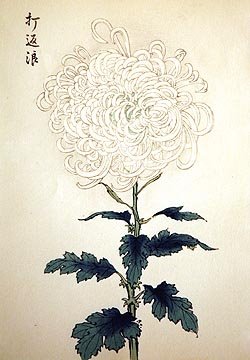 for as long as i can remember, the print, rather than the painting, has fascinated me; i've thought of it as poetry rather than prose. prints have a translucent quality: they're filled with light.
Labels: keika hasegawa
posted by lotusgreen at 11:13 PM
2 comments
 i once went around the world, a week in japan, a week in paris, and a week in new york. from nyc i took the train down to rutgers where there is an institute for the study of japonisme, and where they have an incredible selection from their collection on display.
posted by lotusgreen at 11:27 PM
29 comments