what goes around comes around


posted by lotusgreen at 3:25 PM
0 comments


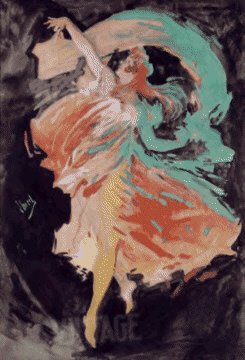
 the butterfly dance served to inspire a dancer who was to become the toast of all of paris.
 This was a dance of transformation through motion; flowing, spiralling, wavering, turning movements that fired audience's imaginations and inspired multiple readings of the morphing shapes she created. Marked by instability as a signifier and a quality of constant flux, this art was “not to be repeated or described”, a dance of continual invention that bypassed poses and postures, emulating the ephemeral “flow of life”.
 and only a few of the artistic renditions of the artist...
Labels: dance, loie fuller
posted by lotusgreen at 8:40 PM
1 comments
 frankly i'm not fully satisfied with my answer to lauren, and i've realized i needed to know more about the wider japanese arts culture. i've barely scratched the surface of course, but i'll report some things i've found:
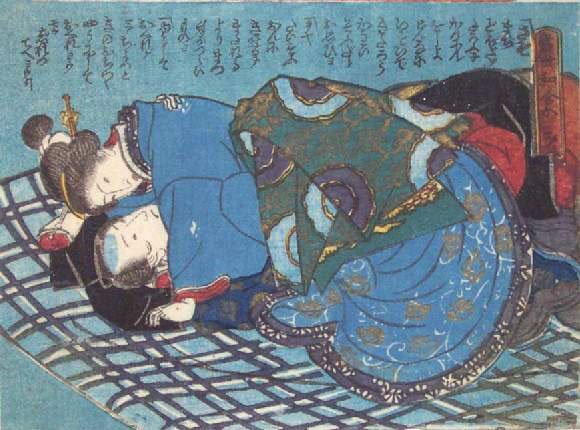
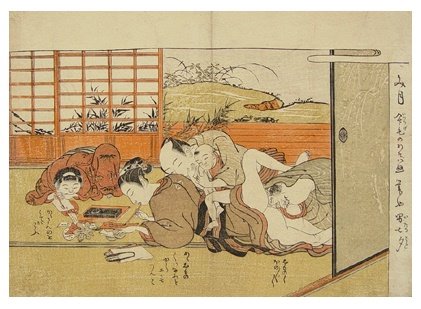 i found no couples dancing at all. until the westerners came, there were plenty of spring painting prints, explicitly spring painting and perfectly matter-of-fact, the neighbor, maid, grandpa or child popping in to say this or that.... but no face-to-face dancing.
 and frightfully little group dancing. there are some images of a group of women doing a spring festival dance, but so few that i've been unable to find any online thus far.
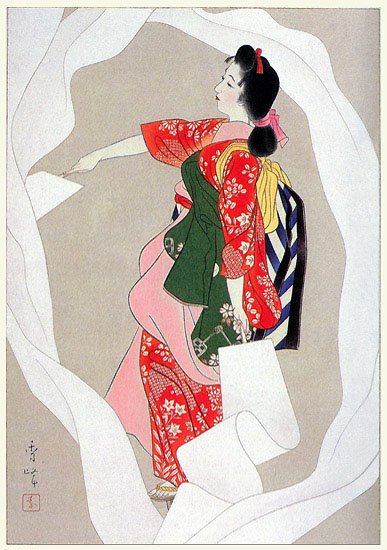
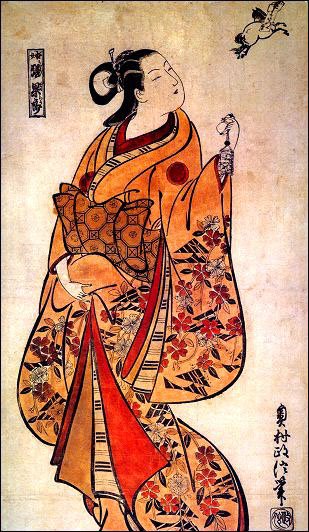
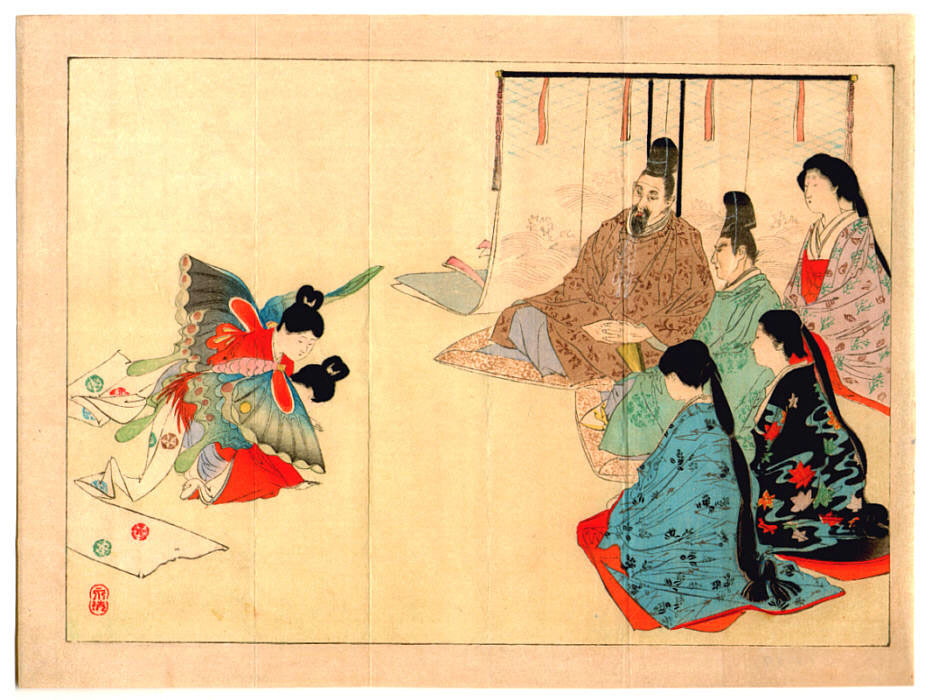 but there are single or paired dancers, men, or women.... and sometimes i can't tell which is which! they impersonate each other, and being a westerner i have not yet educated my eyes to tell the difference. (though noh and kabuki were all men when the westerners arrived, they were mixed, centuries ago when they began. it seemed however that some women discovered courtesanry more profitable than theater, and eventually all women were banned.) this is the butterfly dance; we'll be seeing that again soon.
 yes, there are huge theaters with kabuki and scores of people having dinner while they watch, but these three images really represent what i can find of dance--at least as we define it in the west. there are dances with spiritual connotations, but those are not generally for an audience.
Labels: dance, eisen tomioka, Shuntei Miyagawa, Tsukioka YOSHITOSHI
posted by lotusgreen at 3:41 PM
0 comments
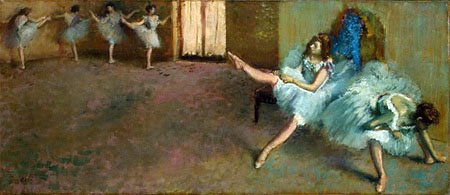 lauren asked in a previous post: I really love all of the cross cultural comparisons. I was looking at Impressionist painters today, and I was wondering if you know of any works by Japanese artists that compare to Degas' paintings of ballerinas...
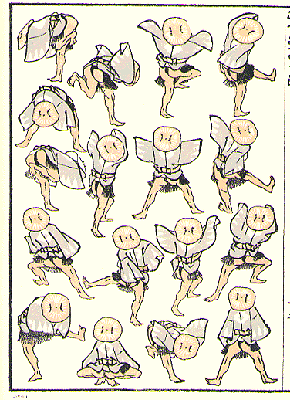 thanks so much for asking, lauren. what i've seen suggested is that degas is doing with these, to some extent, what hokusai was doing in his manga (sketchbooks) -- illustrating movement, playing with bodies from different angles, etc. i'll add to that the fact that you are getting the 'elongated canvas,' almost screen-shaped, along with that diagonal leg creating separate, asymmetrical, portions of the whole. i'm currently looking into the introduction to the west of this from, as well as the scroll form; watch this space.
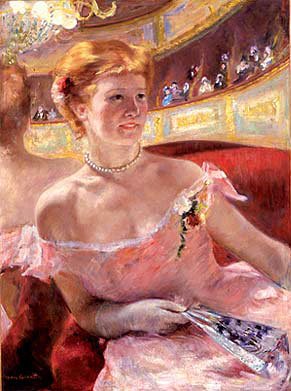 ...Mary Cassatt's "Woman With A Pearl Necklace In A Loge"...
 but i thought this was interesting too: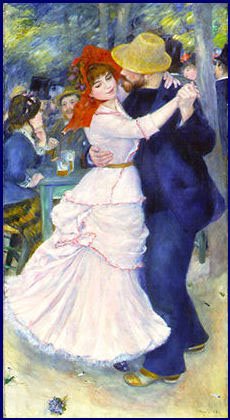
 after painting madame charpentier and her children with both a japanese screen and a scroll on the wall behind them, renoir decided he hated this whole 'japonisme' thing. it was too popular, there were too many imitators, too much kitsch. it was on posters for bicycles, for goodness sake!
Labels: degas, hokusai, mary cassatt, renoir
posted by lotusgreen at 5:04 PM
0 comments
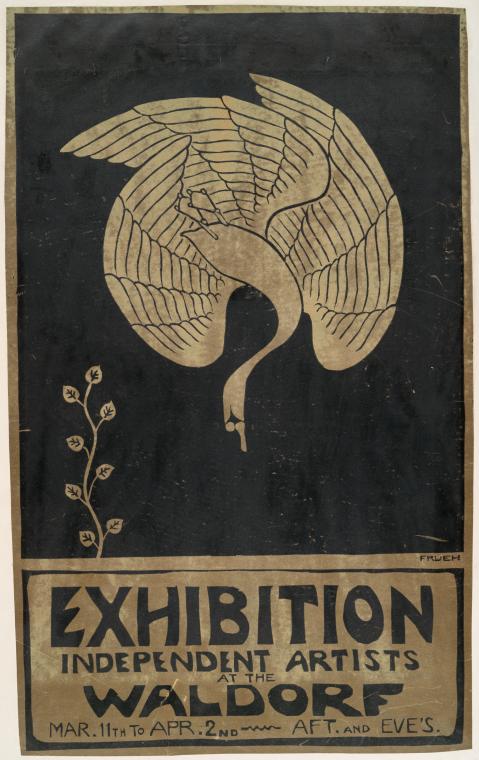
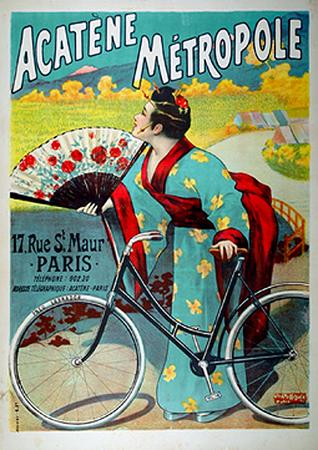 two things were all the rage in the late 1890s. can you find them both in this poster?
 Labels: charles tichon
posted by lotusgreen at 11:48 AM
1 comments
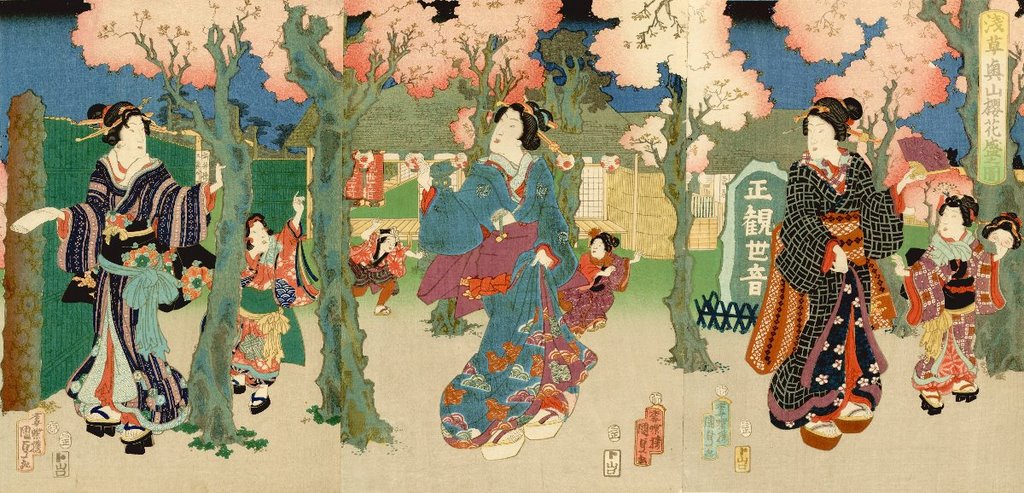
Kunisada II, Utagawa (1823 - 1880)
'cherry blossoms at okayama asakusa'
Labels: Kunisada Utagawa
posted by lotusgreen at 8:20 PM
4 comments


Labels: arthur wesley dow, okumura masanobu
posted by lotusgreen at 6:48 PM
0 comments
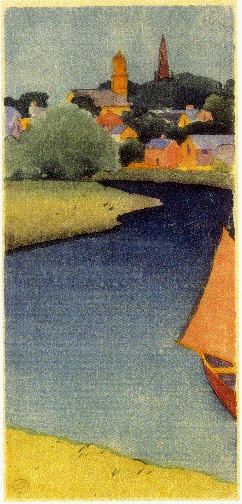 arthur wesley dow grew up in ipswich, massachusetts, which he ended up memorializing in woodblock prints and paintings.
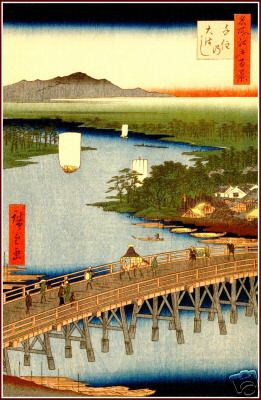 having gone to paris to continue his art education, and to learn from other painters, dow eventually returned to ipswich somewhat disillusioned. though he had learned something about 'plein air' painting (the essential underpinning of impressionism), he felt dissatisfied.
 this study, and a long trip to japan revolu- tionized how dow thought about art, design, media.... and not only did it revolutionize his own work, but those of subsequent generations as dow began to teach, and his students began to teach, and so on.
 follow- ing precepts he had gath- ered from long study of japanese art, asian concepts of space, balance, clarity, and simplicity became known as what he did, and what he taught.
Labels: arthur wesley dow, hiroshige ando, shoun yamamoto
posted by lotusgreen at 1:04 PM
0 comments
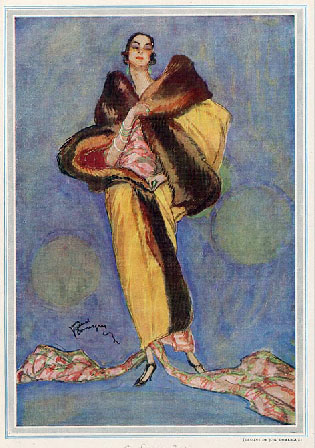 once the sight of women in kimono inspired western women to toss their corsets, clothing designers invented the 'hobble skirt,' which occasionally was augmented with something to bind the knees or ankles. these were embraced as a way to make it easy for women to take tiny small steps.... like the geisha....
Labels: fashion, jean-gabriel domergue
posted by lotusgreen at 7:45 PM
0 comments
 'the
'the 'the
'the
 'the
'theLabels: fashion, frederick frieseke, Kunisada Utagawa, marguerite pearson, pierre brissaud
posted by lotusgreen at 12:43 PM
0 comments
 this screen, credited to matahei by ernest fenollosa was considered a national treasure and was sent to the exhibition of 1900 in paris by the japanese government.

Labels: iwasa matabei
posted by lotusgreen at 8:55 AM
0 comments

Labels: dasha shtshkin
posted by lotusgreen at 3:33 PM
2 comments
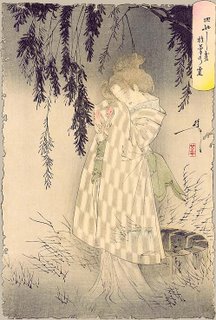 in the kabuki play Bancho Sarayashiki, Okiku is a maid at the mansion of the Japanese samurai Tessan Aoyama. The samurai wants to seduce the lovely girl but she rejects his advances. Aoyama uses a trick. He hides one of ten valuable Dutch plates and threatens Okiku to make public that she had stolen the plate unless she agrees to become his mistress. In her desperation Okiku throws herself into the well and drowns.
 Okiku's ghost comes out every night, counting from one to nine and then breaks out into a terrible howling and sobbing. Finally Aoyama goes insane by the daily apparitions at night. on the right is her ghost, as depicted by yoshitoshi.
 the one on the left is by koloman moser, a founding member of the vienna secession. it is an illustration for rilke's poem,
Early Spring
Labels: illustration, koloman moser, poetry, Rainer Maria Rilke
posted by lotusgreen at 12:45 PM
0 comments
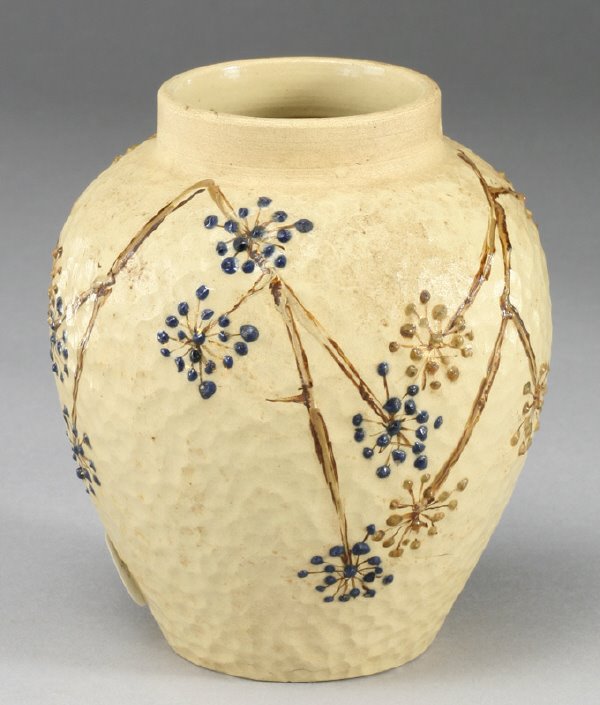
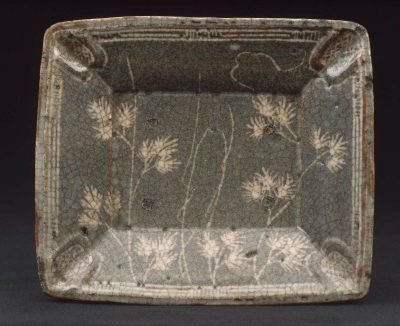 each of these pieces of pottery are listed with their provenance as saying:
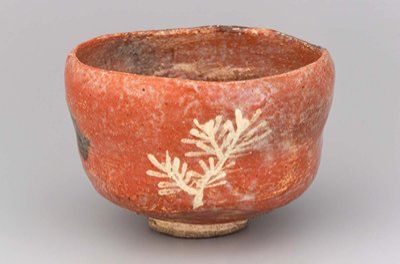 shellmound along with the brachiopods, eventually collected, classified, and catalogued over 5,000 ceramic items during his visits to japan. he became known as “the father of japanese archaeology.”
 that in fact the japanese themselves did not collect or value this work. morse purused the entire country, explored sheds with piles of the stuff in the cobwebby corners, awaiting trash day, and began to notice the different techniques in different parts of the country.
Labels: edward morse
posted by lotusgreen at 6:30 PM
0 comments
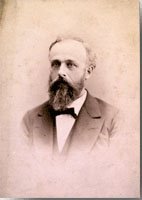 edward morse got into a lot of trouble as a kid. he was thrown out of every school he attended, and occasionally punished harshly in the process when he, for instance, carved up his desk.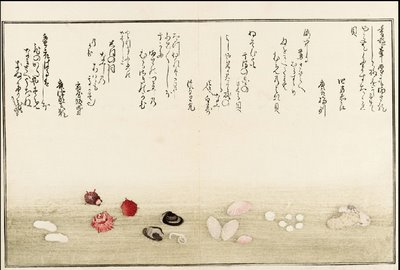
Labels: edward morse, Utamaro Kitagawa
posted by lotusgreen at 10:24 AM
0 comments