japonisme

24 November 2006

stealing magnolias

i haven't seen this before, a nearly exact example of copying (minus the bird), though i suspect that kawarazaki has done it before -- haven't really looked carefully at all of his work, but a swift glance suggested to me that he had.

I've been wondering how it is that with all of these won- derful kimono patterns, one never sees two alike; it seems true but i'm still looking.

nor have i yet found anything to read about this kind of thing, but maybe i just haven't hit on the right search yet.


in any case, i'd suggest 'inspired' is a better word than 'stole' when talking about these astonishingly beautiful windows from tiffany's laurelton hall estate, burned in 1957.

they are part of a new exhibition at the metro- politan museum of art in new york: "Louis Comfort Tiffany and Laurelton Hall: An Artist's Country Estate" continues through May 20, 2007.

(upper right, keiren imao; upper right, kawarazaki shodo. the first is thought to have been done ca. 1885. there's no date on the second but the artist was born in 1889!)

Labels: , ,

23 November 2006

happy holiday

japanese catalpas and bee
watanabe seitei, 1916

Labels:

22 November 2006

quiz

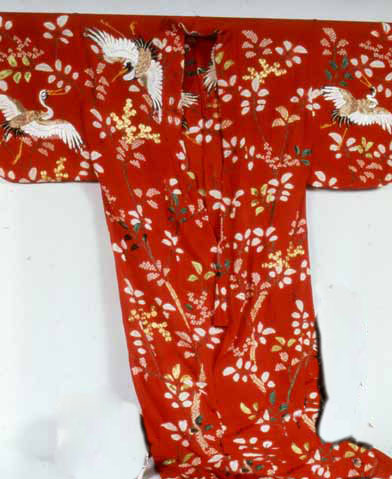
whose kimono is this?

i'll continue to give clues in this topic till someone gets it.


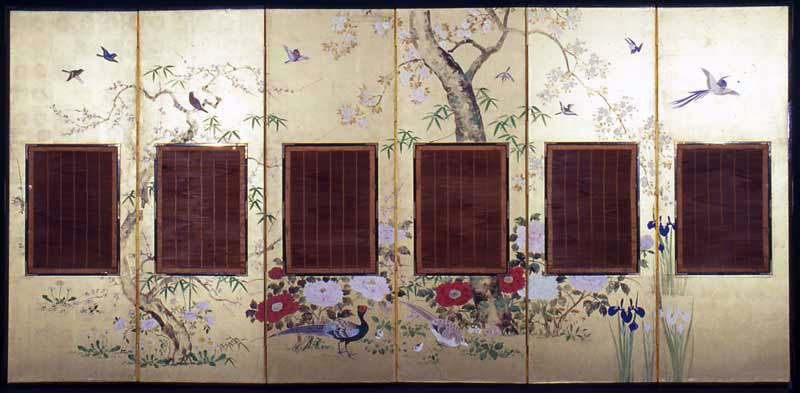
this person had numerous beautiful screens like this
who has this room in their house?


and this library...?

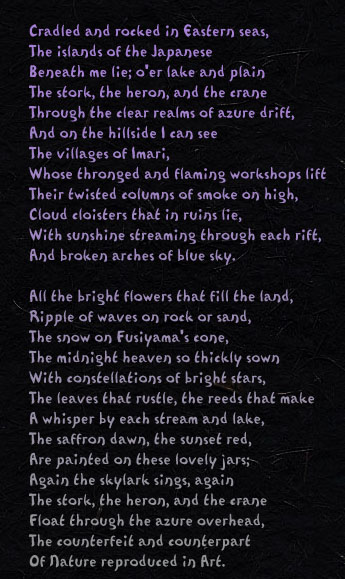
a poem by our mystery stranger, who had his first poem published exactly 186 years ago today, when he was 13.

american

though he's better known for his poem about gitchy- goomy than his one about imported pottery, henry wads- worth long- fellow's eldest son became the family's japanophile, shipping some twenty or so chests back to his home. the enthusiasm was caught by the family, like so many others during that period, and they occasionally all donned their kimono and watched the eclipse of the moon.

a new book about longfellow's son is recently out: Longfellow's Tattoos: Tourism, Collecting and Japan, by christine guth.

21 November 2006

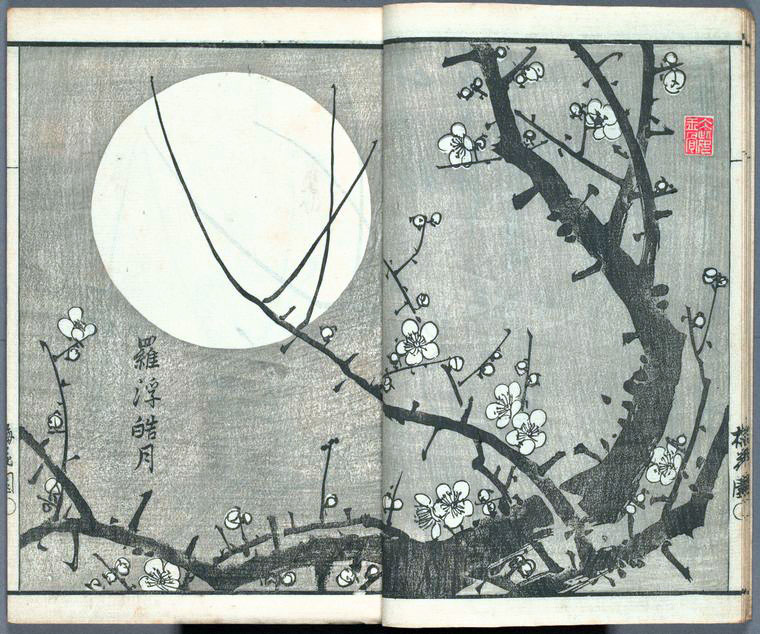
visual haiku


can it be a heron,

plum blossoms, or snow?

no. tonight it is the moon.

hasu midori


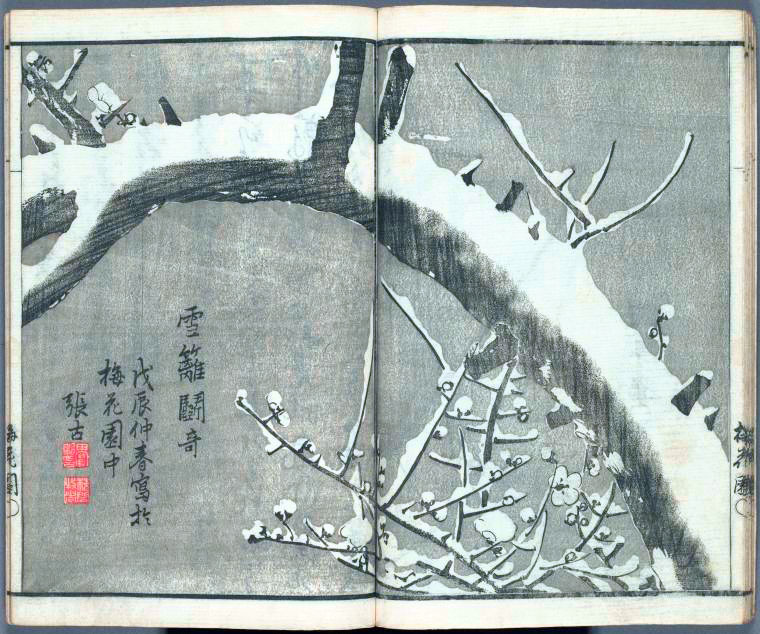
baika jo, the plum blossom album, 1808; baika jo, the plum blossom album, 1808 (this is available online at the new york public library).
ohara koson, little egret on a branch.


Labels: , , ,

20 November 2006

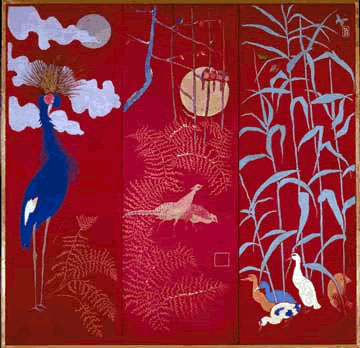
heron, pheasants, and ducks

bonnard, also a nabi, created this screen for his sister.

like the rest of his group, the images are extremely stylized, the clouds scalloped, and... two moons...?!


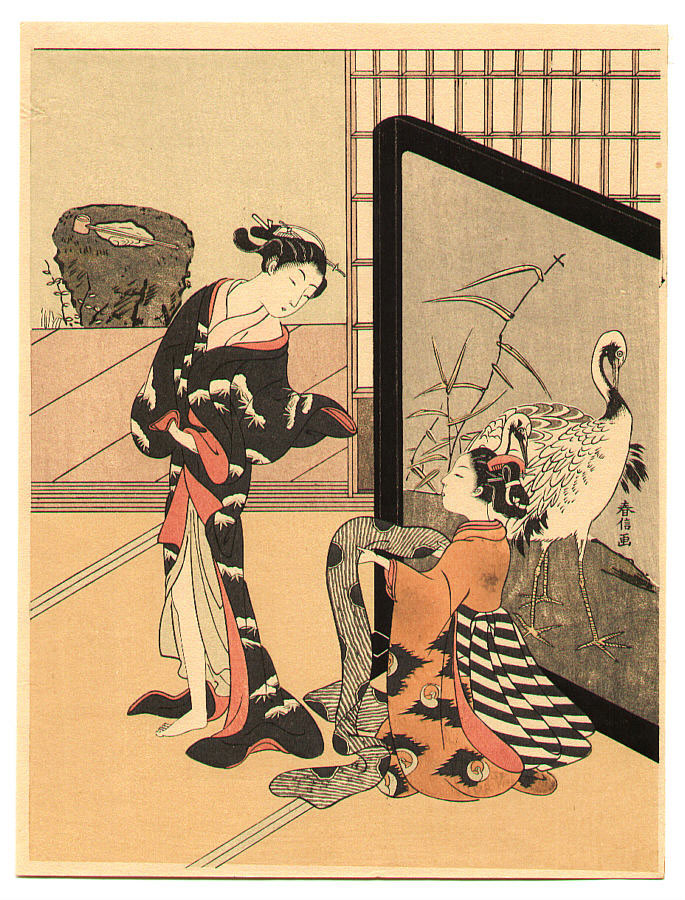
but it's also completely obvious the japanese influences. elements of screens which have elements in common with his screen appear in numerous of the prints that were flooding paris.
in addition to that, and to imported screens themselves, were the many 'decorations' guides published with examples of japanese and chinese design themes. (sort of precur- sors to dover books?) in viewing these small examples, one easily sees the connections.

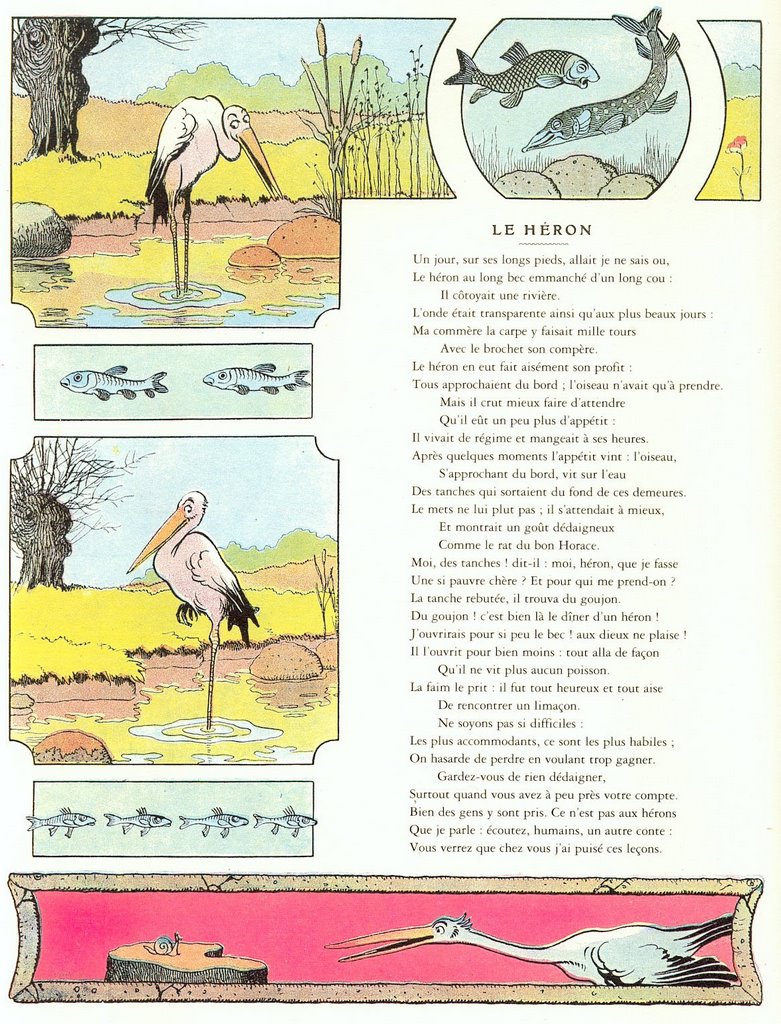
now, bonnard was too much the trickster to do any kind of direct translation. the wonderful red background is more chinese than japanese, and it's said that that heron just might be more a reference to the la fontaine fairy tale than to anything found in a manga or print. they say the nabis loved fairy tale illustrations and why not; they were strongly influenced by the japanese prints themselves.
a compre- hensive if disappointing from a japonisme point of view, 'pierre bonnard: observing nature.' 'ladies and crane screen,' harunobu suzuki. the la fontaine illustrations are by benjamin rabier.

Labels: , , ,

19 November 2006

virgins in the field

a nabi (a small group of artists dubbed that by a critic--it meant 'prophet'), maurice denis believed as did the japanese that it was foolish to see only oil on canvas within a frame as art.

the nabis often called for "walls for decoration!"

this piece, entitled 'april,' 1892, was one of four panels designed for the walls of a young girl's bedroom. like many of the works of the nabis, here the diagonal structure, simplified shapes, and flat surfaces of bright color also recalled the work of the japanese printmakers they admired.

shuntei miagawa's work, 'picking dandelions,' 1904, featured young women and children, which were his favorite topics.

the musee d'orsay in paris features three exhibitions, from 10.31.2006 to 1.21.2007, of denis' work: paintings, drawings, and photographs, along with various related events.

Labels: , ,

18 November 2006

evening glory

i am reading the most astonishing book: 'the great wave: gilded age misfits, japanese eccentrics, and the opening of old japan,"
by christopher benfey.

one of the great tales it contains is that of the visit to japan in 1886 made by john la farge and henry adams.

benfey gives us a clear glimpse into la farge's soul as it, as he, responds to what the japan around him is, his slow, receptive reactions to
mt. fuji, to the great statue of the buddha at kamakura,
and to the statues of kannon he comes upon in the forest.

this is from the metropolitan museum of art's exploration of la farge,
a nice introduction.

of this painting, the met says, La Farge used watercolor to make studies for illustrations and decorative projects, to record his travels, and, perhaps most eloquently, to paint floral still-life exhibition pieces. Nocturne typifies those still lifes in its poetic mood, its sensitive handling of the medium, and its integration of Japanese principles of design and color, which La Farge was one of the first American artists to appreciate.

i just think it's so amazingly beautiful. and it's interesting that a morning glory should be called nocturne. note that whistler also named many of his pieces for types of music.

Labels: ,

17 November 2006

turnabout

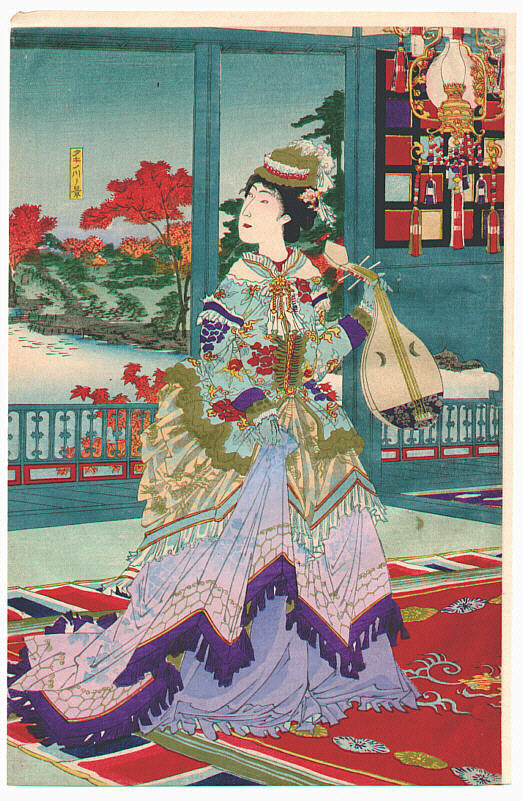
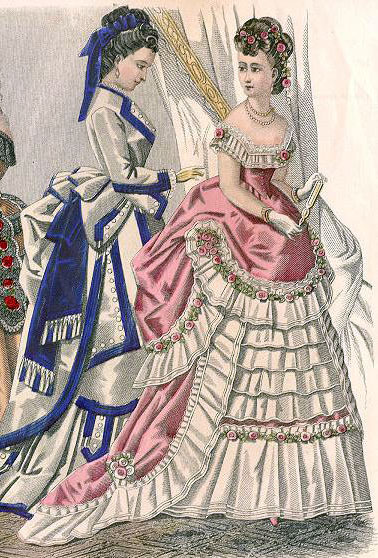
this beautiful print of the empress of the meiji period is from the early 1870s. the emperor meiji was 15 in 1867 when he began his largely figurehead rule. his most important role was to serve as an example, and what he believed was most important to exemplify were the western values of free education for all children, and western clothing for him and his family.


what had been felt as xenophobia from the occupying forces -- er... new trading partners -- swiftly shifted: suddenly everyone wanted to be western. the opposite of japonisme? it was now believed that this would lead to civilization and enlightenment.

it's one of those ironies of history that tells us that it was fenollosa and other westerners who convinced the japanese at that time that their own cultural heritage was rich, and worth saving, and honoring.

(meiji imperial family [detail], kunichika toyohara, nd.; godey's fashions for february, 1874)

Labels: ,

16 November 2006

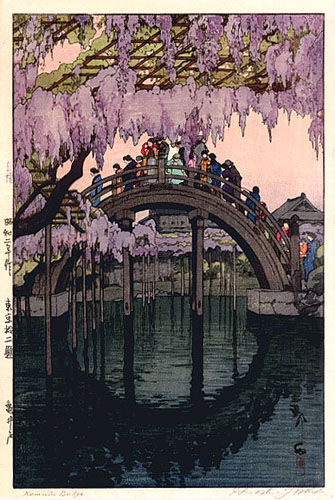
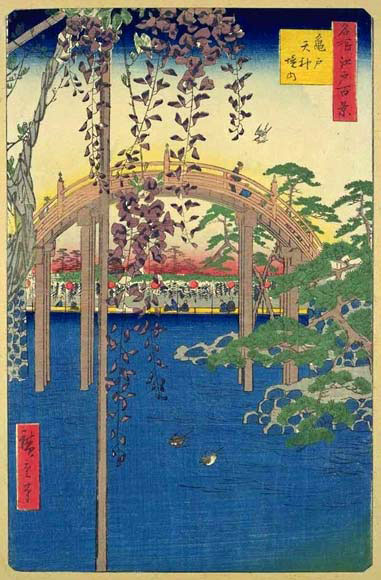
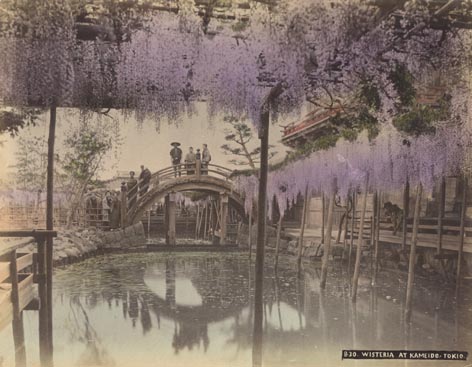
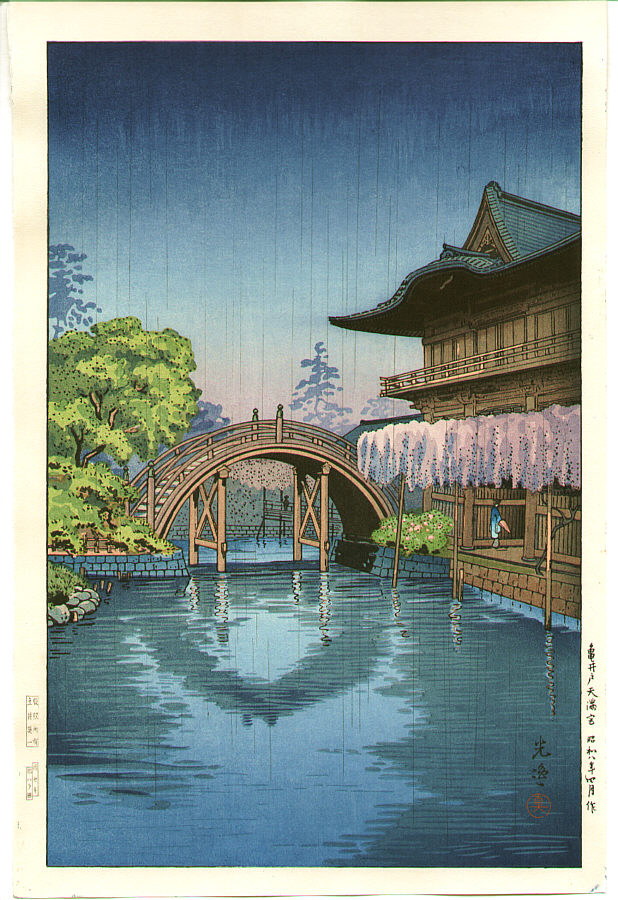
the wisteria at kameido


kono fuji wa
hayaku sakitari
Kameido no
fuji sakamaku wa
tōka mari nochi

these wisteria
have bloomed early...
the blossoming of
those at Kameido will be
more than ten days later

Masaoka Shiki

translator: Janine Beichman


seven years after helen hyde went to japan for the first time at the age of 31, she was quoted in january 1906 issue of harper's bazar as saying, "japan is a gem, a revelation, a new world filled with art possibilities beyond one's dreams."


hyde had already become an artist, an illustrator; growing up in san francisco and studying in paris had already given her a taste for, a delight in, the 'exotic,' the unexpected, the foreign, the unknown.


during her eleven years living in japan, hyde studied the japanese style of printmaking, studying with other westerners at first, and then with the japanese masters themselves.


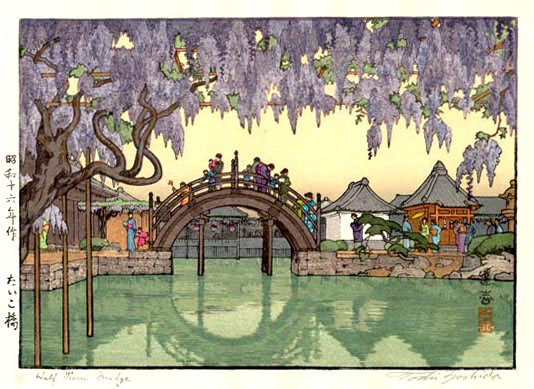
this page has images of the bridge at kameido, near tokyo, as seen by several different artists. ms. hyde's is the one at the top left. if you like her work, you will find a great deal of her work online.


('moon bridge at kameido,' helen hyde, 1914; 'half moon bridge,' toshi yoshida, 1941; 'kameido bridge,' hiroshi yoshida, 1927; '
wisteria at kameido tenjin shrine,' hiroshige ando, 1856; photo, ca. 1895; 'kameido bridge,' koitsu tsuchiya, 1933.)


for really cool coverage of this beautiful place and the artists who have loved it, check out this site


this original bridge was destroyed in world war two, and has been rebuilt.

Labels: , , , , , ,

15 November 2006

~


i am very sad tonight. my dearest little friend is nearing his end.


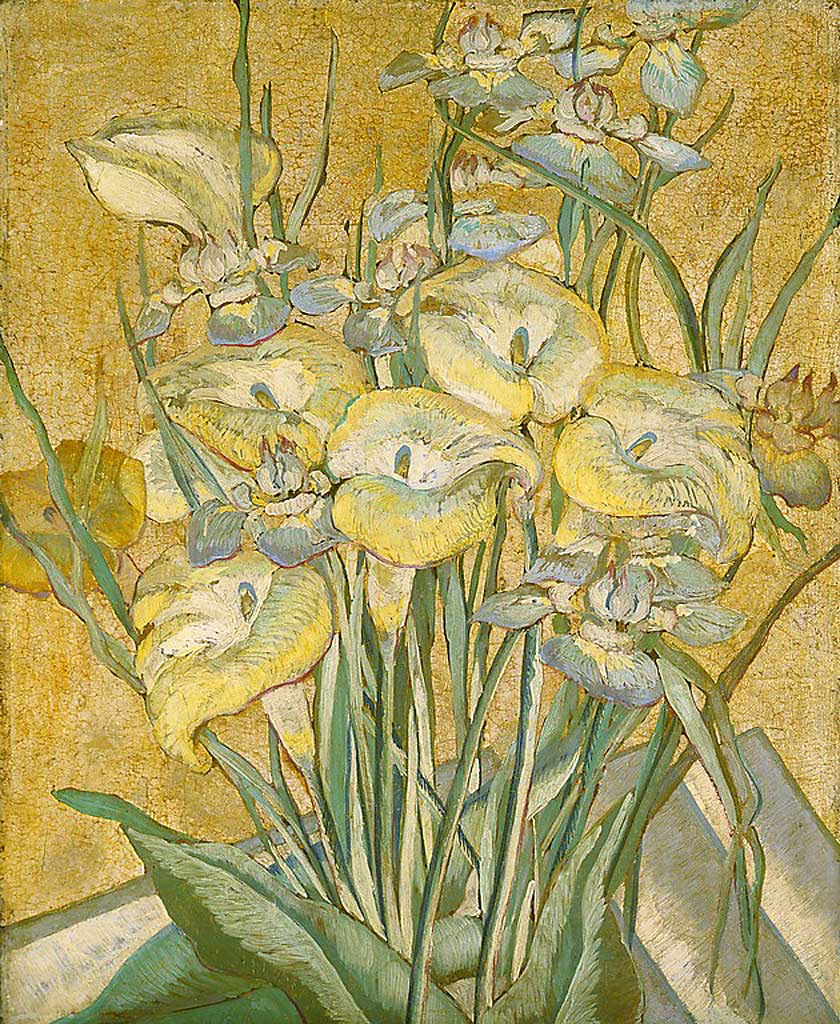
(bird with chrysanthemum, bairei kono, 1900; iris, gesso, 1930s; dahlias, lotusgreen, 2000s; fountain, edna boies hopkins; sorry--somehow i didn't get info for the bird & leaf one, but it's japanese, ca. 1900, i think; lily, arthur wesley dow; petunia, edna boies hopkins; irises and cala lilies, maria oakley dewing, ca. 1900.)

Labels: , , , ,

14 November 2006

translations

i'm working up to talking about the nabis. i've mentioned several times that the japanese saw no separation between art and craft until western influence, and that was an ethic that was a guiding idea for the nabis.

but is is clear, even to me, what that means? i feel like i'm learning on a new level.


if everything is your art, there isn't the separation between what you take aesthetic care in producing, and what you don't. i'm going to try to state this in various ways until i'm really comfortable i'm getting it said the way i really want.

so we have several things: we have the direct influence on style, and then we have the integration of those styles into perspective, and in change of perspective is change of behavior.

the style part is the easiest to illustrate.

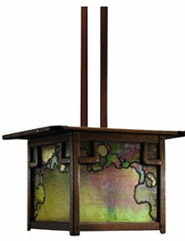
(print by toshikato mizuno, lanterns by arroyo craftsmen, and greene & greene. clock by archibald knox.)

Labels: , ,

12 November 2006

the coburn and the dow

it's difficult for our eyes to even see it now, but the transition in art from depicting the literal to depicting the subjective was wildly revolutionary (as we've already seen). and this goes for photography as well as painting. for many years after their introductions both painting and photography were 'required' to reflect reality 'accurately.' at least that was true in the west.

in japan, it was different. it was just understood that the reality the artist produced was what he made of it. when arthur wesley dow suddenly realized this, supposedly while reading a book on japanese prints at the fine arts museum library in boston, it changed his work forever. he felt that this is what he had been looking for, what his work had been needing. dow realized that he did not want to be copying the prints, something he came to criticize whistler for doing, but rather creating his own style using the principles he had learned from viewing the japanese work.

it is our loss that dow spent far more time teaching, from his school in ipswitch to columbia, to the pratt institute in new york, with many stops in-between, than he did making art, and yet he bequeathed us the wonders of the work of his students.
one student, alvin langdon coburn, wasn't a true beginner when he came to ipswitch in 1903. (he would go


on to begin to photograph many of the 'men of mark' in europe the following year). he and dow became more than strictly student and teacher, as they twice went to the grand canyon together to shoot photographs, or paint.

coburn said of dow's ipswich school, "we were taught painting, pottery, and woodblock printing, and i also used my camera, for dow had the vision, even at that time, to recognize the possibilities of photography as a medium of personal artistic expression. i learned many things at his school, not least an appreciation of what the orient has to offer us in terms of simplicity and directness of composition....i think that all of my work has been influenced to a large extent and beneficially by the oriental background, and i am deeply grateful to arthur dow for this early introduction to its mysteries." the world was learning this from the japanese artists who, until being 'taught' otherwise by the westerners they were so enthusiastically trying to emulate, did not make a distinction between 'crafts' and 'art.' in europe the nabis embraced this philosophy (more on this later); additionally part of this was establishing photography's place as a fine art as well.

many thanks to pinholeman for turning me on to coburn!!

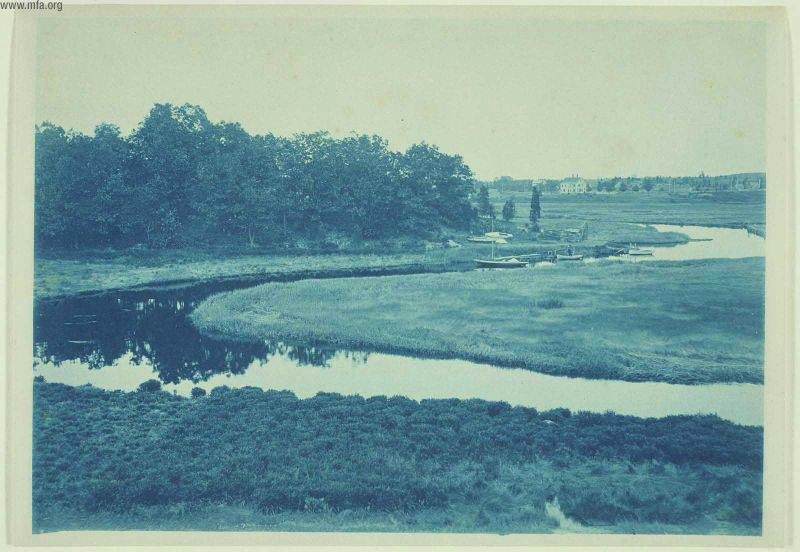
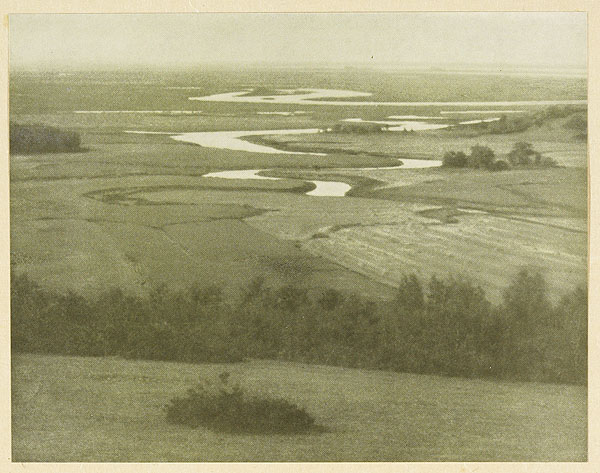
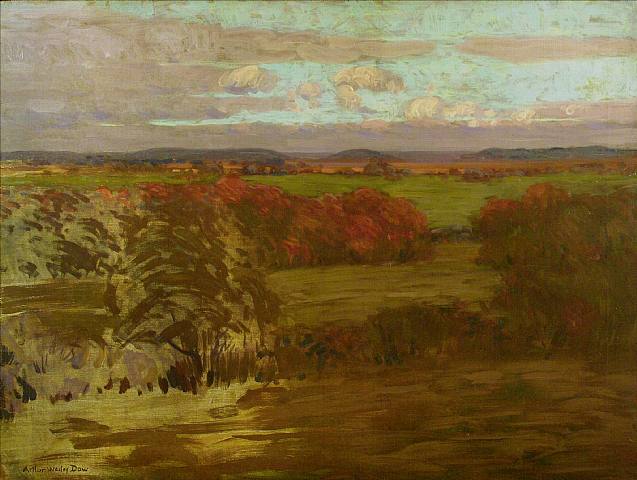
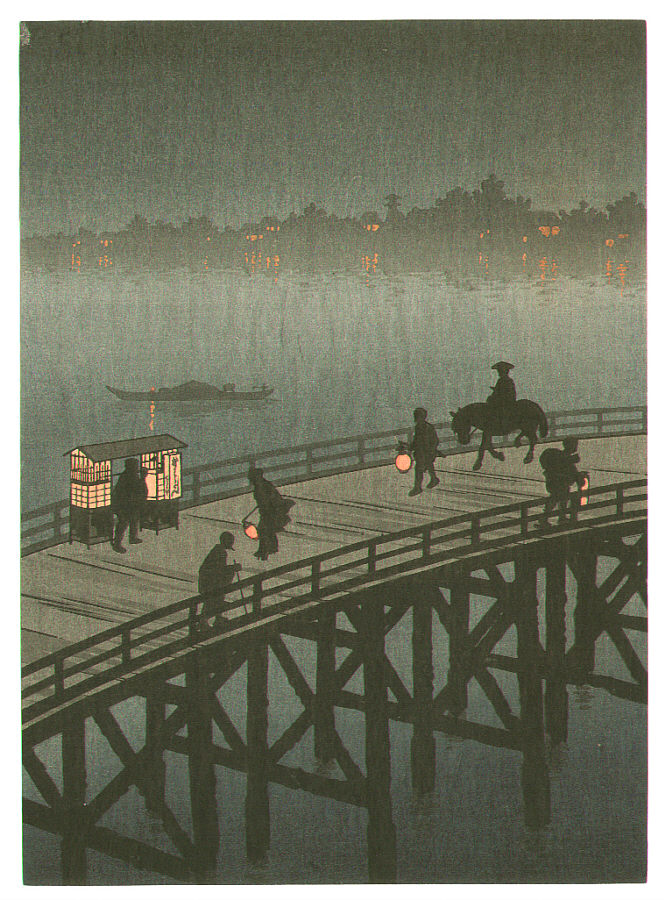
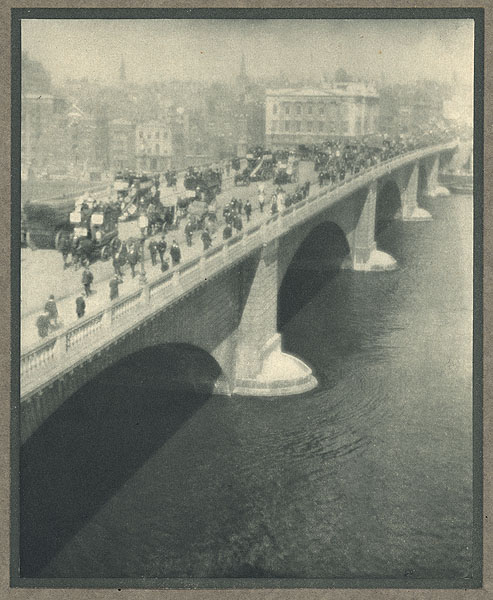
picture info: top right: 'salt marsh' dow; top left: 'moon over cherry trees' hiroshige. 2r: 'the blue dragon' dow's painting of the scene out his studio door; 2l: 'the dragon' coburn's photo of the same spot. (here i've stuck in dow's 'ipswitch meadows' because it struck me that this was essentially the same painting as his 'grand canyon'!) 3r: 'grand canyon' dow; 3l: 'grand canyon' coburn. 4l: 'oh-hashi bridge' koho shoda; 4r: 'london bridge' coburn.
blueinall

Labels: , , , , ,

newer posts older posts