japonisme

12 November 2006

the coburn and the dow
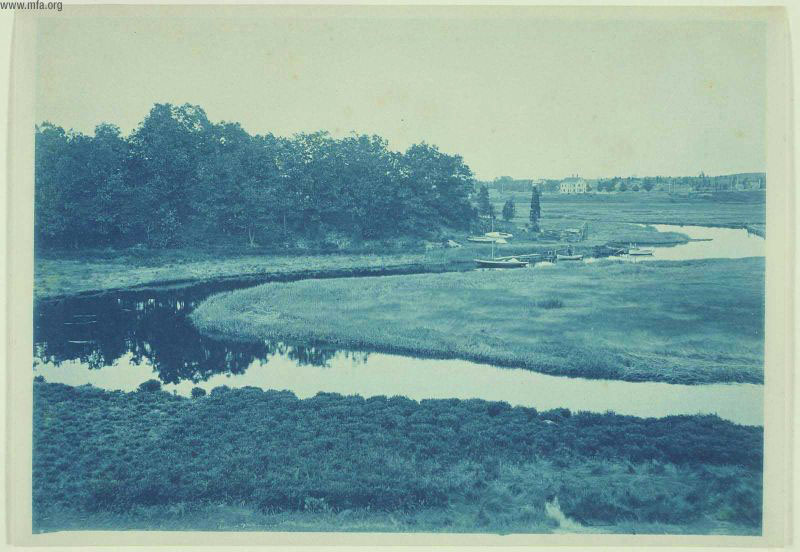
it's difficult for our eyes to even see it now, but the transition in art from depicting the literal to depicting the subjective was wildly revolutionary (as we've already seen). and this goes for photography as well as painting. for many years after their introductions both painting and photography were 'required' to reflect reality 'accurately.' at least that was true in the west.

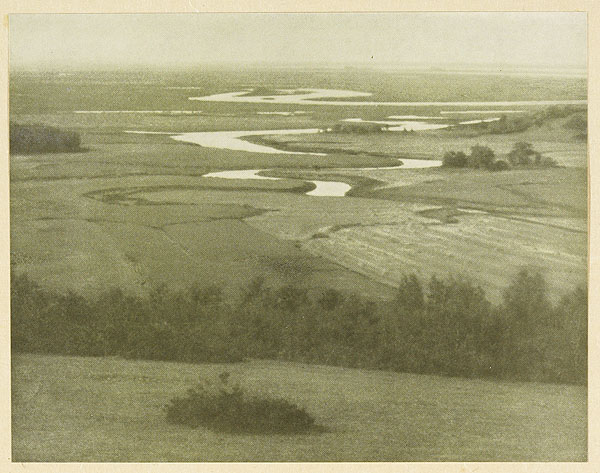
in japan, it was different. it was just understood that the reality the artist produced was what he made of it. when arthur wesley dow suddenly realized this, supposedly while reading a book on japanese prints at the fine arts museum library in boston, it changed his work forever. he felt that this is what he had been looking for, what his work had been needing. dow realized that he did not want to be copying the prints, something he came to criticize whistler for doing, but rather creating his own style using the principles he had learned from viewing the japanese work.
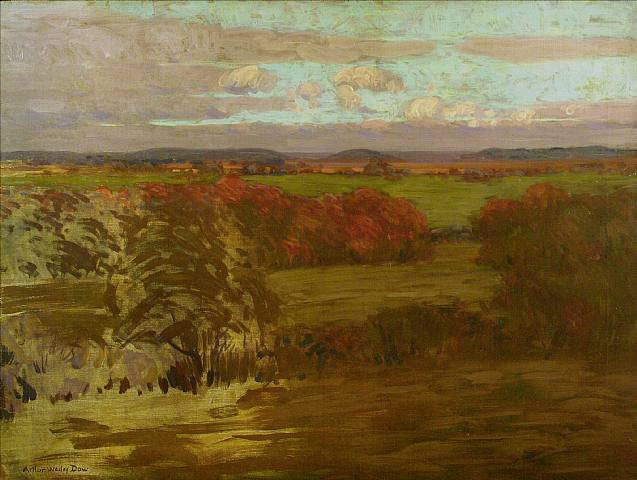
it is our loss that dow spent far more time teaching, from his school in ipswitch to columbia, to the pratt institute in new york, with many stops in-between, than he did making art, and yet he bequeathed us the wonders of the work of his students.
one student, alvin langdon coburn, wasn't a true beginner when he came to ipswitch in 1903. (he would go


on to begin to photograph many of the 'men of mark' in europe the following year). he and dow became more than strictly student and teacher, as they twice went to the grand canyon together to shoot photographs, or paint.
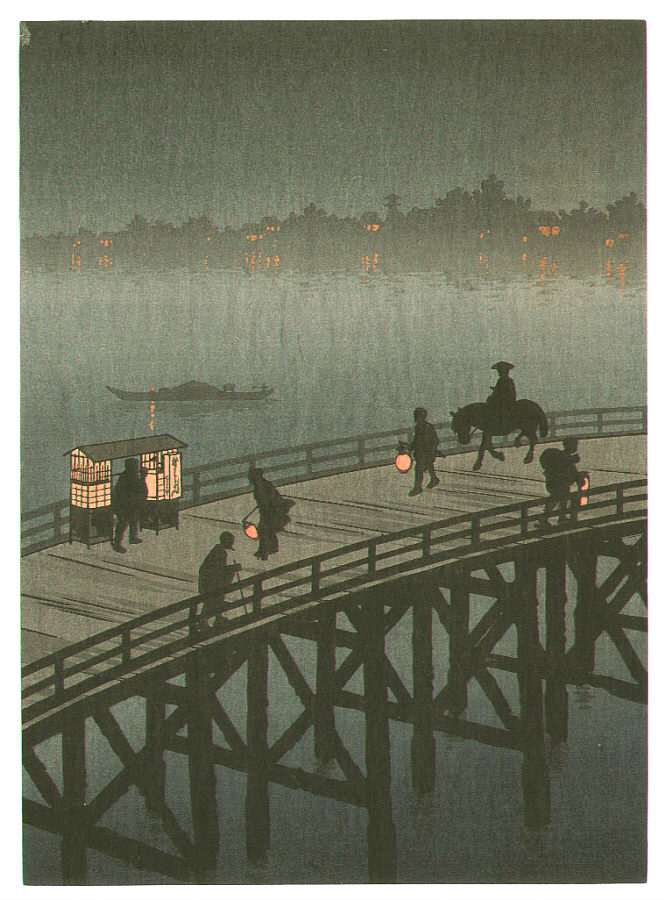
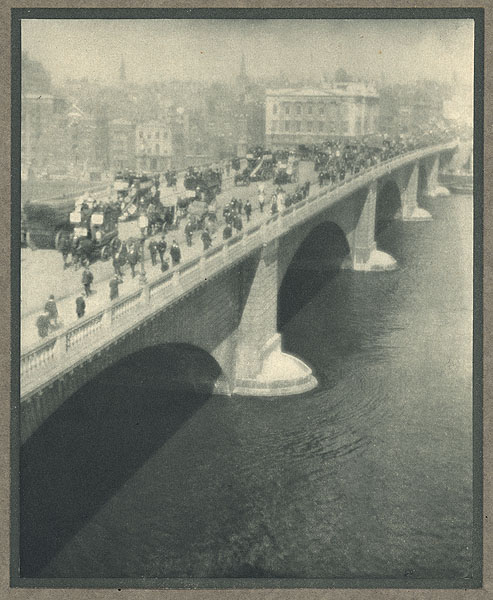
coburn said of dow's ipswich school, "we were taught painting, pottery, and woodblock printing, and i also used my camera, for dow had the vision, even at that time, to recognize the possibilities of photography as a medium of personal artistic expression. i learned many things at his school, not least an appreciation of what the orient has to offer us in terms of simplicity and directness of composition....i think that all of my work has been influenced to a large extent and beneficially by the oriental background, and i am deeply grateful to arthur dow for this early introduction to its mysteries." the world was learning this from the japanese artists who, until being 'taught' otherwise by the westerners they were so enthusiastically trying to emulate, did not make a distinction between 'crafts' and 'art.' in europe the nabis embraced this philosophy (more on this later); additionally part of this was establishing photography's place as a fine art as well.

many thanks to pinholeman for turning me on to coburn!!

picture info: top right: 'salt marsh' dow; top left: 'moon over cherry trees' hiroshige. 2r: 'the blue dragon' dow's painting of the scene out his studio door; 2l: 'the dragon' coburn's photo of the same spot. (here i've stuck in dow's 'ipswitch meadows' because it struck me that this was essentially the same painting as his 'grand canyon'!) 3r: 'grand canyon' dow; 3l: 'grand canyon' coburn. 4l: 'oh-hashi bridge' koho shoda; 4r: 'london bridge' coburn.
blueinall

Labels: , , , , ,

13 June 2007

The Quiet Landscapes of William B. Post

William B. Post (1857-1921) of Fryeburg, Maine, was an influential member of the Photo- Secession, the group that first championed art photography in the United States at the turn of the 20th century. A colleague of Alfred Stieglitz, Post was active from the mid-1880s through the 1910s, producing platinum prints.

Post frequently captured the seasonal changes to the Maine landscape in his sensitively printed photographs such as Intervale, Winter of 1899. The most widely exhibited photograph during his lifetime, this image also appeared as a photogravure in Stieglitz's famous magazine Camera Work. The high horizon line, the expanse of snow in the foreground, and the limited tonal ranges of the trees suggest his creative ability to invent new compositions and poetic harmonies influenced by Japanese art. His use of a narrow, vertical format and choice of floral subjects in other pictures also relates to Asian scroll paintings.

Like many painters, photographers, and designers of his day, Post absorbed the craze for Japonisme after a trip to Japan in 1891. He began showing his photographic work in New York the following year, and in 1893 he showed the young Stieglitz how to use a hand-held camera.

[yes, this article, reviewing a show that has been making the rounds for a year or so, is about post, but, as clearly seen in the last paragraph, it could be about ivan bilibin, in his little vertical print. it could be about coburn or white, whose photographic histories resemble that of post in many ways. and of course riviere's 36 views of the eiffel tower fits right in.]

Labels: , , , , , , ,

02 February 2009

painting the boats: dow 1

Colour variation has always fascinated me. There is a peculiar pleasure in seeing the same design appear in different colours—the design seems to have a soul in each colour-scheme, said Arthur Wesley Dow.

The Ipswich sailors painted their boats in bright hues, using different colours for the inside, outside and streak. They had a limited palette—dark blue, canary yellow, orange, orange-red, several greens, black, and white. They were not content to keep a colour scheme very long, in fact they varied it from year to year, perhaps borrowing one another's paint pots when they freshened up the boats in the spring.

These boats were like colour prints as they lay on the shore in the dark shadow of the willows, or slanted in companies down the heaps of white clam shells—and the tide and the sailors always kept new combinations going.

Under the spell of these, and the old picture books, I tried to make wood engravings to colour by hand, but it was not until I became acquainted with Japanese prints that I found a simple way of creating colour variations. The Boston Museum's vast collection showed me every possibility of this art.


I experimented with the Japanese process, choosing as subjects the shore of Ipswich River with the boats, old houses, bridge and willows, printing many colour variations of each motif.

The special advantages of this art-craft are, first of all, colour quality, then colour variation. In painting, the water-colour settles into the paper, but in a wood-block print it lies upon the tops of the fibres allowing the luminous tone of the paper to shine through.

In this it is like the colour of the best pottery, say Chinese of the Sung dynasty, where the tones lie lightly over a luminous under colour. The old fresco paintings have a similar elusive glowing effect.

Colour variation I have already touched upon. Mr. Fenollosa remarked that this process "utilizes the lost chances." A painting shows forth a single colour-idea that the artist brings out of his mind. There may be many others floating there, but they cannot all be made visible without infinite labour.

With the wood blocks once cut he may seize them all—there is no limit. This is why some wood-block printers will not destroy them. No two prints need ever be exactly alike. The slight variations give a special personal character to each print.

From that day to this I have made wood-block colour prints.


dow's importance, during his lifetime, anyway, included his teaching. we'll look more at that soon, but first: the names of some of his students.

Alvin Langdon Coburn

Rachel Robinson Elmer

May and Frances Gearhart

Edna Boies Hopkins

Gertrude Kasebier

Dorothy Lathrop

Pedro Lemos (later working as Pedro DeLemos)

Georgia O'Keeffe

Mary Frances Overbeck

Margaret Jordan Patterson

Clarence H. White

...and Kate Cameron Simmons and Pamela Colman Smith and M. Louise Stowell and Max Weber (At the Pratt Institute, he studied with Arthur Wesley Dow from whom he learned to see forms as visual relationships rather than objects) and so many many more.

on his methods and influence? that's next....


blueinall

Labels:

08 July 2007

elongated, vertical art was also not seen in the west until japanese scrolls were encount- ered. it is no accident that steichen used this form for his self-portrait (and the poster he made for the whole movement), or stieglitz for one of his most iconic images. (i couldn't find a moon photo, surprisingly! in this particular shape.)


and another important element of the design of the time, learned, again, from the japanese, that i more or less left out yesterday, is asymmetry. (there are numerous other things too, but they more have to do with other arts.)


see for yourself the near- ly ubiquitous occurrence of all of these traits at a wonderful site here. not stieglitz or steichen, or even coburn alone, but an entire era of photography was deeply, and beautifully, grounded across the sea.

Labels: , , , , ,

13 February 2009

travelling through music and light

in some cases i've found, dow did take the photo before making the print (or painting) of the same place. but nine years before! did the places stay that identical? did he use the photos as guides. you know what? we will never know (unless i dig up something from his diaries).

thanks to the smithsonian, some dow stuff is making it onto the internet, but there's so much i just can't find. that's part of the reason i feel compelled to put up some of this stuff myself. like a timeline (you know i like those).

1857 born, ipswich, massachusetts.

1880 studys art with anna k freeland, who was an historical and portrait painter in worcester.

1882 studys art with james m stone, also an historical painter, in boston.

1884 goes to paris to study at the academie julian under boulanger and lefebvre

1885 summers in pont-aven.

1889 returns permanently to ipswich.

1891 meets ernest fenollosa and 'discovers' japanese woodblock prints. teaches art in boston, then opens school in ipswich.

1893 marries minnie pearson; becomes assistant curator of japanese arts at the museum of fine arts in boston.

1895 first exhibition of his own woodblock prints, in the japanese area of the mfa; begins teaching at the new pratt institute in new york city.

1899 publishes composition.

1903 travels around the world. lectures in kyoto.

1904 becomes the director of the art department at the teacher's college of columbia university.


1908 publishes theory and practice of teaching art; publishes by salt marshes in collaboration with his friend everett stanley hubbard, who writes the poetry.

1911 travels to the grand canyon and to california with alvin langdon coburn.


dow's publications are online. (some things aren't. i'm still hunting for the words of a speech or two.) i've had a tough time trying figure out how to present the teachings, but that's what i'd like to try next.

okay, i'll admit it. that last painting is not by dow. it's by robert henri. maybe he was channeling dow. but i love finding these rest, watching the same artist expressing the same things with different 'voices,' a composer listening to his music on all number of different instruments.

Labels: , ,