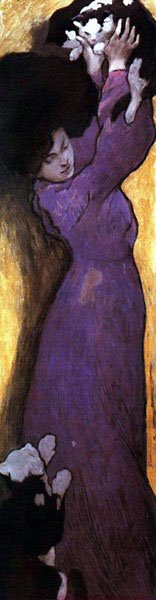
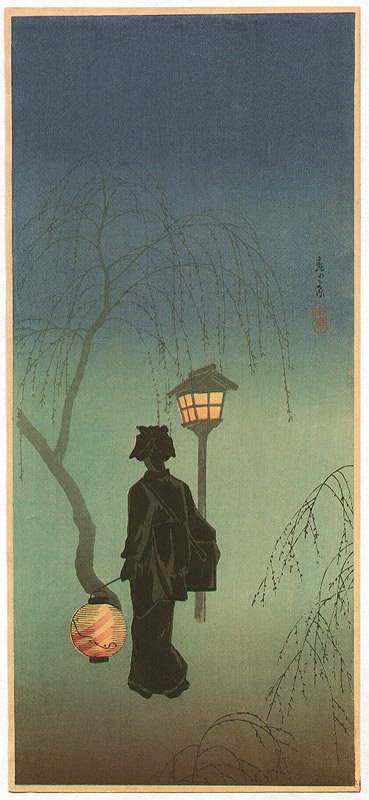
vaszary jánosca. 1900
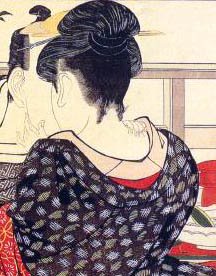
kunisada utagawaca. 1830
•
a perfect match
for the crazy cat...
peony
猫の狂ひが相応のぼたん哉
のぼたん哉
neko no kurui
ga sôô no botan
kana
Kobayashi Issa
1824
Labels: cats, haiku, issa, János Vaszary, Kunisada Utagawa
vaszary jános
kunisada utagawaLabels: cats, haiku, issa, János Vaszary, Kunisada Utagawa


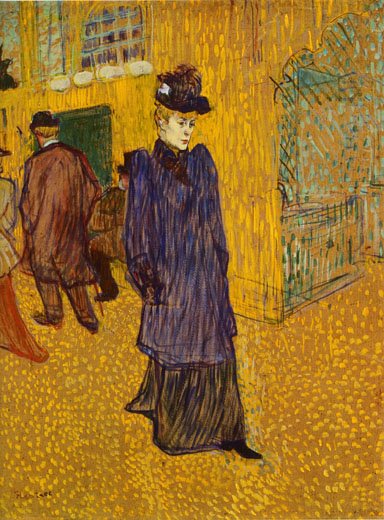
Labels: genjiro ito, henri boutet, poetry, shotei hiroaki, toulouse-lautrec, walt whitman
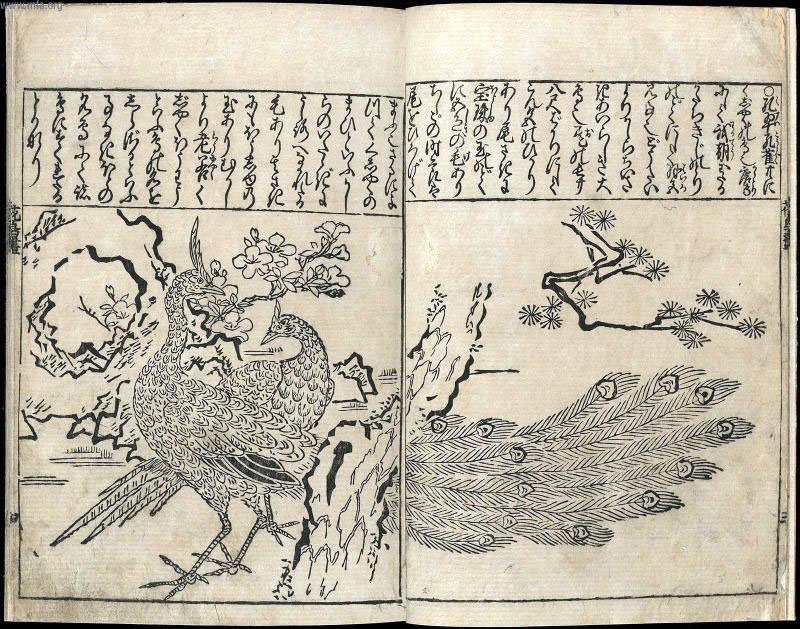
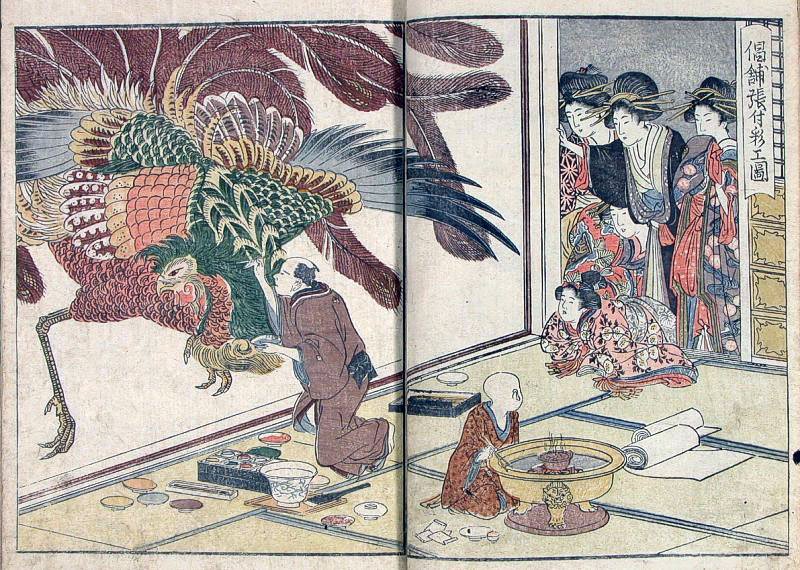
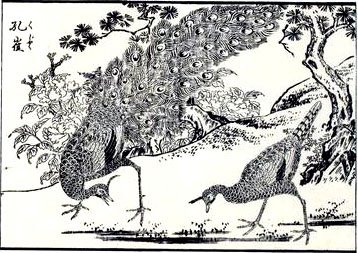
well, i'm sure that any student of history is used to conflicting stories, but this is my first real foray, so i'm surprised, interested, and maybe even amused. this print from a manga is by hishikawa moronobu. it was done in 1683. this suggests to me that in fact peacocks did indeed exist in japan. now there could be a million reasons why i'm wrong: he made these up and just coincidentally re-created a real bird; they were there but died out by the time iida made that kimono; and ad absurdum. more likely, i guess, the person who reported that fact (someone from the kyoto costume institute?) was misinformed. there must be a story but we just may never get it. (oh--i just noticed--this must be from the same series.)Labels: hishikawa moronobu
Woman's dressing gown in two partsKyoto, Japan
Gown (center back length): 141.0 cm (55 1/2 in.); sash (overall) 33.0 x 301.0 cm (13 x 118 1/2 in.)
Silk plain weave (taffeta) embroidered with polychrome silk; silk plain weave lining; cord and tassel trim
Classification: Costumes
Pink silk taffeta dressing gown in kimono style with embroidered naturalistic chrysanthemums and butterflies in polychrome silks. Silk plain weave lining, padded hem and pleat in back of robe. Full sleeves gathered at shoulders and trimmed with braided silk cord and tassles. Matching sash of pink silk taffeta with double-sided embroidery of chrysanthemums in green brown and pink polychrome silk with knotted silk fringe. Gown labeled: S. Iida "Takashimaya" Silks and Embroideries. Kyoto.
Labels: chrysanthemums, fashion, Iida Takashimaya
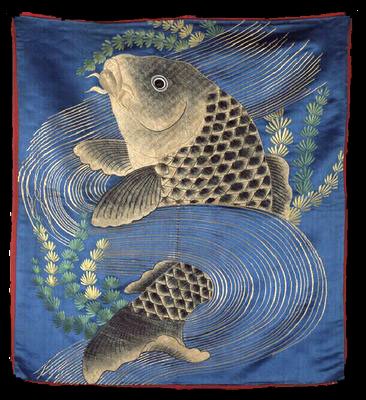
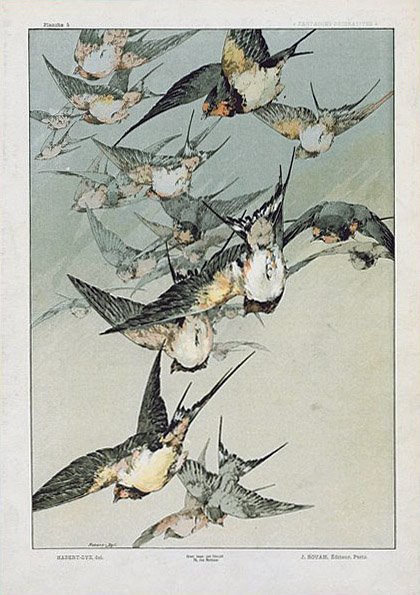
(hokusai; unknown japanese ceremonial fabric cover, 19th century; habert-dys, french ca. 1900)

Labels: habert-dys, hokusai
in his work, art and art industries in japan (1878), rutherford alcock singles out the love of nature and partiality towards the ever changing state of things to be characteristic of japanese art: nature being neither uniform nor repetitive, learning from it can result in a rich diversity, and this learning process from nature accounts for those characteristics of japanese art which are lacking in european art.

Labels: decorchemont, ephraim faience, genki raian
in 1863 critic william rosetti offered advice to western artists regarding their japanese counter- parts. "study their practice," he said, "for such points as the actions of birds, their quaint turns of head or lithe deviations of neck; the decorative and at the same time naturalistic treatment of plumage... we incline to say that the japanese reach higher in point of perceptive knowledge, and instant magic of the realizing hand, than any phase or period of european art..." (illustration by felix lorioux)Labels: felix lorioux
The speaker of this poem, "Summer Birds and Flowers," is someone looking at a scroll by Shikibu Terutada from the sixteenth century.Unrolling
the coiled scroll
enacts the momentary
sweeping down the midday sky
of small birds
on a draft from the distant
blue ravines
and impends
is tempered—
so that the tidal and jagged line
of the far mountains
seems merely an artful
mapping of the birds'
arc of flight
And such a glimmer of gaiety
as they dip and swoop
with unguarded ease
into the inseparable
immensity
(from 'autumn grasses')

Labels: birds, bracquemond, hokusai, margaret gibson, ohara koson, poetry, theo van hoytema
henri riviere's "les trente-six vues de la tour eiffel" is in exhibition at the new otani art museum in tokyo until Oct. 22.
Labels: 36 views, henri riviere, hiroshige ando, hokusai
jules auguste habert-dys's japonisme, for reasons i don't understand, appeals to me in some deeply personal way. it feels quintessential, a superb distilling of french and japanese. i can find very little about him other than that he was just one of many artists who came out with a collection of designs at the turn of the last century, and that he studied with felix bracquemond, and illustrated for one of the many "art and decor" magazines popular at the time.Labels: habert-dys, ohara koson
well, i don't wish to call any- one a liar, but per- haps Iida Takashimaya, who embroidered a peacock on a silk kimono meant for export, despite the fact that there were no peacocks in japan, could explain this image.

liberty of london still manufactures the designs it created for this era.Labels: liberty co, louis comfort tiffany
At-home gown 1904 -08 by Iida Takashimaya, Kyoto, Japan
plain-weave silk with peacock and cherry blossom motifs embroidered in silk using traditional nikuiri-nui (padded) technique, kumihimo (silk cord) and tassel trim, fuki (padded hem), and habutae silk lining
On loan from the Kyoto Costume Institute
This gown was made by Iida Takashimaya for the Takashimaya department store. This was the first Japan- ese store to export to Western Europe. The garment has a traditional kimono shape, but with a flared cut to suit European tastes.
Though the peacock is not native to Japan, the designer has included it on the gown as the bird became strongly associated with the Japonisme art movement of the late 1800s. A famous example of Japonisme was the Peacock Room – an entire room decorated in 1876–77 by artist James McNeil Whistler (1834–1903). (copy from the exhibit)
ascinating, sarcastic, brilliant, argumentative, genius, james mcneill whistler brought to the art world new perspectives, new inspiration, and new headaches.
he didn't limit his fights to those with critics. he was a man who knew what was right, and anyone else be damned. when hired to do a simple assist at room decoration he instead repainted the entire room, including over leather walls, making of it exactly what it should be. unfortunately, the owner of the house disagreed, and refused to pay whistler the total agreed amount. petulantly, and yet with glory, this grand peacock mural, inspired by utamaro's print, was created for the room, parodying he and the owner: the proud and the pauper. (more on this to come)Labels: whistler
utamaro kitigawa died of a broken heart. at least this is what some of his biographers say, though none of them seem to agree on much.Labels: Utamaro Kitagawa
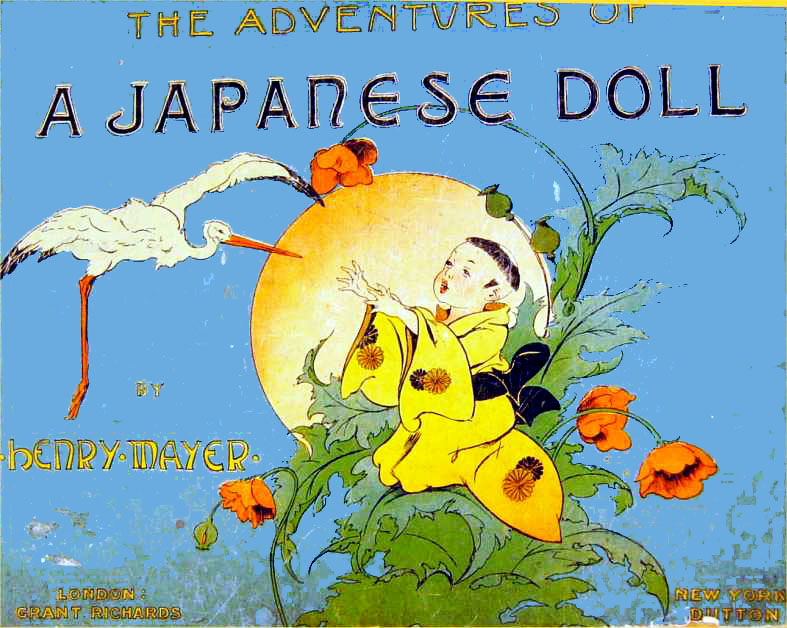
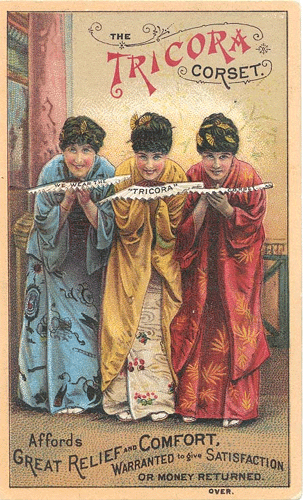
from the ephemera society, "With the opening of Japan to trade in 1854, the American market was flooded with goods from the Far East. Later on, exhibits of Japanese goods at the Centennial Exhibition in 1876 in Philadelphia and the success of Gilbert and Sullivan’s operetta The Mikado as well as New York’s exhibit The Japanese Village, both in 1885, exposed more Americans to Japanese wares and design. 
Labels: comment
"...If we study Japanese art, we discover a man who is undeniably wise, philosophical and intelligent, who spends his time - doing what? Studying the distance from the earth and the moon? No! StudyingLabels: hiroshige ando, van gogh
'the japanese painter,' by adolf von menzel, was unusual for him; it's impres- sionistic though he stated he disliked impres- sionism and wished to paint painting more real than photographs. he has managed to capture, perhaps, the spirit of east meeting west better than a photograph ever could.Labels: adolf von menzel
this tiffany vase is from an amazing online journal, 'nineteenth-century art worldwide,' which offers articles and reviews of the circle of traditions of which japonisme is a part, written by the people who have made it a field of study today.Labels: louis comfort tiffany