japonisme

06 December 2006

change & exchange

No great artist ever sees things as they really are. If he did, he would cease to be an artist. Take an example from our own day. I know that you are fond of Japanese things. Now, do you really imagine that the Japanese people, as they are presented to us in art, have any existence? If you do, you have never understood Japanese art at all. The Japanese people are the deliberate self-conscious creation of certain individual artists. If you set a picture by Hokusai, or Hokkei, or any of the great native painters, beside a real Japanese gentleman or lady, you will see that there is not the slightest resemblance between them. The actual people who live in Japan are not unlike the general run of English people; that is to say, they are extremely commonplace, and have nothing curious or extraordinary about them.
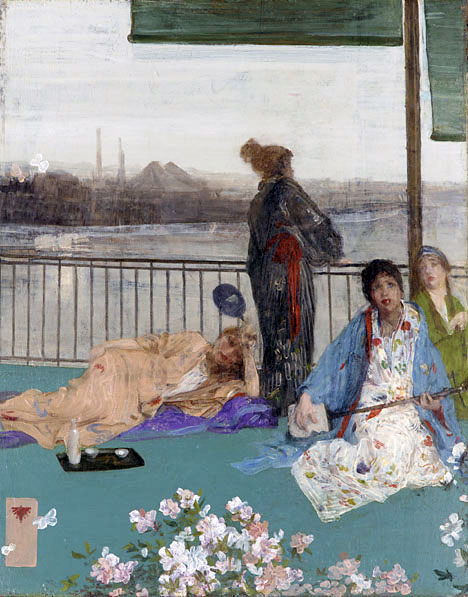
In fact the whole of Japan is a pure invention. There is no such country, there are no such people. One of our most charming painters [whistler] went recently to the Land of the Chrysanthemum in the foolish hope of seeing the Japanese. All he saw, all he had the chance of painting, were a few lanterns and some fans. He was quite unable to discover the inhabitants, as his delightful exhibition at Messrs. Dowdeswell's Gallery showed only too well. He did not know that the Japanese people are, as I have said, simply a mode of style, an exquisite fancy of art. And so, if you desire to see a Japanese effect, you will not behave like a tourist and go to Tokio. On the contrary, you will stay at home and steep yourself in the work of certain Japanese artists, and then, when you have absorbed the spirit of their style, and caught their imaginative manner of vision, you will go some afternoon and sit in the Park or stroll down Piccadilly, and if you cannot see an absolutely Japanese effect there, you will not see it anywhere.
Oscar Wilde (1882)

Japan is more than just fancy but Wilde's senti- ments capture the mystique that surrounds the subject. When Americans first learned about Japan in the mid-19th century, it must have seemed a very peculiar place indeed. Nearly everything about the Japanese culture and lifestyle was a novelty and a complete enigma. Travelers to Japan, both then and now, attempted to discover the things which made Japan tick. Edward Said wrote in his book Orientalism that westerners have perceived the Orient through generations of enduring stereotype and even today there is an abundant literature by supposed experts on how to understand Japan and its people.*
"I feel an irresistible desire to wander, and go to Japan, where I will pass my youth, sitting under an almond tree, drinking almond tea out of a blue cup, and looking at a landscape without perspective" - Oscar Wilde (1882)
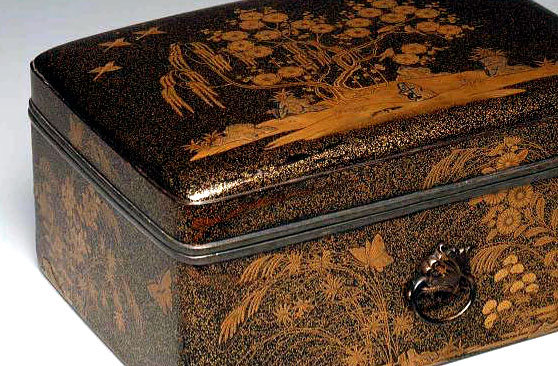
another tricky thing is.... even the "experts" nowadays can't tell, apparently, what the japanese made for themselves, and what they made strictly for expert. not just in prints, but in crafts as well, much of what we see in the aesthetic movement are reflections of japanese crafts that were designed specifically, and exclusively, for western markets.


we are fortunate, if we like this stuff. companies such as bradbury & bradbury have made many original wallpapers available again, beautifully. other companies as well are

reproducing papers, fabrics, furniture, and then, of course, there are the antiques. much is accessible through arts & crafts home.

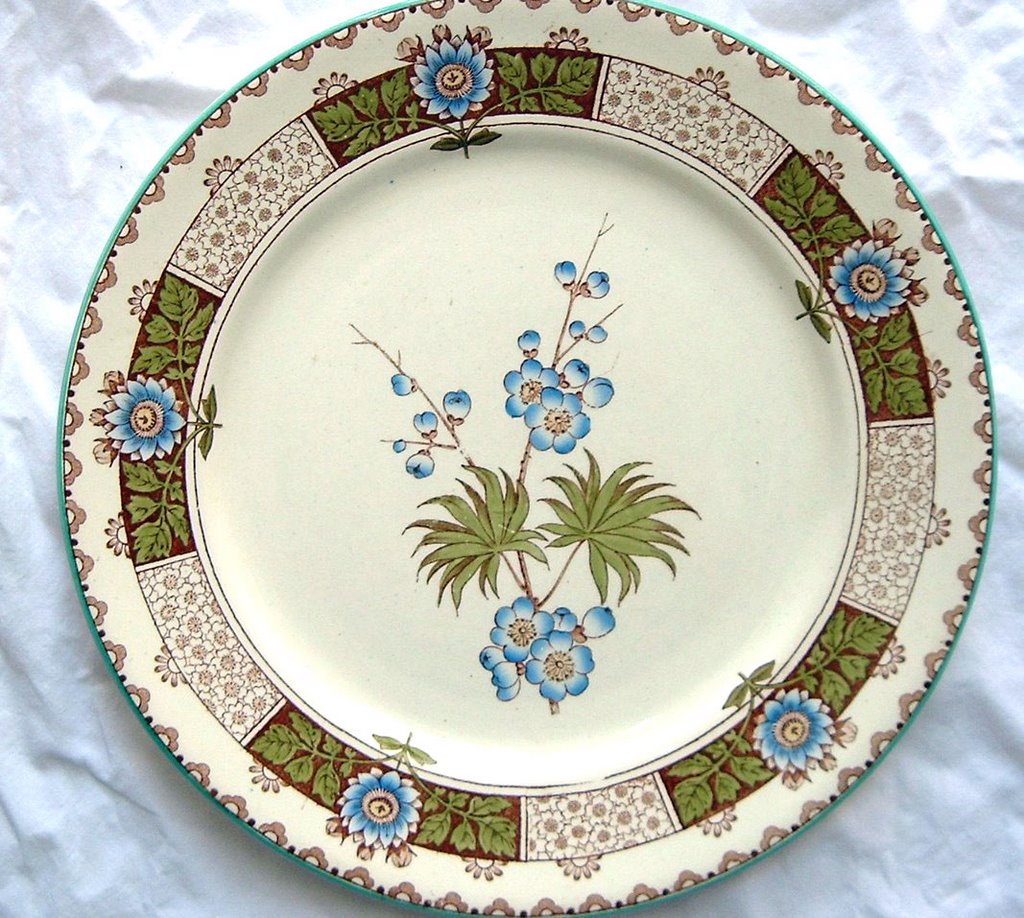
the upper right image is a godwin upholstery design for liberty & co., below it is a b & b wallpaper sample; the plates examples are wedgewood. even the most sophisticated of travellers still found it difficult to remember that china and japan were quite distinct nations. therefore, you saw "chinoiserie" china patterns named mikado.

Labels: , , , , ,

04 December 2006

letting in the light

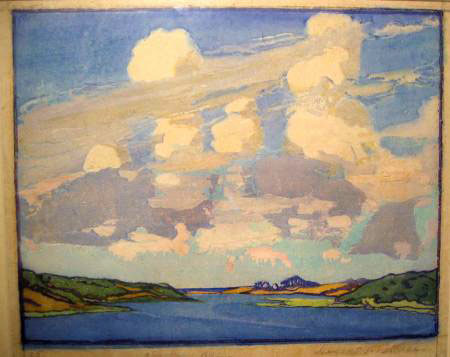
i love these prints so much; i can't say why. the first on the right, here, is by margaret jordan patterson. she was a student of arthur wesley dow. i was fortunate enough to find a calendar a while back with this in it, so i've had it on my wall for many years. i could stare at it forever.

this one is actually a contemporary painting by a man named thomas paquette. it fascinates me that he never saw mjp's image, never even heard of her. his work is one of the only painter's work that i can see the influence of japanese prints in the technique, not necessarily the subject matter nor even the style, exactly. it's the distinctness of each color, as though, or actually, outlined. something about the ways he uses color, i've seen only in shin hanga before; the translucency of the colors, the transparency of solid objects -- that he achieves this with oil or gouache is amazing.

walter j phillips was an etcher who grew dissatisfied with working in black and white. in the studio, he read of the woodblock prints being distributed and done in europe, and decided to give it a try. a trip to europe several years later where he met with other printmakers, japanese and european, filled in some fine points for him, and taught him about japanese papers.

isn't it ironic that the shin hanga artists made prints the way they did at least in part due to the fact that it was what they knew they could sell, and in so doing went on to inspire generations of artists as to how a landscape could be.

Labels: , , ,

03 December 2006

of clothing, change & illusion

It is with the delicious surprise of the first journey through Japanese streets--unable to make one's kuruma-runner understand anything but gestures, frantic gestures to roll on anywhere, everywhere, since all is unspeakably pleasurable and new--that one first receives the real sensation of being in the Orient, in this Far East so much read of, so long dreamed of, yet, as the eyes bear witness, heretofore all unknown.

There is a romance even in the first full consciousness of this rather commonplace fact; but for me this consciousness is transfigured inexpressibly by the divine beauty of the day. There is some charm unutterable in the morning air, cool with the coolness of Japanese spring and wind-waves from the snowy cone of Fuji; a charm perhaps due rather to softest lucidity than to any positive tone--an atmospheric limpidity extraordinary, with only a suggestion of blue in it, through which the most distant objects appear focused with amazing sharpness.

The sun is only pleasantly warm; the jinricksha, or kuruma, is the most cosy little vehicle imaginable; and the street-vistas, as seen above the dancing white mushroom-shaped hat of my sandalled runner, have an allurement of which I fancy that I could never weary.

Elfish everything seems; for everything as well as everybody is small, and queer, and mysterious: the little houses under their blue roofs, the little shop-fronts hung with blue, and the smiling little people in their blue costumes. The illusion is only broken by the occasional passing of a tall foreigner, and by divers shop-signs bearing announcements in absurd attempts at English.
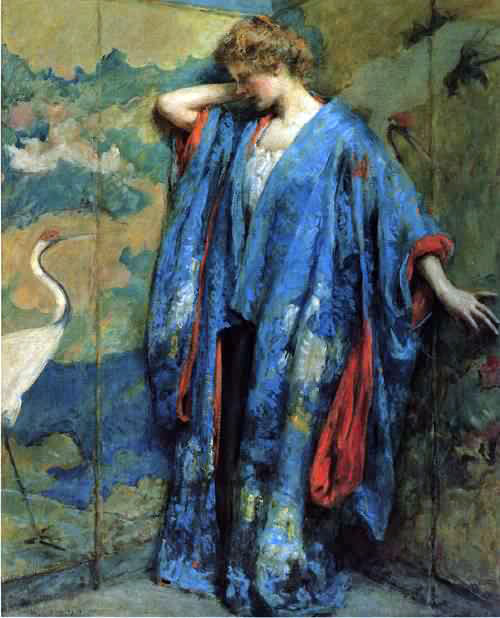
Nevertheless such discords only serve to emphasise reality; they never materially lessen the fascination of the funny little streets.

lafcadio hearn, 1891
how does that jibe with: "with lightning intensity, japan entered the modern era. clans were abolished in 1871; a railroad was opened... in 1872. ...in 1877 , telephones were first used..."1 development occurred in everything from the novel to bicameral government, to the development, as we have seen, of universities, sciences, warfare, much that the japanese felt the west had to teach.

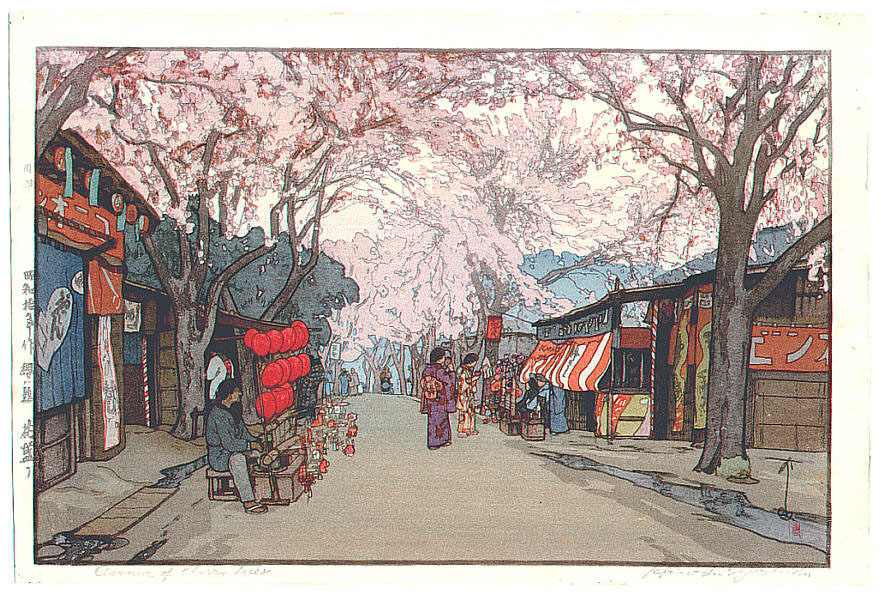
how does yoshida hiroshi's lovely view of a cherry-blossoming japan's women jibe with photos of how women really looked in 1935, when that print was made?


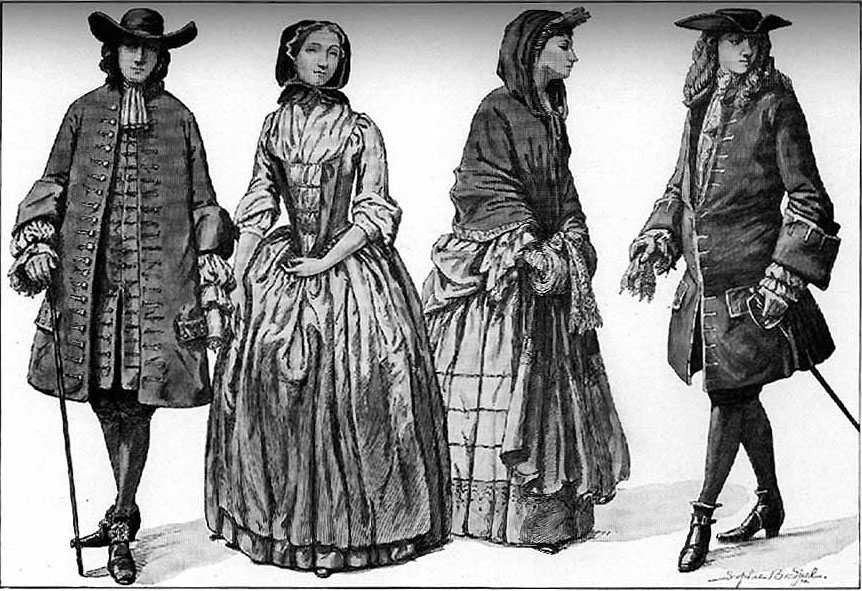
and lastly.... it's true, that in the 1600s, when the japanese cut off contact with the outside world, western women were wearing dresses. unfor- tunately, so were the men.

if the west had been isolationist for nearly 250 years, what would we have been wearing in 1853 when another culture sailed in and broke up our isolation?

no, i don't think hearn set out to mislead, i'd more suggest rosy-colored glasses. and yoshida only sought to sell his work: the producers of shin hanga realized no one really wanted to buy images of japan how it was beginning to look: they wanted to buy the fantasy. perhaps we still do.

1. joseph kestner, university of tulsa

Labels: , ,

01 December 2006

the randomness of beauty

i've been down- loading items for years, and they have now found a use. and i've been down- loading more. i have to keep them organized, and i have one folder for the images of women i've collected for this blog.

now photoshop has a feature that it didn't used to have and that it took me way too long to discover, but once you find it, you can't imagine how you ever did without. file browsing.

and file browsing allows you to sort in many different ways. well tonight i sorted by 'color profile' and ended up with many really intriguing combinations, but these four fell exactly in order, all in a line, and.... it was like a ouiji board.... someone is channeling their own agenda. and i'm very appreciative.

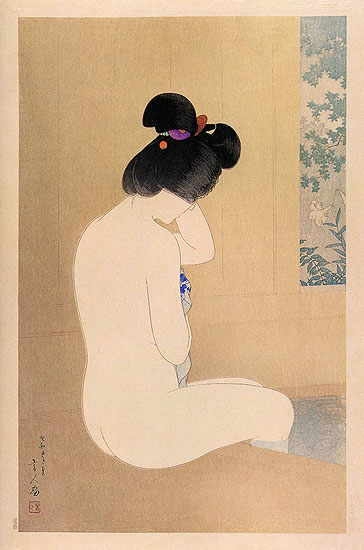
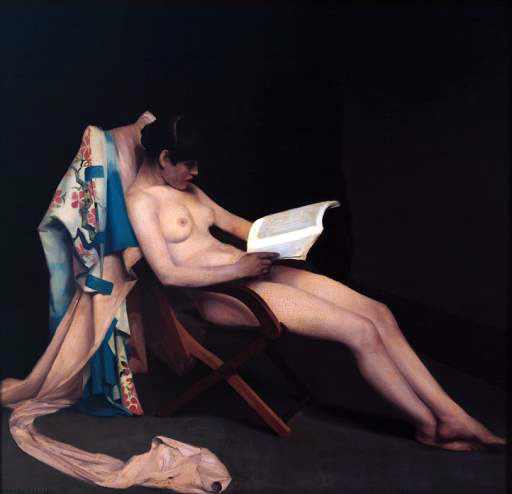
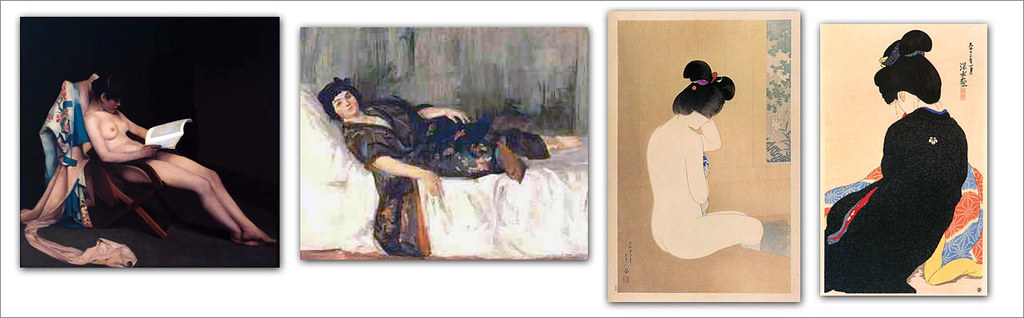
(though they can't fit that way in this format, these were all in a straight line, skin, black, skin, black. the first skin is by theodore roussel. black gown is by john sloan. the 'fragrance of the hot springs' is by torii kotondo, and the last one is by ito shinsui. in this layout, however, i think it's really easy to see the difference in styles. added later: aha! i thought of a way to do it. click it to see it big.)

Labels: , , ,

peres de la nouveau

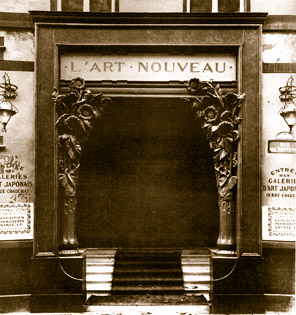
in 1895 a little man from germany opened a shop in paris. he called it l'art nouveau. the new art.

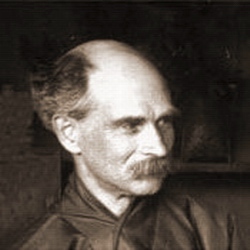
the man's name was bing. s. bing. he has two first names upon which no one seems to be able to agree:

sigfried, or samuel. being more an entrepreneur than an artist (his family was in the porcelain business), he turned astonishing instincts into a wealth of beauty. he wore a kimono when he was in his shop, selling arts (slightly japonized?), many of which he'd commissioned, from europe and the united states.

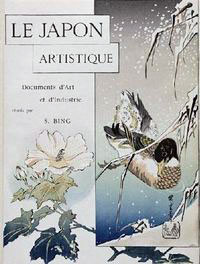
in order to encourage the interest and sales in japanese arts and crafts, which he also imported and sold, bing started a magazine, le japon artistique, which lasted three years. in it he educated, featured, and fascinated his worldwide readership (it was printed in three languages) with color reproductions and early photography of the objects he was importing and wishing to sell.

across the globe, another entrepreneur, not an artist, was soon to coin his own phrase: shin hanga. new prints. watanabe shozaburo was every bit the showman as was s bing. and his instincts were his guides as well. european educators who had been invited into japan, the meiji government's rush into all things new, put a halt on the japanese interest in the very prints, the ukiyo-e, that had been so fascinating the west. and even that market was dwindling.

watanabe collected his own group of artists, and inspired them to do the "slightly westernized" prints that he knew would interest a worldwide market. among them were hiroshi yoshida (though he was to break ranks), ohara koson, hasui kawase, ito shinsui, and many more.

one wonders where we might be without the salesmen, the showmen, and the entrepreneurs. perhaps far less rich, in the best meanings of that word, than i had ever imagined before.

(more on these subjects to come, of course)
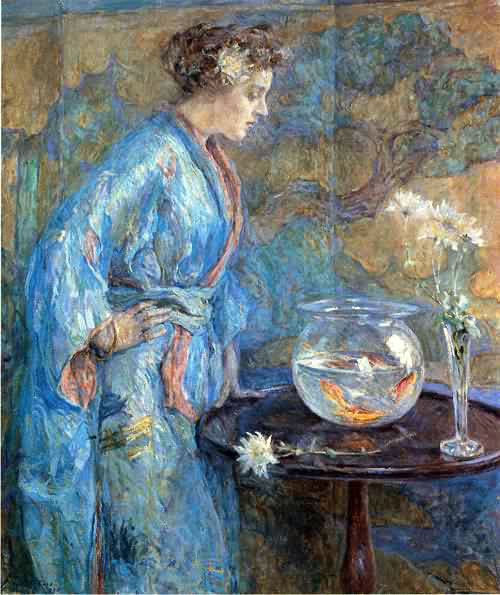
(image by hasui kawase)

Labels: , ,

30 November 2006

i just want to say....

...that there are many things to be learned here, some of which i'd just as soon never have learned. part of it may have been what led americans to put us citizens into "interrment camps" during the second world war: while we relished many of the gifts of the japanese, many of her first western visitors in over 200 years did not see the japanese as people. certainly not as equals.

"they" were either "toys" (being so little when compared to many westerners), erotic playthings (what else to think of a culture of "heathens" where sex is not a sin, and where the women of highest education and stature were the courtesans), or simply curiosities.

"conquerers" have always done that of those they seem to "better." blacks were only "part of a person--was it 5/8?-- in america for how long? women didn't have souls in many cultures.

maybe the japanese had traits that distinguished them from other cultures--what culture doesn't? but just as the octopus is only two chromosomes away from humans (or whatever), every single human on the planet has so overwhelmingly more in common than different that the difference is a trifle, even if it's a trifle that intriques, terrifies, and delights.

we can talk all we want about xenophobia being genetically coded in all of us, but on a practical basis, since refrigeration has been invented, functioning on that level only leads to war.

and i hate to give it up too! the idea of a people all luxe, calme, et volupte, skilled at things like tea, and flower-arranging, and empowering beauty above all things is a lovely fantasy. and ignored the humans for the humans they were.

Labels:

29 November 2006

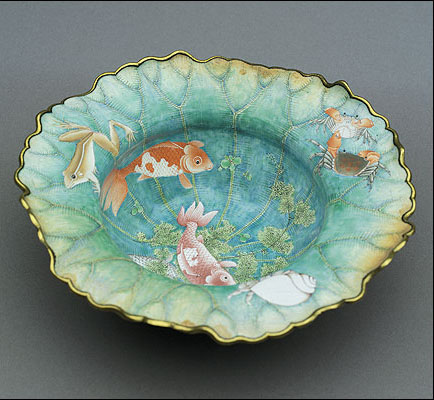
from china to paradise

one thing i haven't yet gotten into all that much is the fact that china started it.

i think calligraphy, writing, is at the base of design. in the west the alphabet grew, over the centuries, more and more straight-lined; in the east, it grew less so. yes, japan changed the lines of the chinese arts, crafts, religion, etc. as much as did the french, for example, when the line crossed the continent. perhaps, the japanese loosened it even further, and the french found some middle-ground.

well, i'm getting way off the point here. i could talk about aryan nature religions entering into china, then proceeding into japan.... in any case, and however one explains it, that is the route it took.

when i was in tokyo, i went to the tokyo national museum (whose website features some incredible treasures), and i saw one imari ware plate, with lotus and herons, that looked to me like "the missing link." it really did look like it was halfway between the japanese ceramics i was seeing around me, and what i'd seen of art nouveau. (sorry i can't reproduce it--the photo in my book isn't good, and the museum website seems to be down).

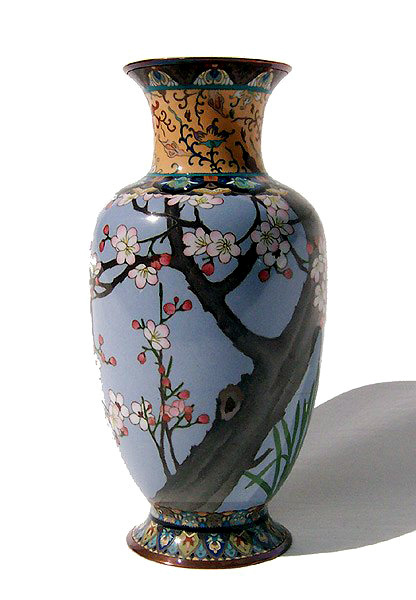
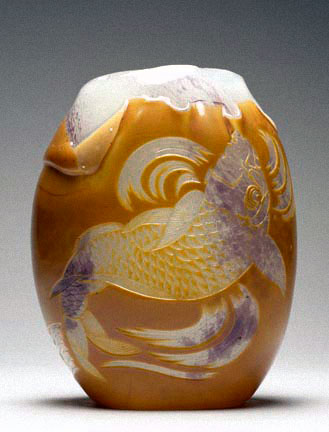
i felt the same way when i was looking through a book from the library and saw this vase from the 1700s--an example of 'peking glass.' this was chinese! (it's currently at the victoria and albert museum.)

the extra- ordinary 'cameo glass' vase is about as 'art nouveau' as it gets, but doesn't it now begin to look less 'nouveau' when you see it in context? it's by eugene rousseau, and it's from about 1880.


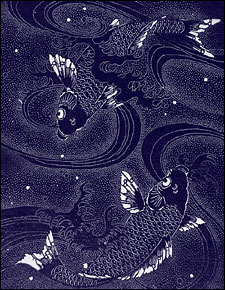
during the meiji period (1868-1912), stencils like this were used in the making of kimono fabric in japan. An exhibit is running from oct. 19 to 20 jan. 2007 at the maison de la culture du japon in paris. (via nathako )


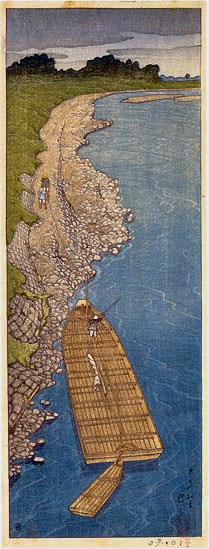
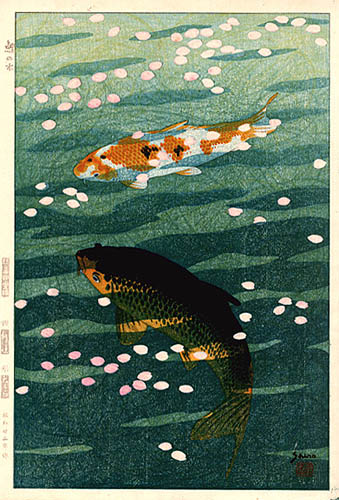
this charming print by hiroshi yoshida is from 1926


and this one, by shiro kasamatsu, is from 1957!


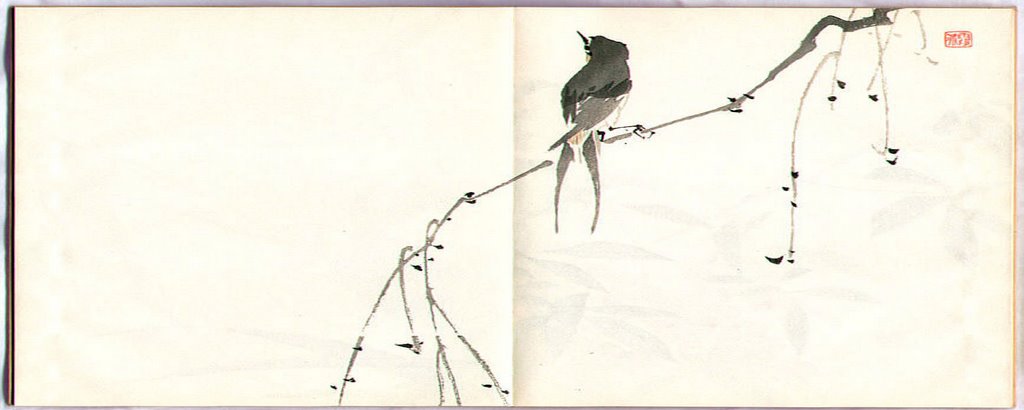
and this book is from some time in-between!


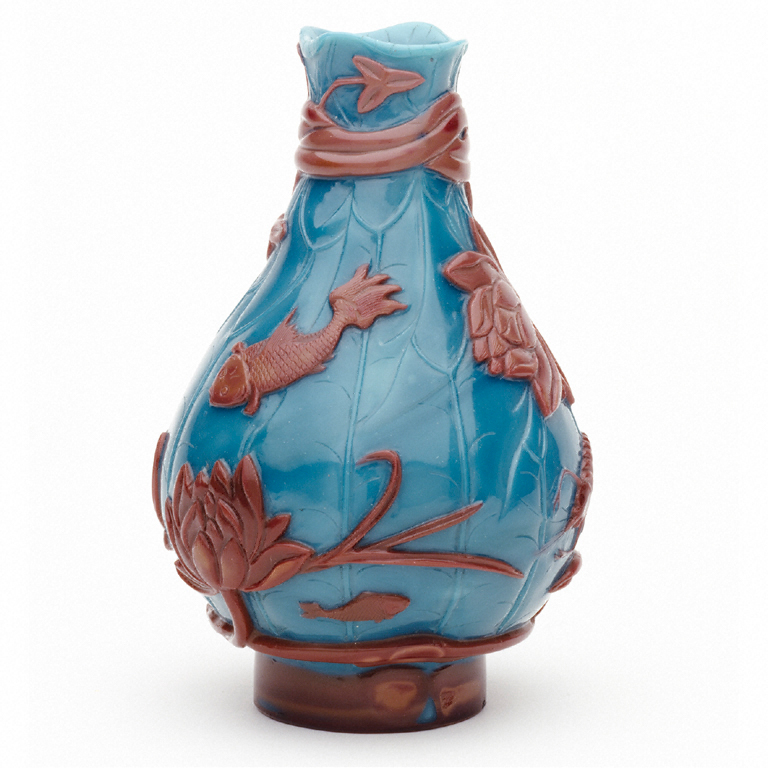
and the one at the top? china. qing dynasty -- that's sometime between 1736 and 1795.

Labels: , , , ,

28 November 2006

what do these 5 paintings have in common?

besides being all by whistler?...


the top print on the floor (above) is hiroshige's 'Cherry Island in Osumi Province,' from his 'Famous Views of the 60-odd Provinces' series,
done in the first half of the nineteenth century.
i didn't look for any of the other images,
but my guess is that they're probably from the same series.


the same black kimono!
in the last one, it's hanging on the wall!
i count three kimono (and yeah, that's the plural!):
black, peach, and white, and one red, one black, obi.

Labels: , ,

27 November 2006

the dream v. the illusion

but don't you just find it fascinating that westerners seemed to think that by wearing japanese clothing, it would bring them closer to enlightenment, while the japanese thought that wearing western clothing would do the same thing
for them.


(william merritt chase)

Labels: ,

if not black...


i think at some point it became just as de rigeur for the artist to paint a woman with kimono, screen, et al if he wanted to sell paintings.


some of the related subjects i'll be looking into soon are the matched set of enterprising showmen in tokyo and paris who set an entire fashion, and misconception deliberately in place,


the questionable roots of the aesthetic movement, more kimono colors, and, just generally,


more astonishing beauty, and the ways it's still touching us today.


would you like me to try to put together a bibliography as i go along?

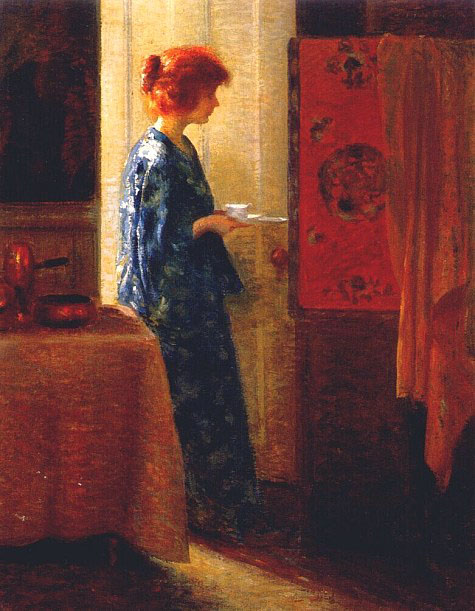
(starting upper left: john hubbard rich; robert lewis reid 1913; richard emil miller 1910; frank h desch; robert lewis reid 1913)

Labels: , , ,

25 November 2006

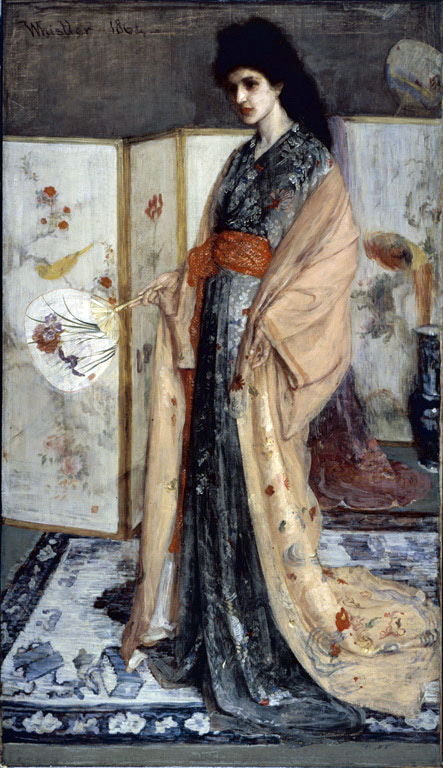
lady in black, with fan...

it became de rigeur for the uppercrust woman to have her portrait painted in, or with kimono, japanese screen,


fan, japanese ceramics, or any combination thereof. this is only the beginning. much more to come.


David R. Brigham
1, in American Impres- sionism: Paintings of Promise, says, "A number of .... Impres- sionists, .... painted female figures in interiors adorned with Japanese


effects. Kimonos, screens, fans, and porcelain added richness of texture and meaning to their subjects."


so is this still all interesting to some readers? yesterday was de-lurking day! so please de-lurk. i would love to hear your thoughts! thanks.

(starting at upper right: manet 1873;
chadwick 1891;
sir john lavery;
whistler;
julius le blanc stewart 1908)

Labels: , , , ,

newer posts older posts