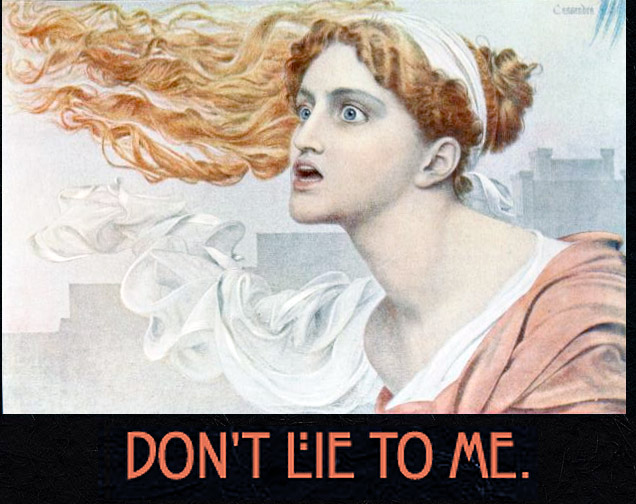
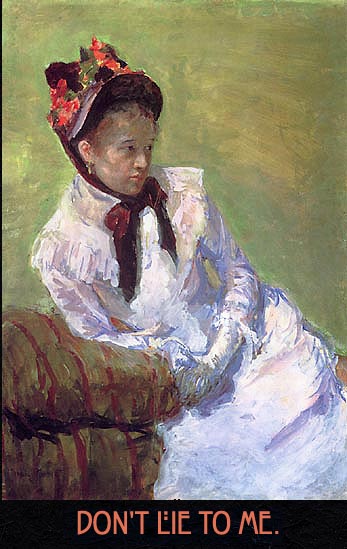
i had seen covers of this magazine, the poster, frequently around the web, and in my books, but no amount of searching seemed to turn up much of anything besides these hints. slowly but surely, i would collect one here, one there, whenever i'd come across them; suddenly, what did i know but that i had collected the cover images of most of them! much to my surprise! but not only that, i was taught once again, google something today, you don't find it, google it again tomorrow: one can now find the entire text of every article in the magazine's history (and all the visuals with paid services)!
JAPAN & POSTERS by CHARLES HIATT

IF imitation be the sincerest form of flattery, Japan, in matters of art, is now the most flattered nation in the islands, seen from this distance, seems world. Not so long ago, the appreciation of Japanese art was confined to a handful exquisitely informed amateurs such as the
De Goncourts, and to a few artists, amongst whom
Whistler was incomparably the most distinguished. Nowadays the cult of things Japanese has spread not only to Kensington, but even to Clapham and Brixton, and one would find it difficult to discover any self-respecting villa residence in London in the decoration of which nothing suggested the adorably graceful land of
Hokusai and
Outamaro.

It will be news to many people, even to some who are interested in the pictorial placard, that there are such things as Japanese posters. The life of those favoured Asiatic islands, seen from this distance, seems too idyllic to allow of the clamour of advertisement. And yet the picture-poster of is no new thing even in Japan : the idea of it, at all events, has existed there for ages, just as it existed in ancient Greece and Rome. To come to more recent times, we find that the first elephant ever introduced into Japan was advertised much as Barnum might advertise a new addition to his menagerie. The year in which the Japanese first saw the biggest of all beasts was 1729, and its arrival was heralded by a placard illustrated with a wood-cut coloured by hand. In addition to this, pilgrims to Japanese shrines were in the habit of leaving a memorial of their visit in the shape of little illustrated bills bearing their names posted on the wall of the temple, on much the same principle as the modern European cad cuts his name in the bark of a tree, or scribbles it on the wood-work of a railway carriage. Again, the Japanese theatres have for a long time been in the habit of exhibiting large panels on which are depicted the incidents of the plays performed and the counterfeit presentments of the chief actors engaged.

It is not, however, with the poster in Japan, but with the influence of Japanese art on the poster in Europe that this article is concerned. It is scarcely too sweeping to say that in some degree all the best modern illustrated placards including even those of Cheret, Grasset, and Mucha have been influenced by the Japanese colour print. In the work of some of the
mâitres de affiche the influence is much more marked than in that of others. Amongst modern French poster artists none is more mordantly original than
Toulouse-Lautrec : to accuse him of imitation would be merely absurd, and yet nearly all his great wall pictures show clearly that he has been a careful and ingenious student of Japanese work. At the first blush it would seem as if he owed his inspiration solely to a particular aspect of the life of modern Paris, but a closer observation reveals the fact that his best designs have much in common with those wonderful prints which are at once the delight and the despair of Occidental draughtsmen. His "Jane Avril," that delightful design which combines the hues of the crocus, the primrose, and the crimson tulip, is conceived in manner essentially Japanese.

In
H. G. Ibels we have another Parisian who has drunk deeply at the well of Oriental inspiration, with results altogether charming and distinguished. Without sacrificing his individuality, he has learned not a little of his technique from the study of Japanese models. The same, in a less degree, may be said of
Henri Riviere, if we may judge him by his three designs "
L'Enfant Prodigue," "
Le Juif Errant," and "
Clairs de Lune." I might multiply on account of their subject matter they these examples almost to infinity, but could hardly fail to achieve a certain those which I have quoted are sufficient to illustrate my argument. In this connection, however, it is impossible not to mention
Degas, the wonderful master of line, whose work has so much in common with that of the best Japanese artists. So far as I know, Degas has not yet made an essay in the affiche, but if he were to do so, we may be sure that he would produce something new and fascinating.

In this country the attention of the great mass of the people was undoubtedly first drawn to things Japanese by the "
Mikado." Mr. Gilbert's amazingly felicitous excursion into the realms of topsey-turveydom did more to popularise the delicate picturesqueness of Japanese art and costume than a library full of learned treatises. The
posters which advertised this production, though degree of prettiness, were thoroughly English, and, it must be added, thoroughly bad. Since then, however, the poster movement has taught our artists much, and when a second Japanese musical play was mounted they were able to give a much better account of themselves. They saw their opportunity and made the most of it. The "
Geisha" was generously advertised, and much credit is due to Mr. George Edwardes for employing not one, but several of the ablest English designers in the preparation of posters to proclaim far and wide the delights of his new production.

The English theatrical poster a short time ago was one of the most crude, inartistic, and frequently brutal productions which the imagination and hand of man ever devised. The memory of it makes one shudder, and it is altogether pleasant to turn one's thoughts to the agreeably fantastic designs which lured us to Daly's Theatre when the "Jewel of Asia" was there for our amusement. It is almost unnecessary to say that the talent of Mr. Dudley Hardy was enlisted for the "Geisha." Mr. Hardy's versatility and ingenuity are only exceeded by his amazing industry. It is wonderful that he does so little that is bad. This Japanese bill is not amongst his happiest efforts: in manner and execution it is essentially English, and lacks the verve which made the bills for "A Gaiety Girl" so attractive. Mr. Edgar Wilson's poster for the "
Geisha" was more fortunately conceived. The Japanese girl with her huge parasol is an excellent piece of work, and the colour-scheme, which includes glowing scarlet, bright yellow, dull green, and red-brown, is a very striking one. Even better is the design by Mr. John Hassall which, in the disposal of the pattern and in the graceful and naive arrangement of the details,recalls the Japanese colour print in the happiest way. In advertising the "Geisha," Mr. Will True proved himself a resourceful artist who possessed a fine sense of colour, and who was, in addition, a capable draughtsman. One of his bills is actually a Japanese print re-drawn and surrounded by a conventional border. It performed its primary business of advertising to admiration, and the wise collector will do well to add a copy of it to his treasures.

The other bill by Mr. True is graceful in line and harmonious in colour. The Japanese lettering, it should be noted, is an accurate translation of one of the songs in the “Geisha," and forms a most interesting detail of the placard. The collector has already seized upon the advertisement which Mr.
Mortimer Menpes designed to advertise a recent exhibition of his pictures at Dowdeswell's. Although only in black and white, the spirited drawing of the figure makes a copy of this little poster a very desirable possession. I have before me as I write a window bill advertising a book entitled "A Cycle of Cathay," by Dr. Martin, first President of the Imperial Tungwen College, Peking. It is in black and white, and is adorned by a grotesque and vigorous Chinese figure well calculated to arrest the attention.

The foregoing is merely a rough note on a subject about which a good-sized volume might be written: it professes to be nothing more. If I have not touched upon the Japanese element in the masterly posters of the
Beggarstaffs, it is only because I hope, at some future time, to be able to deal with the subject at such length as it deserves. Surely nobody will deny that the artistic invasion of England by Japan has, on the whole, been beneficial to our arts and crafts in general, and to the art of the poster in particular. It may be -I do not say it will be -that when the halcyon days of our admiration have passed, we shall not be inclined to estimate the art of Japan so highly as we do now. In the meantime, there can be no doubt that we are drawing from it much healthy inspiration, and not a few novel and entirely legitimate technical devices.
for more, see reVIEW's list of articles from 'the poster'
here,
and
here, for even more options.
and
here, from the same people, a whole list of wonders.
Labels: a morrow, b westmacott, cecil aldrin, EGMO, g h evison, g howell-baker, james pryde, john hassall, m yendis, p balcock, paul berthon, posters, s browne, s wood, scotson-clark, t browne, w self
 With rod and tackle box,
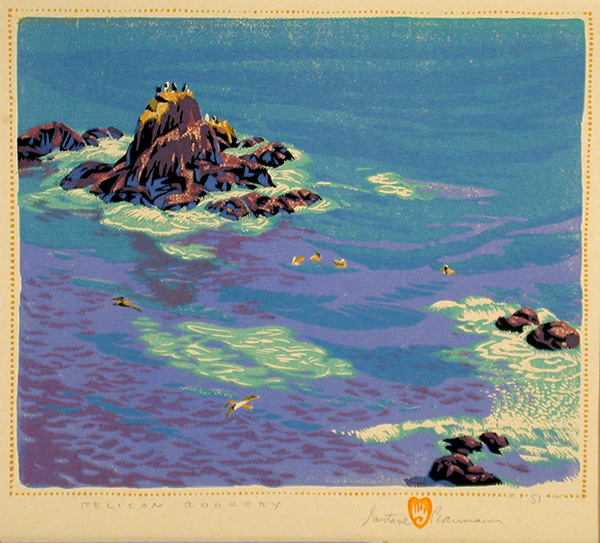 we studied French in Québec and
 kneels struggling in the sand
 but she says,
 a total of six loud snaps.
 The pelican now tests his wings, rowing
 The pelican now tests his wings, rowing
 all afternoon
 all afternoon
 just when the pelican waddles up
 and climbs, turning over our small circle,